


Introducing the Naissance d’une Montre 3 by Ferdinand Berthoud
Watch Fairs
Introducing the Naissance d’une Montre 3 by Ferdinand Berthoud

Summary
There are certain projects in watchmaking that resist being treated as novelties, or even as products at all. The Naissance d’une Montre 3 is one of them. It is the third chapter in a story that begun more than a decade ago by the Time Æon Foundation, and it essentially asks the question of what it would mean to make a chronometer today as Ferdinand Berthoud himself might have recognised, built entirely by hand, without recourse to CNC machines, and stewarded by a community who have made the preservation of endangered crafts their life’s work.
The answer, unveiled after six years of work within Chronométrie Ferdinand Berthoud and the wider Chopard group, is a watch built to the standards of a high-grade, handmade pocket chronometer from the 18th or 19th century. It marries traditional handcraft in its purest form with the traditional solutions once relied upon for precision timekeeping. The watch combines a fusée-and-chain, Breguet stop work and a bimetallic compensation balance wheel. Both the mechanics and the design of the watch were inspired by the Montre Astronomique No. 3, made for Ferdinand Berthoud by Jean Martin in 1806. For a clear view of the movement, don’t miss the excellent analysis and photography by The Naked Watchmaker.
Naissance d’une Montre
The Naissance d’une Montre series of watches are not so much watches as they are encyclopaedias of long-dormant watchmaking practices. When the Time Æon Foundation was established in 2005 by Philippe Dufour, Robert Greubel and Stephen Forsey, its founders were already concerned that the knowledge needed to make a watch entirely by hand – the cutting of wheels, the polishing of pinion leaves, the bluing of steel – was on the verge of extinction. The idea was simple but daunting. To save these crafts, they had to be put into practice, and they had to be documented in a way that others could learn. Thus began the “birth of a watch” series, each chapter an experiment in creating a complete timepiece from raw materials without modern shortcuts.
The first was carried out with Michel Boulanger, a schoolteacher who became a student once more under Dufour and Greubel Forsey, and after six years of work it produced a tourbillon watch, sold at Christie’s in 2016 for over USD 1 million. The second, undertaken by Dominique Buser and Cyrano Devanthey of Oscillon with Greubel Forsey and Urwerk, yielded an unusual watch with a constant-force mechanism that was auctioned in 2023. Now, in its third chapter, the experiment has migrated to Chronométrie Ferdinand Berthoud, where Karl-Friedrich Scheufele and more than 80 artisans and specialists from across the Chopard group took up the challenge.
To realise the Naissance d’une Montre 3, the team at Fleurier set aside a space in the manufacture and filled it with machine tools from another era, rather than the usual banks of CNC machines. Many months were spent not only defining methods for each component but also acquainting themselves with the idiosyncrasies of the old tools. Only once they had mastered these could they begin to meet the exacting standards of precision and quality of the project.
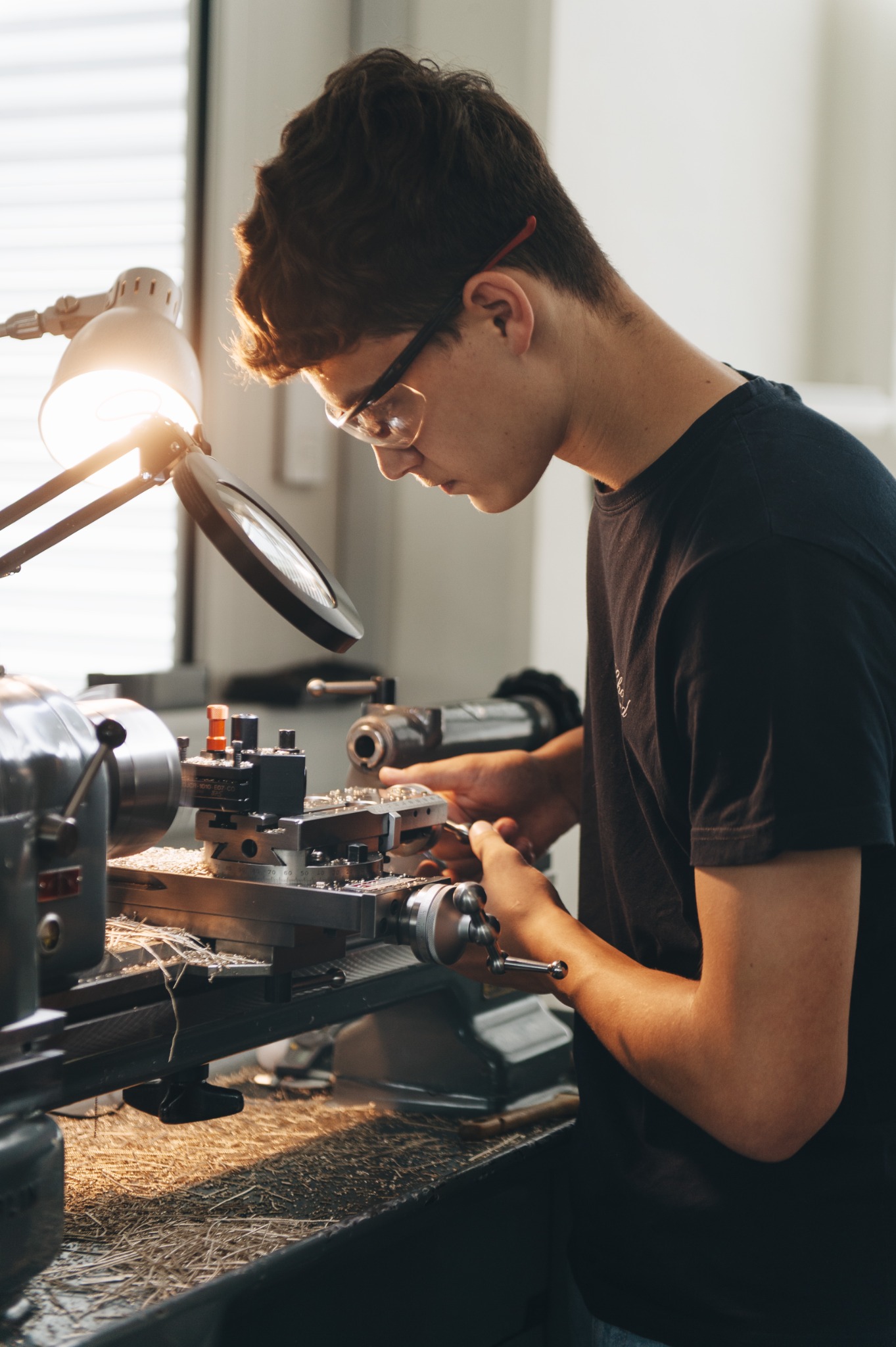
Traditional machining at Fleurier: crafting each part of the Naissance d’une Montre 3 by hand, without CNC machines
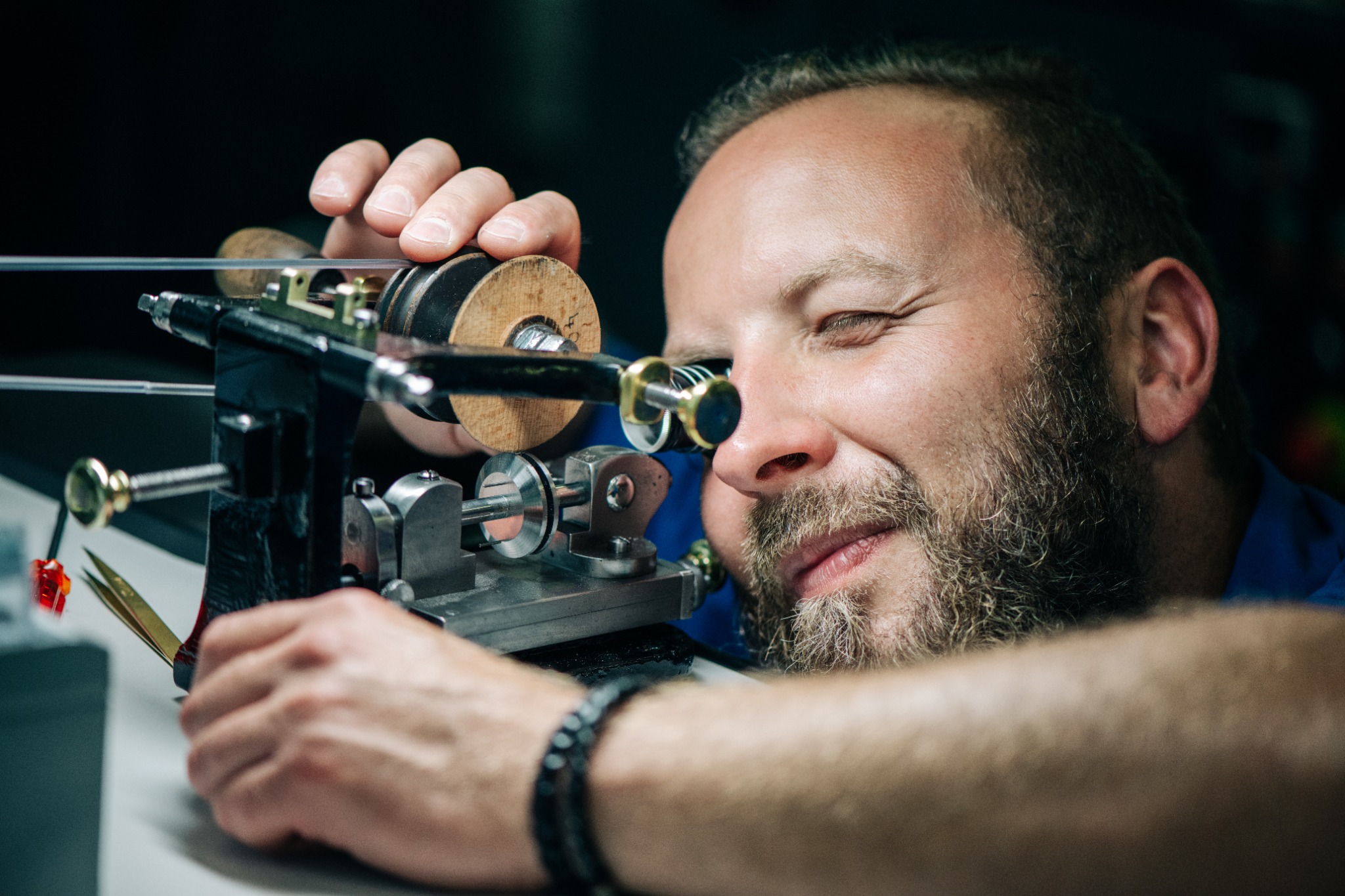
Precision in practice: artisans employ vintage micromechanical tools to build the Naissance d’une Montre 3
Among the machines is a Schaublin 102 single-axis lathe from 1960, pressed into service to shape circular parts such as arbours, fusees, pillars, pinions, wheels, barrel drums, studs, winding stems, and screws. Beside it is a SIP jig borer of the same vintage, used for reaming, milling, drilling, and grinding on components such as levers, mainplates, wheel plates, bridges, and springs, with threaded holes cut using taps.
The scale of the undertaking is best seen in the numbers. From the first sketch to the delivery of the first watch, nearly 11,000 hours of work were required. Each movement is made up of 747 components, with 477 in the chain alone. Cutting and polishing the most ancillary components such as the leaves of a pinion, done with a pearwood grinding wheel, takes a full day, while finishing a wheel in the gear train requires three. The main plate itself has 126 sinks in eight different diameters, of which 90 were polished by hand, using roller cutters, boxwood pegs and traditional polishing pastes.
Only 11 examples of Naissance d’une Montre 3 will be made, 10 in 18k ethical gold and a single example in stainless steel. The latter, the very first of the series, will be offered at Phillips in Geneva come November, with proceeds directed toward preserving and transmitting traditional watchmaking skills. The remaining in gold will be made at a rate of 2 pieces a year.
-

- The Naissance d’une Montre 3: a handmade chronometer that blends 18th-century craftsmanship with modern dedication
-
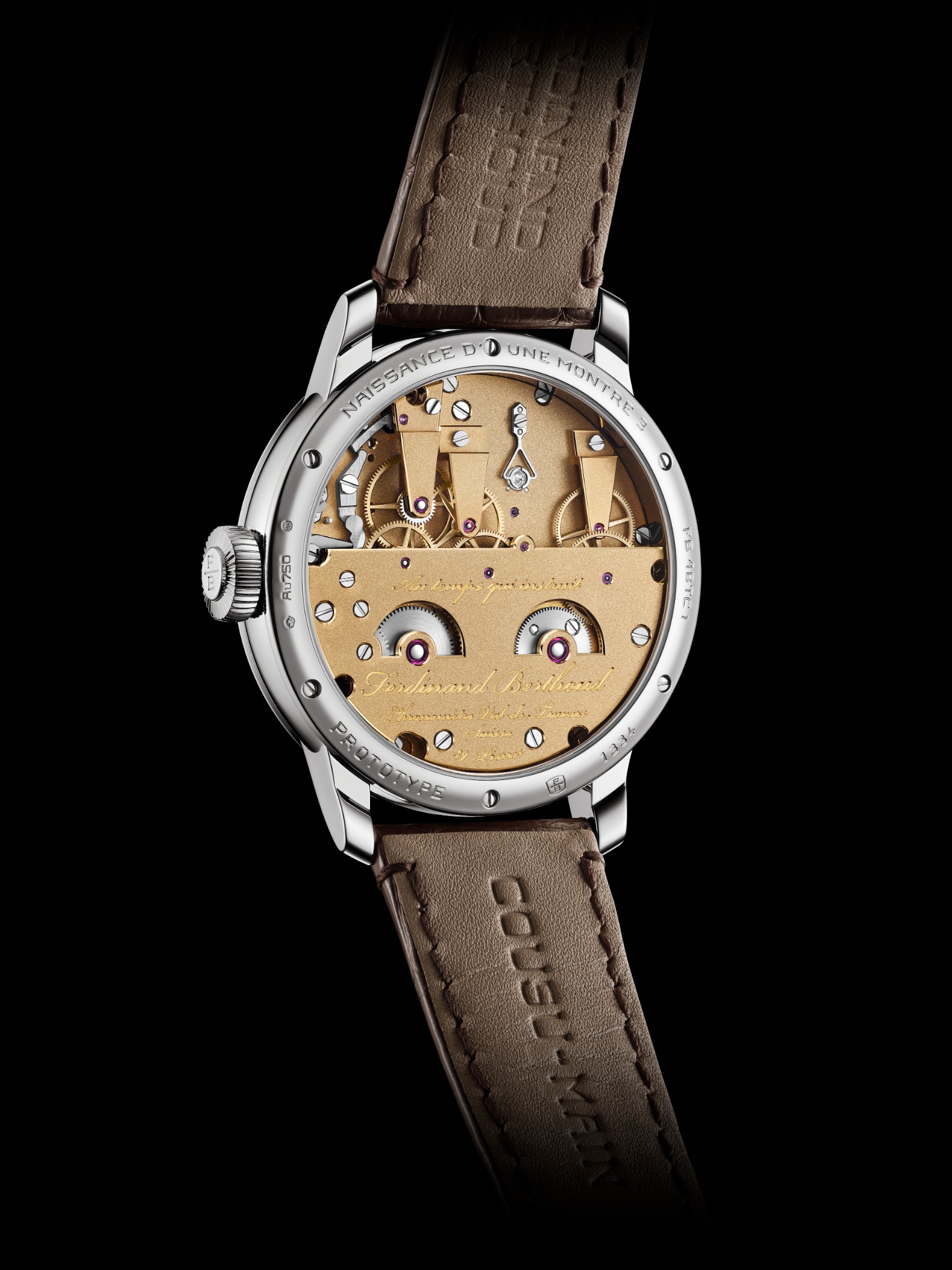
- Rear view of the Naissance d’une Montre 3, revealing traditional engravings and handcrafted finishing
Beautiful anachronisms of precision
The case measures 44 mm by 13 mm, with curved flanks, a concave bezel, welded lugs, and a wide, hand-engraved fluted crown. Shaping those forms on hand-operated tools is no small brief, hence the project drew on techniques from across the Chopard group. Lost-wax casting, more often associated with jewellery, was used to produce the case middle and bezel, whose compound curves resist conventional machining, while turning, milling, and tapping provided the basic geometry. From there the parts passed to the finishing benches, the lugs were welded to the middle, and the engraving and hallmarks were done by hand.
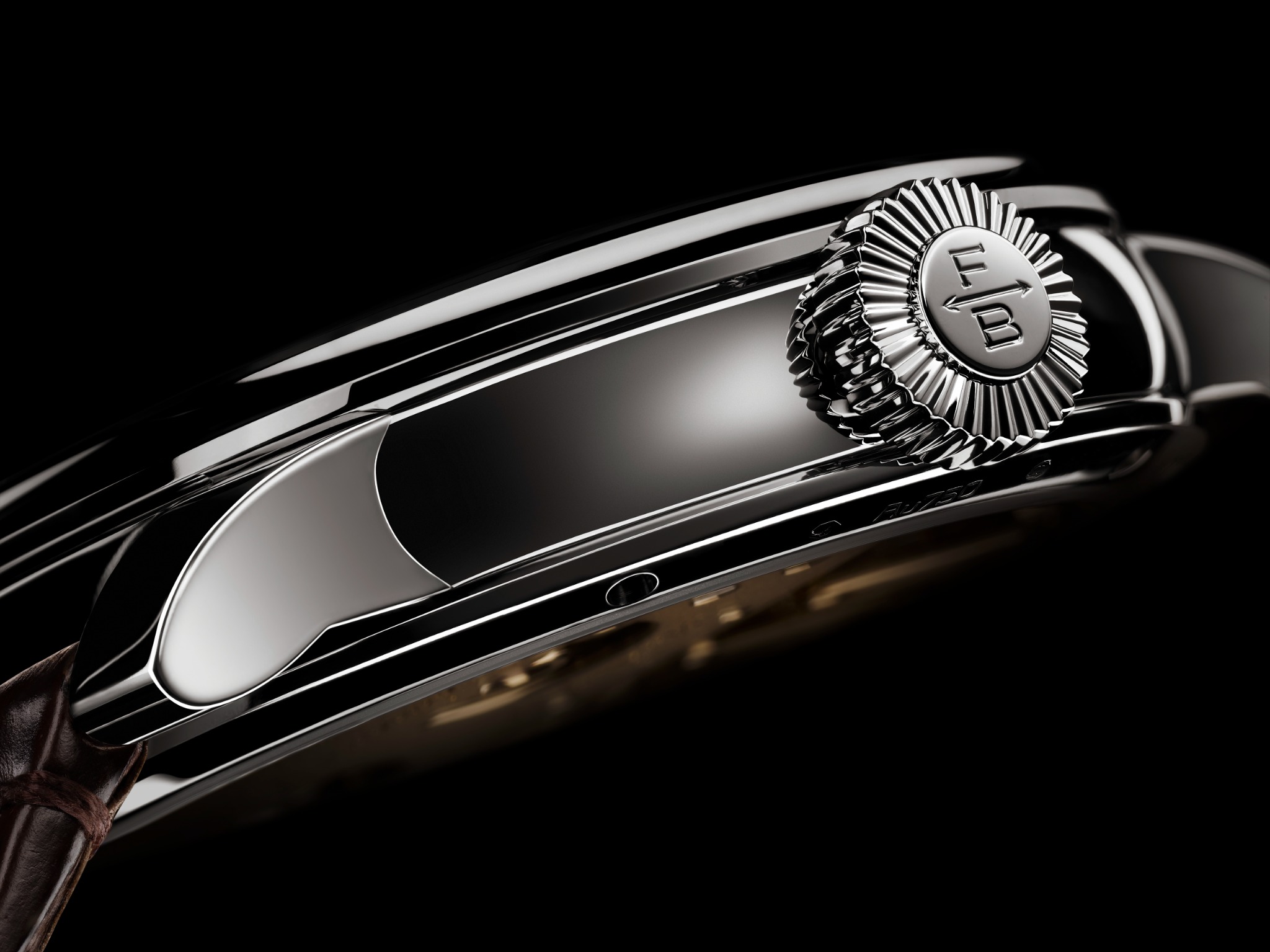
Detail of the Naissance d’une Montre 3 case: curved flanks, a concave bezel, and the hand-engraved fluted crown
The movement, the Calibre FB-BTC.FC has an inverted construction, with its bridges and plates held together by polished steel pillars. What would ordinarily be hidden beneath the dial is instead the dial itself. Like the Montre Astronomique No.3, the hours and minutes are displayed on a sub-dial while on the central axis is a lone, flame-blued seconds hand that is extremely fine. At the lower half of the movement sits the fusée-and-chain transmission. As with other FB calibres, it employs a reverse fusée, an idea first explored by Thomas Mudge in his marine timekeepers.
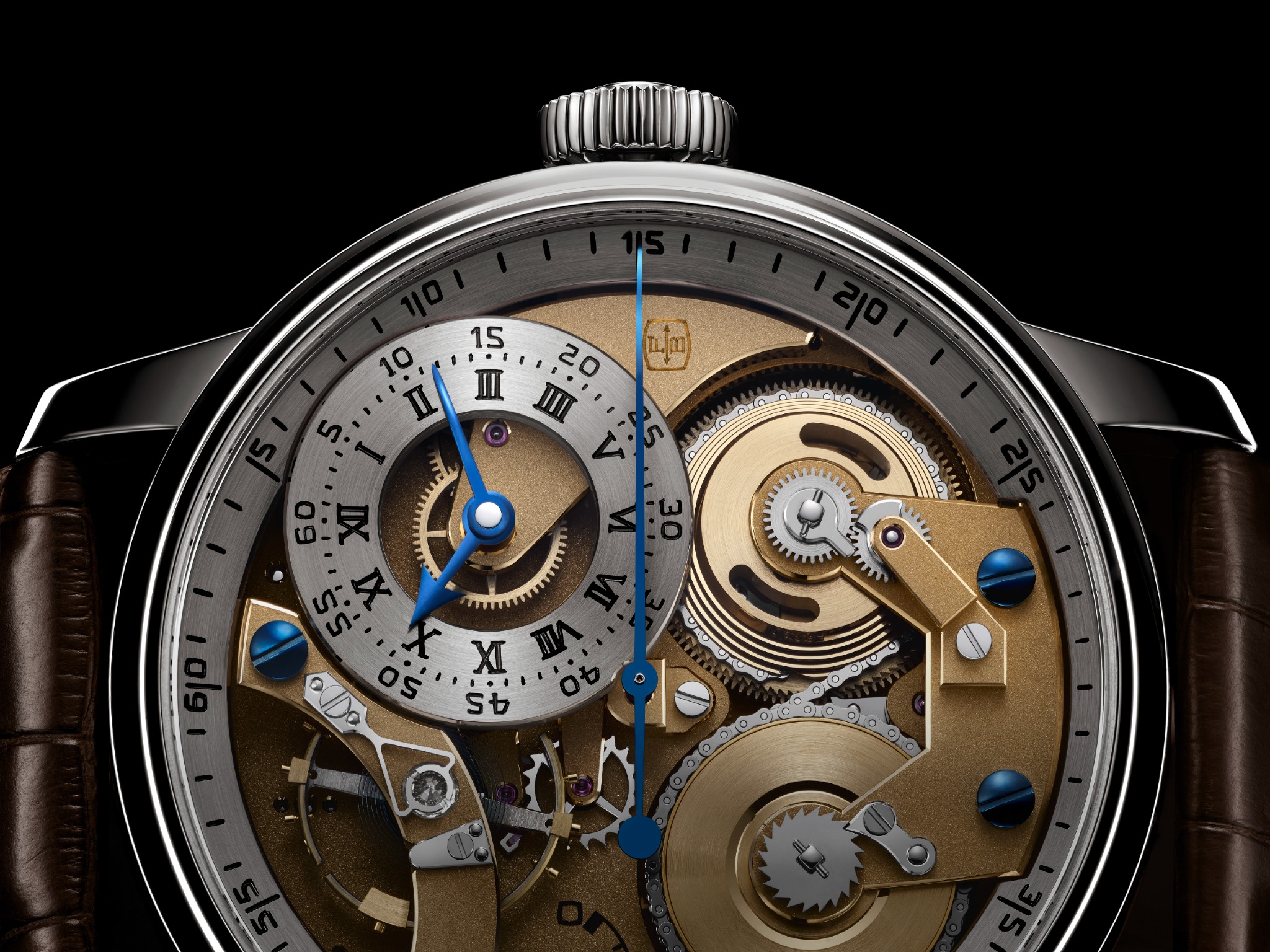
The dial of the Naissance d’une Montre 3, with its sub-dial for hours and minutes and blued central seconds hand
In the traditional layout, the fusée sits to the left of the barrel and the chain runs barrel to fusée. The barrel is wound first, and in operation the chain unwinds barrel to fusée. In this arrangement the pull of the chain and the thrust of the fusée pinion both act in the same direction, so the pivots of the fusée arbour must withstand the sum of those forces, increasing friction and wear. In the reverse arrangement, the positions of the barrel and fusée are swapped so that the chain crosses over. The fusée is wound first, and in operation the chain unwinds fusée to barrel. This configuration makes winding easier, while at the same time the pull of the chain now opposes the thrust of the fusée pinion, balancing the forces at the pivots and reduces frictional losses.
-

- Front of the Naissance d’une Montre 3 movement, where the reverse fusée-and-chain transmission is clearly visible
-
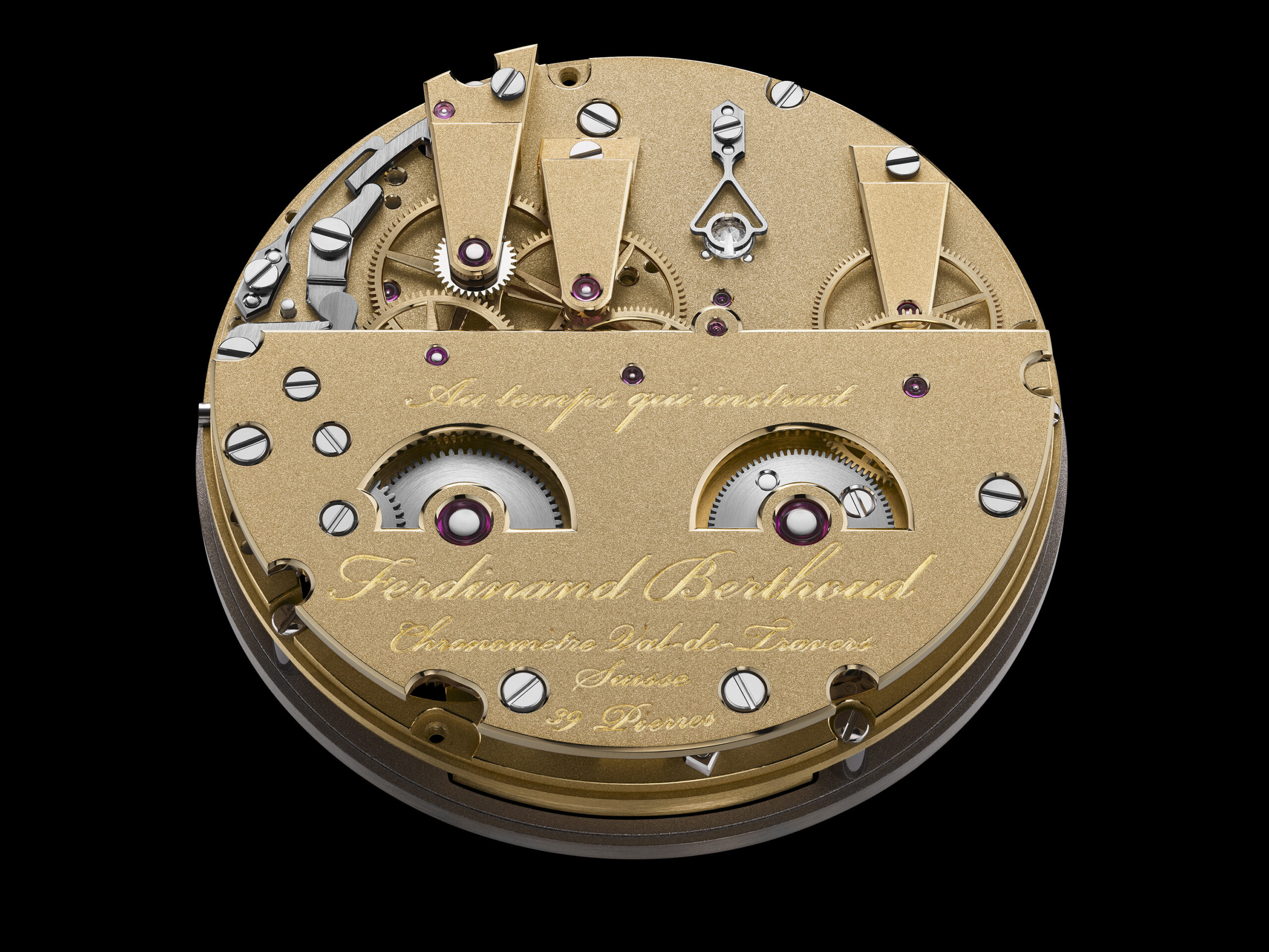
- Back of the Naissance d’une Montre 3 movement, featuring engraved inscriptions and traditional bridge finishing
In standard FB calibres, a differential made up of planet gears is built into the fusée to maintain power during winding. Some form of maintaining power is necessary because the fusée rotates in one direction while winding and in the opposite direction during operation, interrupting power flow. Instead of a differential, an older solution, invented by John Harrison, was used here involving a pawl integrated into the ratchet of the fusée that prevents it from turning backwards during winding and a maintaining spring that continues to drive the center wheel.
Another element that sets this calibre apart from other Ferdinand Berthoud movements is the stop work. Instead of the familiar Geneva stop work, the fusée is fitted with a stop work originally devised by Breguet. In the Geneva stop work, a Maltese cross is fitted to the barrel and engaged by a finger squared to the barrel arbour. The two remain in contact throughout the barrel’s motion, and the protruding arm of the cross limits the usable portion of the mainspring by physically blocking further rotation. In Breguet’s solution, the finger on the barrel arbour acts directly with a protruding sector of a cam. The two are not in constant contact; their coordination is managed through an additional set of wheels beneath. The Geneva system eventually replaced Breguet’s, likely because his solution was thicker and required this extra gearing.
As the fusée is mounted on the centre wheel, an auxiliary train is needed to drive the motion works of the offset hours and minutes display. Hence, there is a large number of wheels visible on the rear of the movement, including the train for the power reserve indicator.
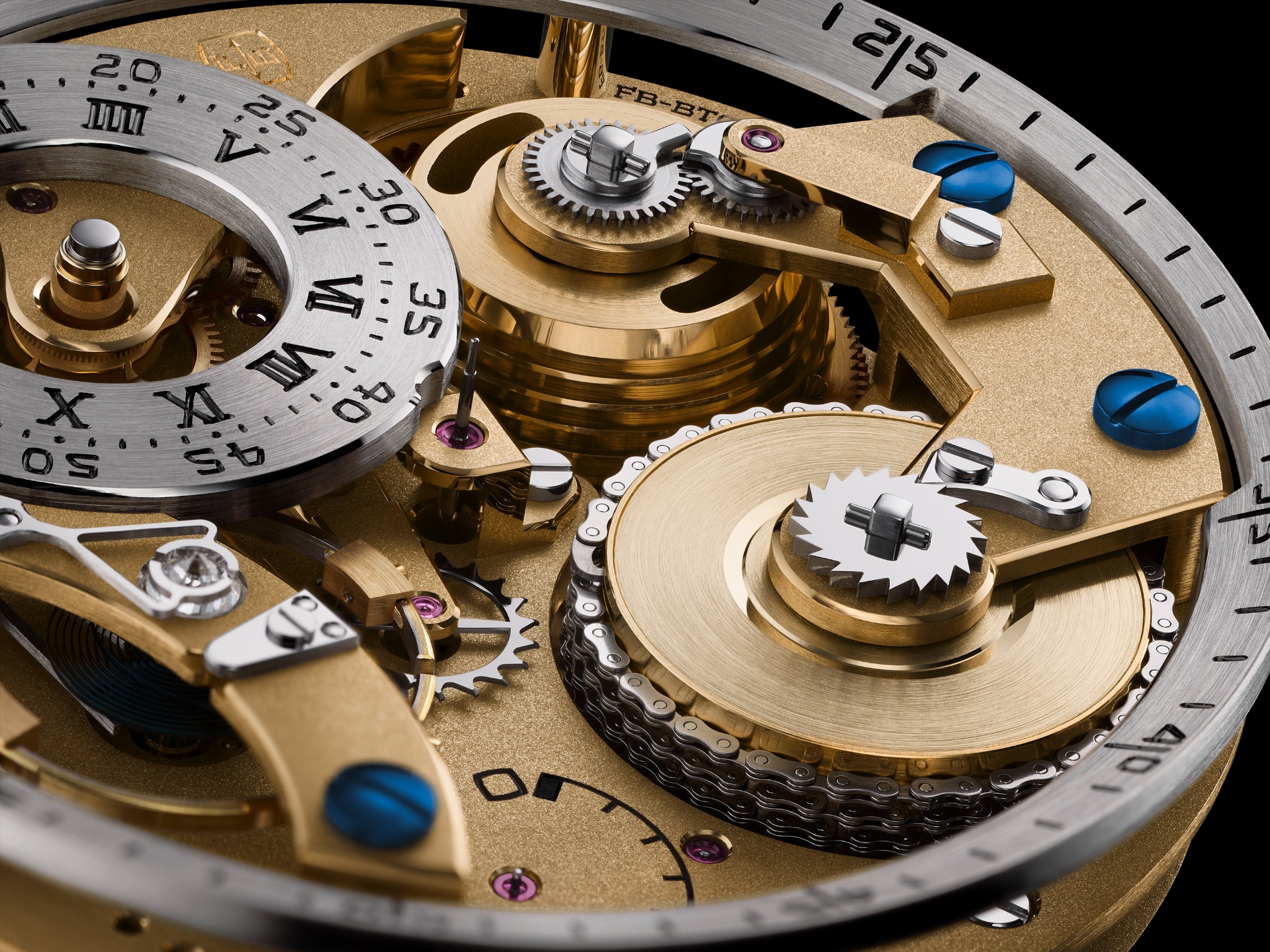
The intricate fusée-and-chain transmission, a hallmark of the Naissance d’une Montre 3’s hand-built movement
The movement beats at 21,600 vph, and the main event is undoubtedly the bimetallic split balance of Invar and brass. This is the so-called Guillaume balance, named after Charles-Édouard Guillaume, the Swiss physicist who discovered Invar in 1896 and later developed Elinvar, earning the 1920 Nobel Prize in Physics. The nickel-iron alloy effectively solved the long-standing problem of the middle temperature error, which was phenomenon first observed by Ferdinand Berthoud in 1771. Put simply, it was discovered that a brass-and-steel bimetallic balance would keep time at low and high extremes, but run fastest at an intermediate temperature and lose time as it moved away from them. The difficulty was that the balance and the hairspring did not change at the same rate. The balance altered steadily with temperature, while the elasticity of the carbon steel hairspring fell away on a curve. This mismatch meant the two could not cancel each other out across the full range of temperatures, leaving a residual error at the midpoint. By replacing the inner steel strip of those earlier balances with Invar, Guillaume created a compensating balance whose non-linear response mirrored that of the carbon steel hairspring, giving the oscillator far greater stability across the full range of temperatures.
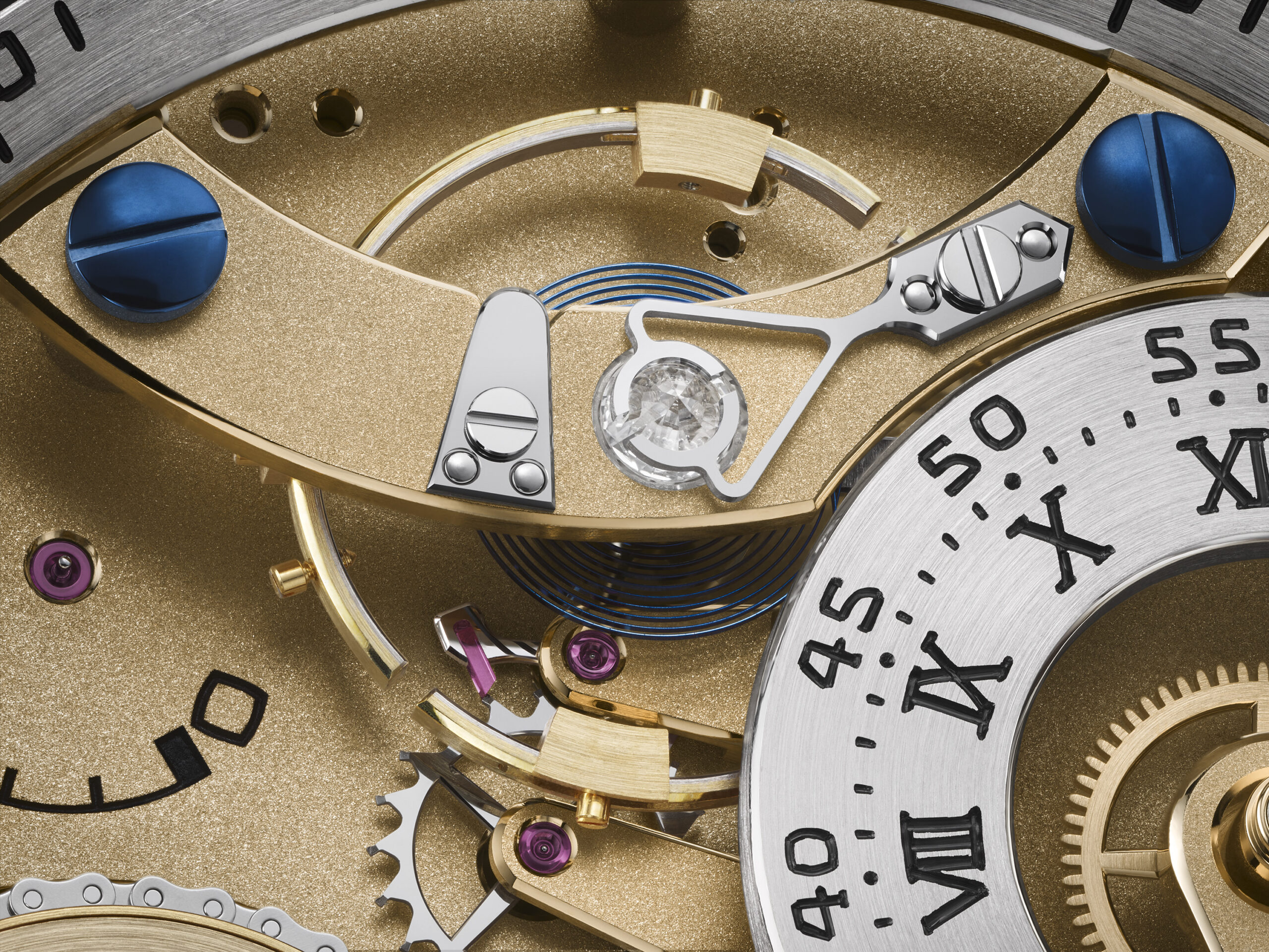
The bimetallic Guillaume balance wheel of the Naissance d’une Montre 3, designed for precision and thermal compensation
The principle is straightforward yet ingenious. Brass expands markedly with heat, while Invar expands far less than steel and does so in a non-linear fashion. Riveted together in a cut rim, the mismatch in expansion causes the arms of the balance to bend inward or outward as temperature changes. This alters the effective radius of the wheel, and therefore its moment of inertia, in the opposite sense to the changing elasticity of the steel hairspring. Before the advent of self-compensating alloys such as Elinvar, Nivarox and Glucydur, which rendered separate compensation largely unnecessary, the bimetallic balance was the gold standard for precision timekeeping, appearing in everything from marine chronometers to observatory-grade watches.
The balance wheel in the Naissance d’une Montre 3 has four adjustments screws along the rim, two fixed inertial weights as well as two gold-plated nickel silver weights on the split rims for regulating thermal compensation. In good sport, the hairspring is made from a nickel-free steel alloy, which remains sensitive to temperature changes, making compensation genuinely relevant. The spring has also been heat-tempered to a uniform blue. This is an unbelievably anachronistic gesture, and the watch, and all it argues for, is all the more complete and exciting for it.
The movement is officially certified by the COSC, a fact that is remarkable in itself. Passing modern chronometer trials is already demanding for any watch, but to do so with a hand-made movement regulated by a bimetallic Guillaume balance and a steel hairspring – technologies long abandoned because they are so difficult to stabilise to contemporary standards – is almost unheard of today.
The Naissance d’une Montre 3 is hence not only a compendium of traditional craft but also a ledger of technical answers from an era when horology stood near the centre of science. It is the most accomplished watch in the series to date, and recalls a time when the accuracy of a balance and hairspring was not an abstraction for collectors, but a matter on which navigation, astronomy, warfare and the destinies of nations could depend. To build such a watch today is to recall the great minds who treated the measurement of time as both a practical necessity and a scientific frontier, and who ultimately showed how inquiry and ingenuity, in their highest form, can still inspire us today.
Tech Specs: Ferdinand Berthoud Chronomètre REF. FB 4BTC. 1
Movement: Manual-winding Caliber FB-RES.FC; 50-hour power reserve; 3Hz or 21,000vph; Chronometer-Certified by COSC
Functions: Hours and minutes; central seconds; Fusée-and-chain transmission with Breguet stop work and bimetallic compensation balance wheel; Stop seconds function
Case: 44.3mm x 13mm; white gold; water-resistant to 30m
Dial: 18k white gold; Hours & minutes dial circular satin-finished, with hand-engraved Roman numerals for the hours and an Arabic minute track; Seconds ring circular satin-finished; Power-reserve indicator hand-engraved on the mainplate
Strap: Hand-stitched rolled edge alligator leather strap with handcrafted white gold pin buckle
Availability: Limited to 10 pieces, produced at a rate of 2 pieces a year
Ferdinand Berthoud

You may also like

News
Ferdinand Berthoud Celebrates Sincere Fine Watches’ 70th Anniversary with the Chronomètre FB 1RES.3 Sincere Platinum Jubilee Edition
Nov 14, 2024
News
Ferdinand Berthoud Celebrates Sincere Fine Watches’ 70th Anniversary with the Chronomètre FB 1RES.3 Sincere Platinum Jubilee Edition
Nov 14, 2024

The complicated chronometry of Ferdinand Berthoud
Aug 15, 2023
The complicated chronometry of Ferdinand Berthoud
Aug 15, 2023

Interviews
In Conversation with Karl-Friedrich Scheufele on the Art and Science of Ferdinand Berthoud
Apr 11, 2023
Interviews
In Conversation with Karl-Friedrich Scheufele on the Art and Science of Ferdinand Berthoud
Apr 11, 2023