

Breguet Introduces the Classique Tourbillon Sidéral 7255
News
Breguet Introduces the Classique Tourbillon Sidéral 7255

Today marks the 224th anniversary of one of horology’s most significant milestones – the day Abraham-Louis Breguet secured the patent for his legendary invention, the tourbillon, back in 1801. France was then using the Republican calendar, introduced in the wake of the Revolution to distance itself from royalist traditions. This system divided the year into 12 equal months of 30 days, with five or six days added at the end to align with the solar year. Breguet’s patent was filed during Messidor, the summer month named after the Latin word for harvest. Official records show the date as 7 Messidor, Year IX, which translates to June 26th in the Gregorian calendar.
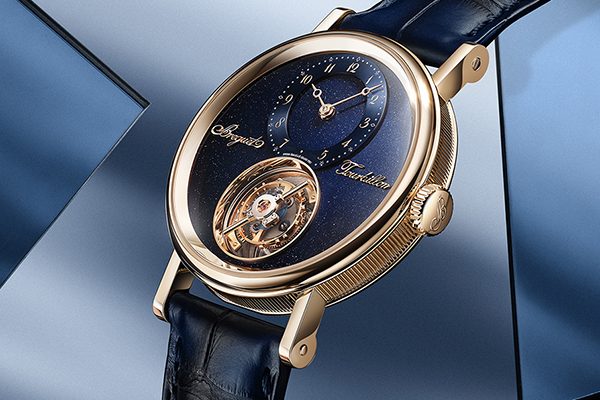
To commemorate this enduring feat, Breguet has unveiled the Classique Tourbillon Sidéral 7255. It may come as a surprise, given the brand’s deep history with the tourbillon, but this is the first time Breguet has introduced a flying tourbillon. Sidéral, in this case, refers not to sidereal time but to the cosmic aesthetics of the watch, namely its aventurine enamel dial, which evokes a starry night sky.
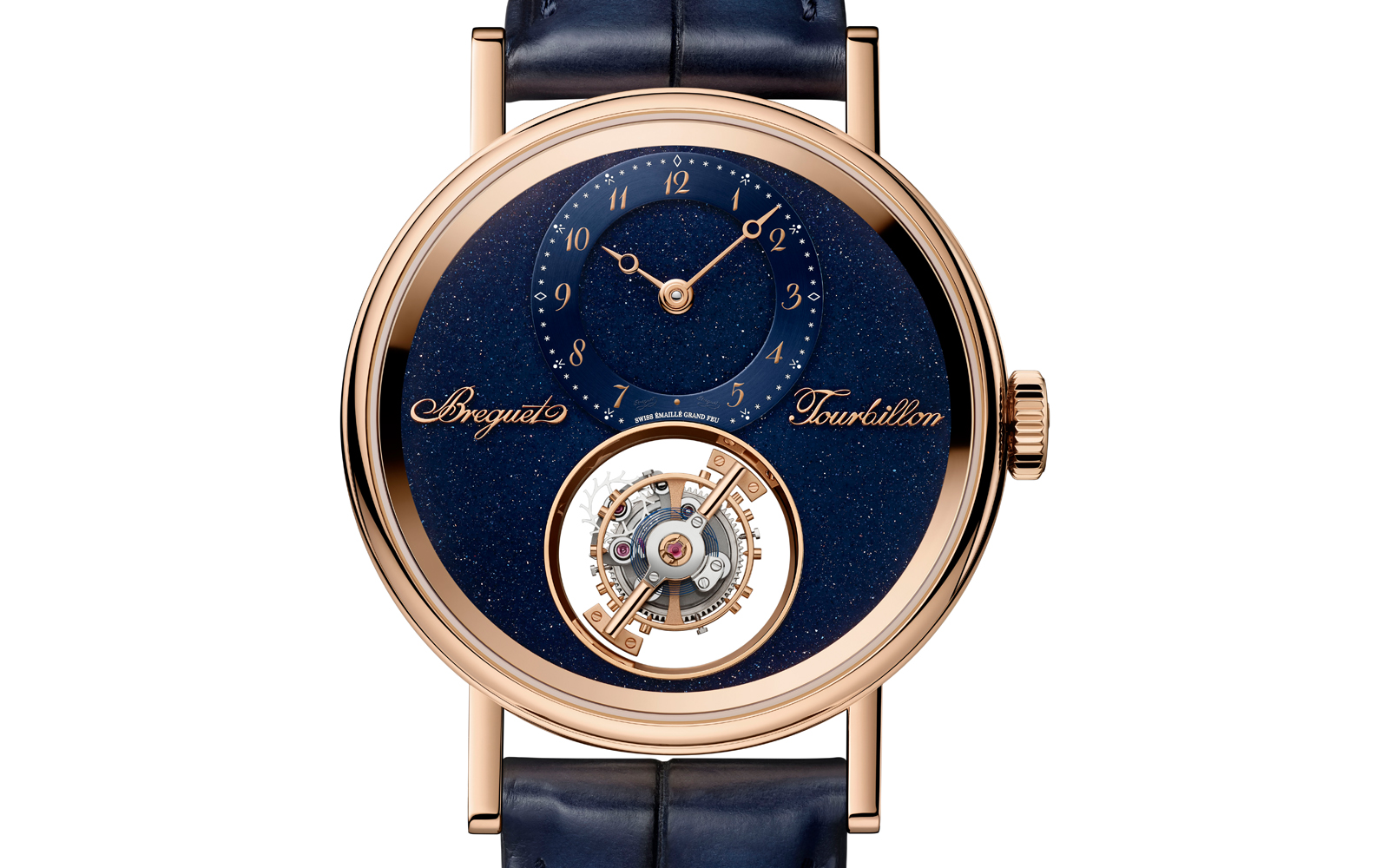
Breguet Classique Tourbillon Sidéral 7255 with a mysterious flying tourbillon
Beyond being a flying tourbillon, it is also a mysterious tourbillon. Breguet first explored the concept in 2007 with the Classique Tourbillon Messidor 5335. At the time, mysterious wristwatches were quite rare; Cartier was six years away from launching its first mystery wristwatch of any kind. The only watches that dabbled in the theme were the trilogy of tourbillons by Thomas Prescher and the Corum Tourbillon Saphir. The latter, in an interesting twist, featured a movement seemingly suspended without bridges and plates. Both were referenced in a patent Breguet filed in 2004, and the Classique Tourbillon Messidor 5335, was conceived as a purest expression of the concept, eliminating any visible mechanical connection to the tourbillon. The new Classique Tourbillon Sidéral 7255 is mechanically almost identical to the Messidor 5335, with the key distinction being the construction of the tourbillon itself.
-
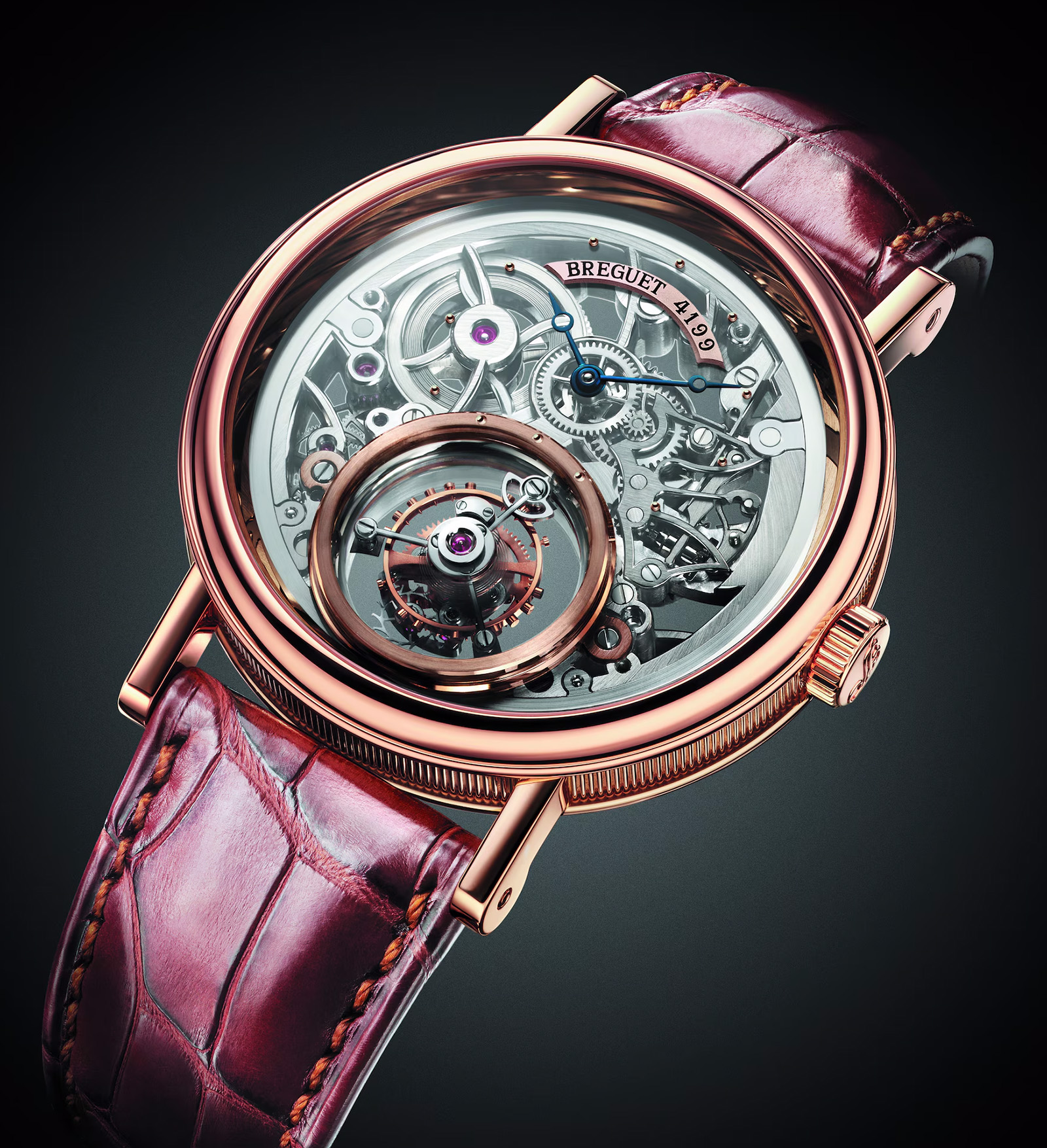
- The Breguet Classique Tourbillon Messidor 5335 launched in 2007
-
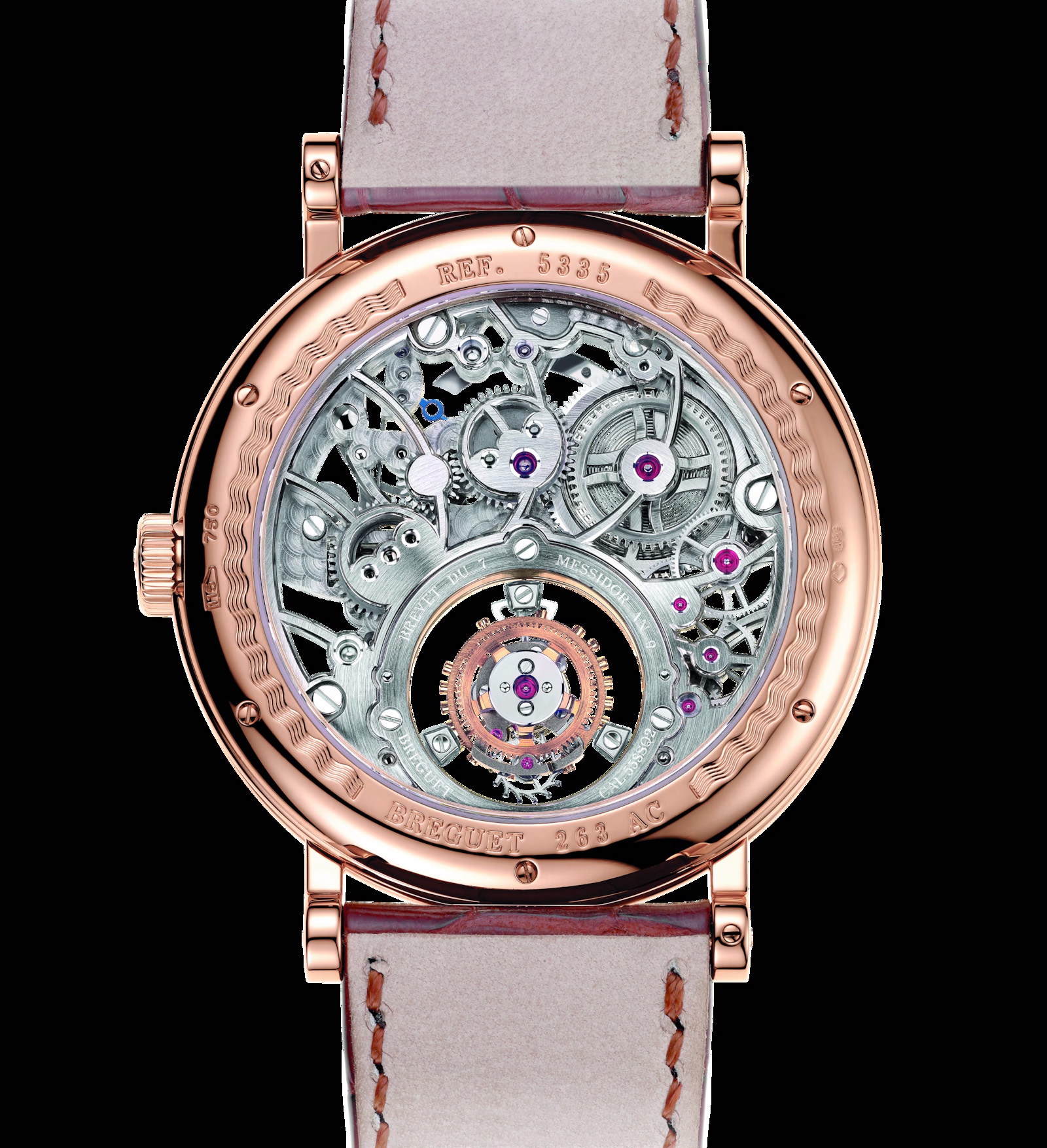
- The keyless works and winding train occupy the left half of the movement, while the wheel train is arranged on the right
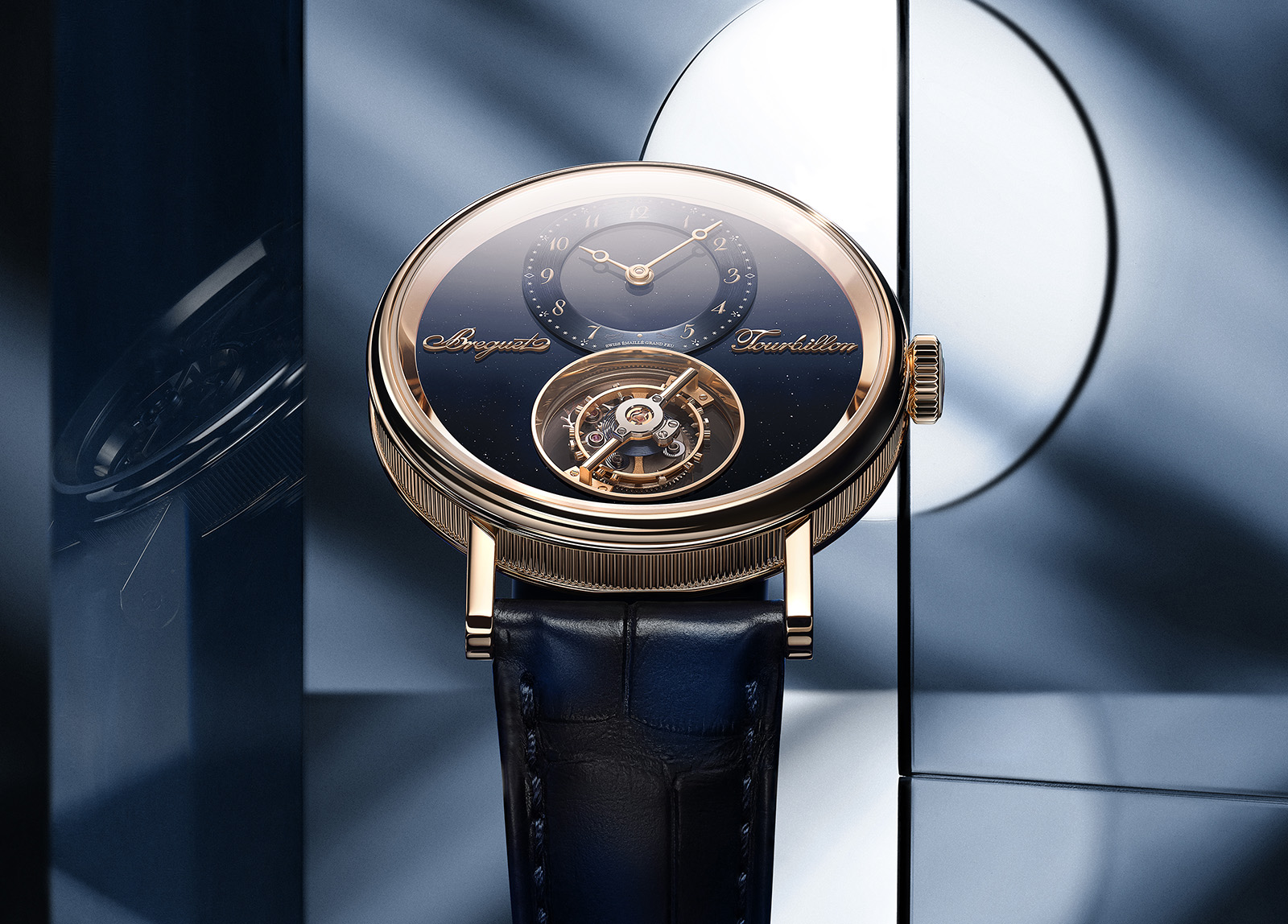
Breguet Classique Tourbillon Sidéral 7255
As with all the anniversary editions so far, the case is made of the new proprietary gold alloy, simply called Breguet Gold. It’s a blend of gold, silver, copper, and palladium. The latter lends the metal a more neutral hue between yellow and rose gold, while also improving its resistance to discolouration over time. In terms of proportions, it is more compact than the Messidor 5335, with a diameter of 38mm, though slightly thicker at 10.2mm. The added height was a deliberate choice, allowing the tourbillon to be raised 0.9mm above the dial for greater visual impact.
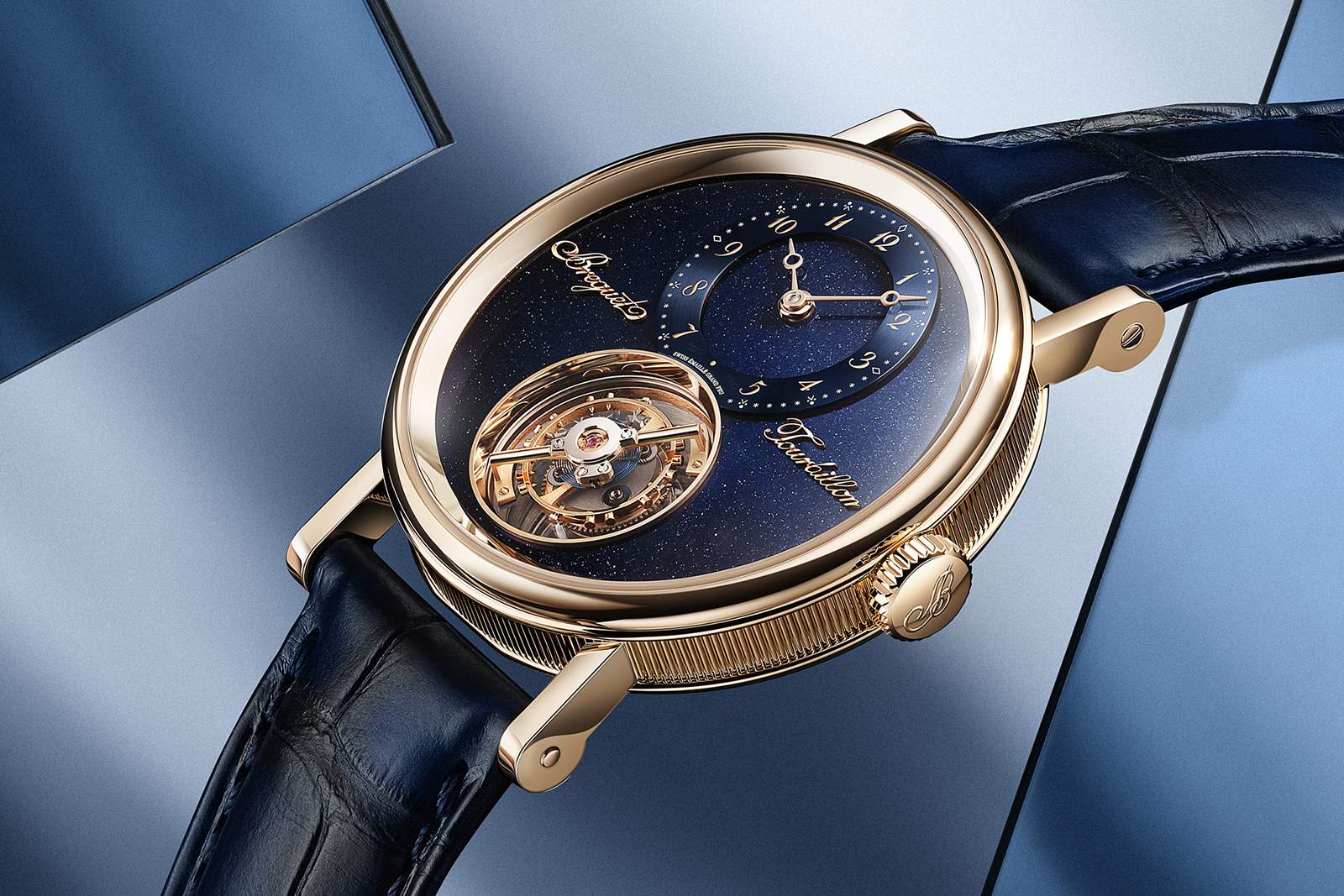
Breguet’s signature case in Breguet Gold paired with an aventurine enamel dial
The dial of the Classique Tourbillon Sidéral 7255 also marks a first for Breguet with the use of aventurine enamel, a technique previously introduced by its sister brand Omega. It’s not simply a sheet of aventurine glass placed under the hands. Instead, Breguet has treated aventurine as a true enamel, subjecting it to the grand feu process.
Unlike conventional aventurine dials, which are typically sliced from solid aventurine glass, Breguet begins with powdered aventurine glass, just as one would with traditional enamel. But this powder is not identical to standard enamel powder; the grains must be slightly larger to preserve the distinctive sparkle of the copper inclusions suspended in the glass. This powder is then applied in successive layers onto the dial blank, with each layer fired at over 800°C in a kiln. A minimum of five firings are required to achieve the desired depth and brilliance. Yet each stage of the process is fraught with risk as copper particles are especially volatile under such high temperatures. It is also crucial to control how the enamel spreads and settles during each firing. Breguet designed the dial with structural boundaries; the gold base has a raised rim and a gold tourbillon bezel. Together, they act as retaining walls, keeping the enamel confined within precise borders during the firing process.
The result is a dial that combines the luminous depth of enamel with the cosmic shimmer of aventurine glass. The hands, applied Breguet numerals, along with the script “Breguet” and “Tourbillon” appliques are all in Breguet Gold, as is the chapter ring itself which has been PVD coated in blue. Flanking the six o’clock marker are Breguet’s secret signatures, used historically by A.L.-Breguet as an anti-counterfeiting measure.
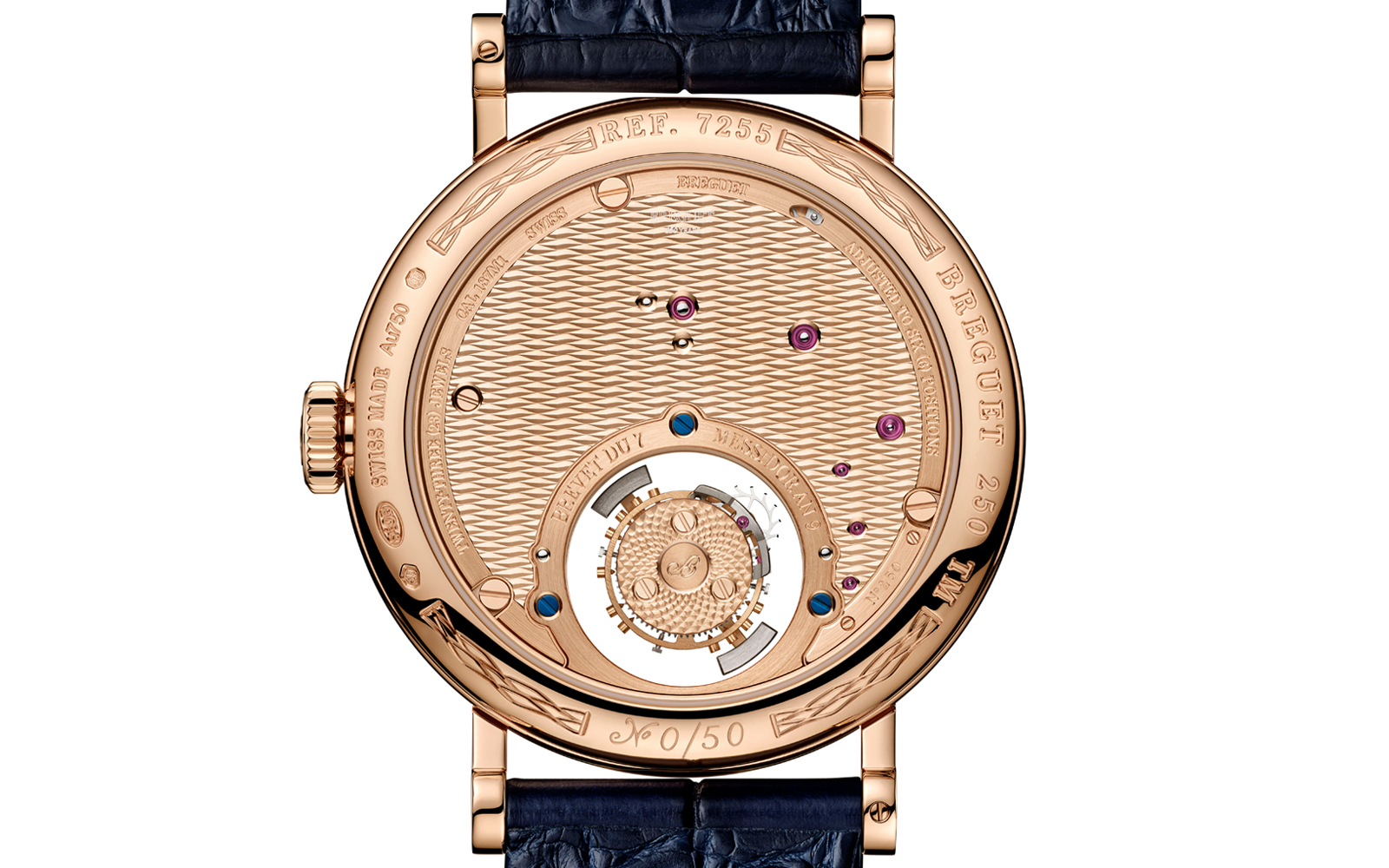
The movement within – the Calibre 187M1 – is an interesting one as all the components had to be cleverly displaced so that they don’t intrude into the visual void surrounding the tourbillon. The barrel and going train are relegated to the left of the movement opposite the crown. Intermediate winding wheels are in place to traverse the distance to the barrel ratchet, and the motion works are above the centreline, driven directly by the barrel. The basic principle of mystery watches is well known by now – parts are supported by transparent sapphire discs which are driven by gear teeth on their metal rims. But it is nonetheless interesting, especially in how it differs from the Messidor 5335.
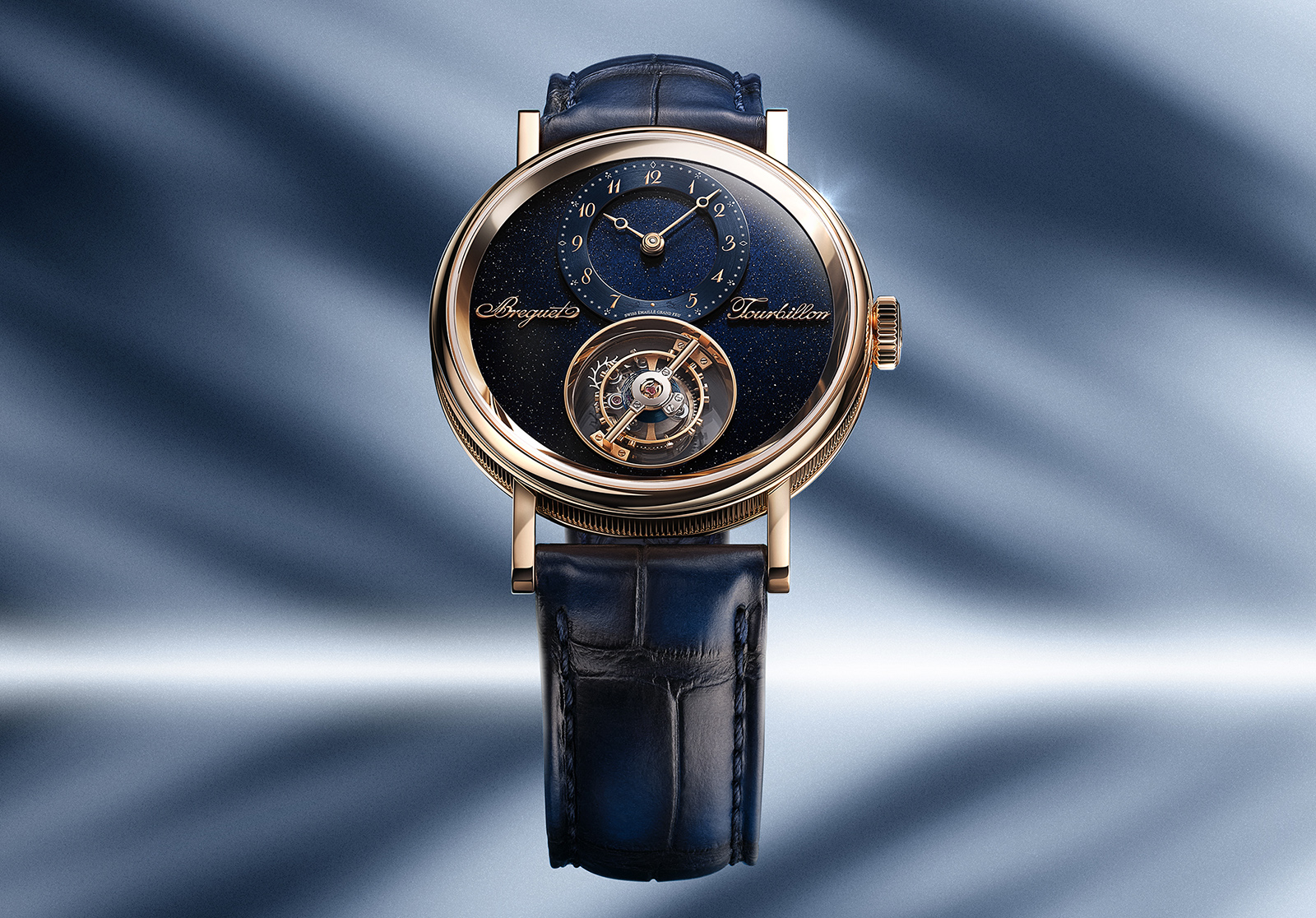
Breguet Classique Tourbillon Sidéral 7255
At a glance, mysterious tourbillons might appear as though they are flying tourbillons as there is no prominent upper bridge supporting the cage from the base plate. The absence of visible support creates the illusion that the cage is freely suspended in space, rotating without any mechanical attachment. In reality, as with the Messidor 5335, the tourbillon is supported from both sides; both the upper and lower pivots of the tourbillon cage are mounted in jewels, which are themselves set into transparent sapphire discs. In the Classique Tourbillon Sidéral 7255, however, there is no upper sapphire bridge.
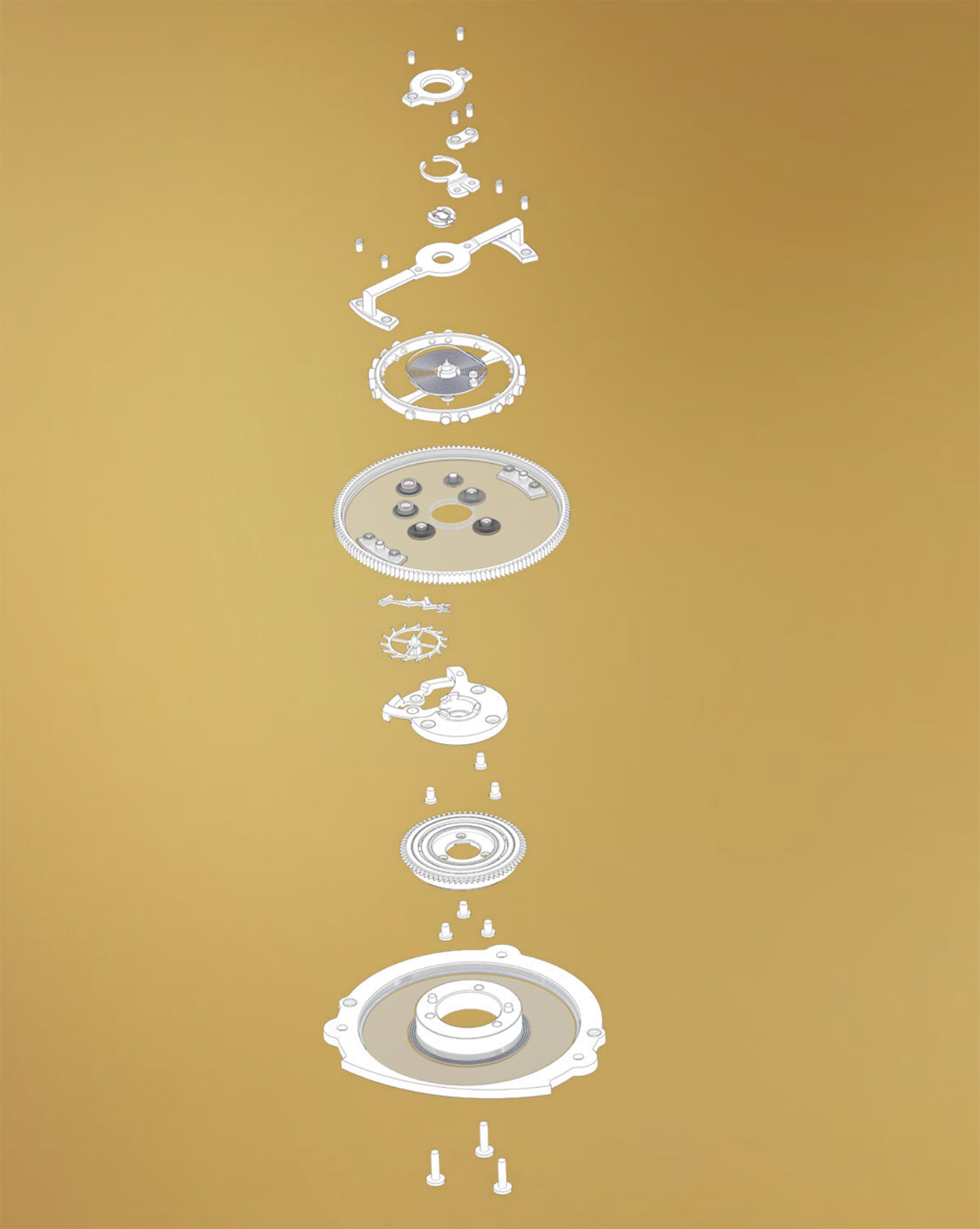
The tourbillon construction in the Classique Tourbillon Sidéral 7255
The large ring with an inset sapphire disc forms the base mounting structure that secures the tourbillon assembly to the rest of the movement. It has a cup-shaped part that holds the fixed wheel, around which the escape pinion rotates. The bearings of the escapement and its bridge are mounted on a second sapphire disc, which serves as the rotating base of the cage itself. The balance wheel is supported by a bridge as part of the upper structure of the cage. The sapphire cage has a toothed metal rim for meshing with a driving wheel hidden by the dial.
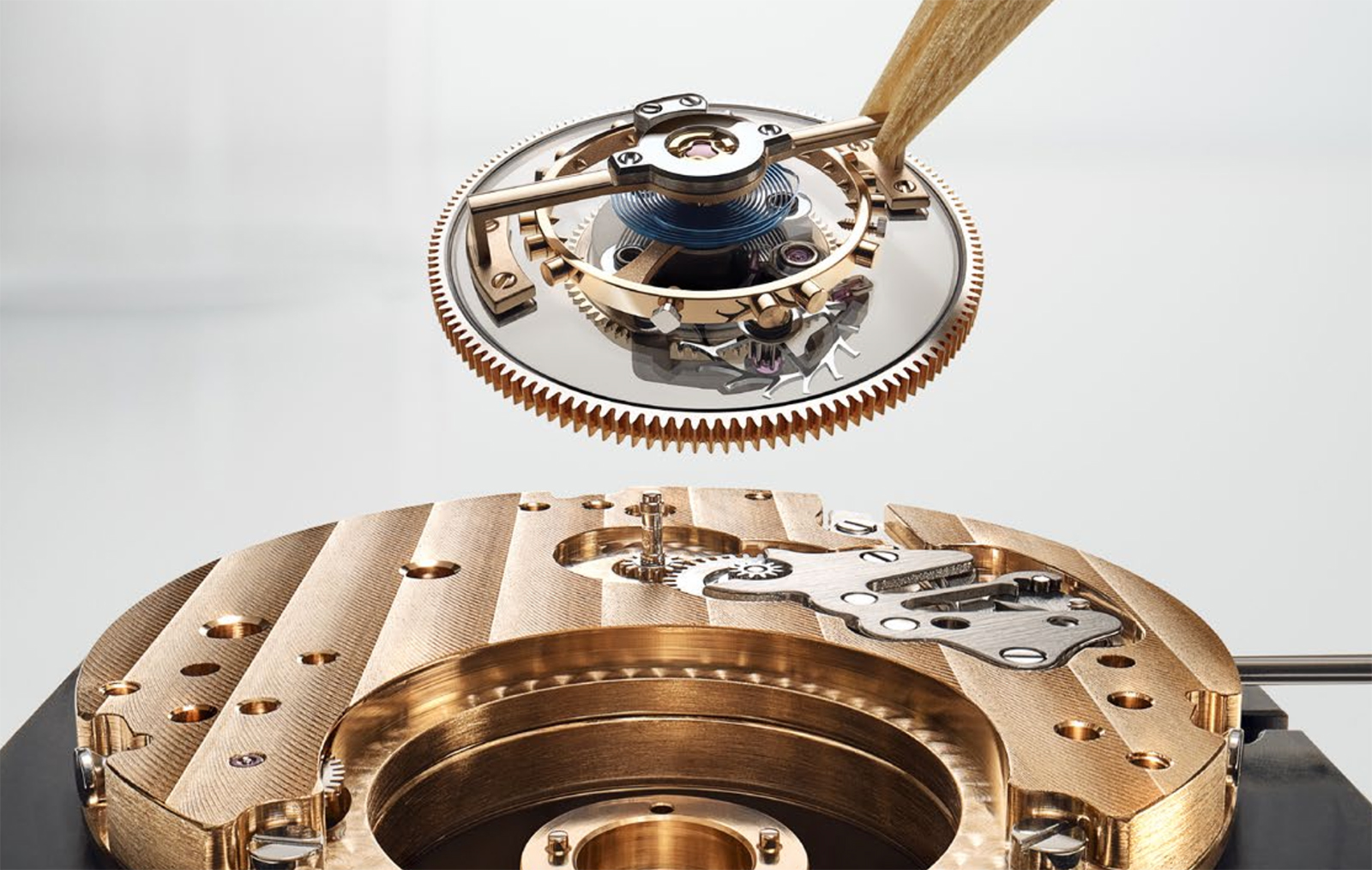
The finishing gear on the left side of the base plate drives the sapphire cage with a toothed metal rim
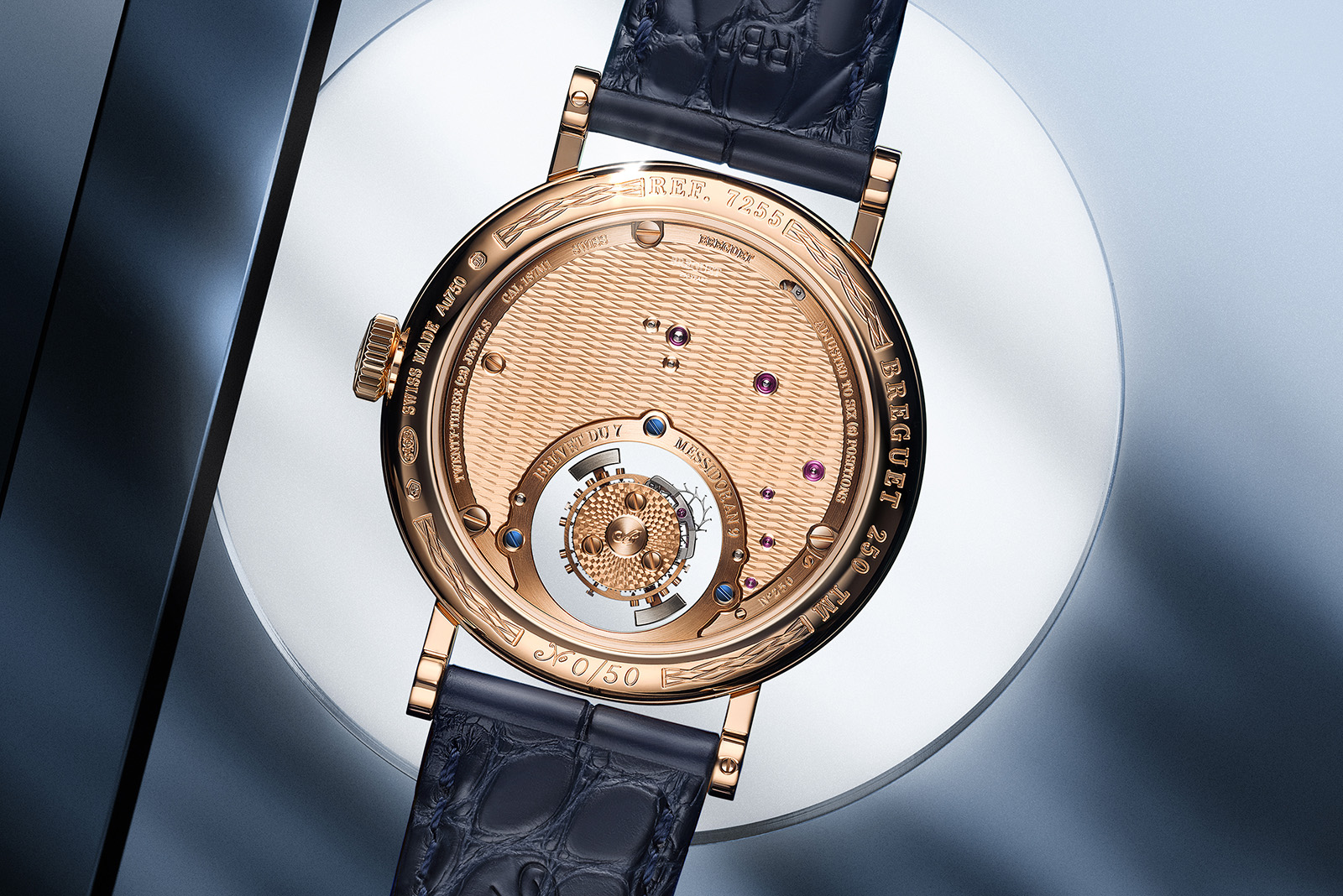
The top plate is engraved with the new Quai de l’Horloge guilloché motif
The rest of the movement is entirely concealed beneath a plate made of Breguet Gold which has been engine-turned with the new Quai de l’Horloge guilloché. This is a watch that begs to be seen in person, both for its aventurine enamel dial and its mysterious tourbillon. It is a limited edition of 50 pieces and price at launch is CHF 190,000.
Tech Specs
Reference: 7255BH/2Y/9VU
Movement: Calibre 187M1; manual winding; 50-hour power reserve; 2.5 Hz (18,000 vibrations per hour)
Functions: Hour and minutes; seconds via one-minute tourbillon cage
Case: 38 mm x 10.2 mm; 18k Breguet Gold; water resistant to 30 m
Dial: Grand feu aventurine enamel with Breguet Gold chapter ring (satin-brushed, blue PVD), numerals, hands and appliques
Strap: Navy blue alligator leather with 18k Breguet Gold 3-blade folding clasp
Limited edition: 50 pieces
Price: CHF 190,000
Breguet

You may also like

News
Breguet Unveils the Classique 7225 with a Magnetic-Pivot 10 Hz Balance and the Phase de Lune 7235
Oct 24, 2025
News
Breguet Unveils the Classique 7225 with a Magnetic-Pivot 10 Hz Balance and the Phase de Lune 7235
Oct 24, 2025

News
Breguet Marks 250 Years with the Marine Hora Mundi 5555
Sep 12, 2025
News
Breguet Marks 250 Years with the Marine Hora Mundi 5555
Sep 12, 2025

News
Breguet Marks 250 Years With New Boutique At ION Orchard, Singapore
Aug 20, 2025
News
Breguet Marks 250 Years With New Boutique At ION Orchard, Singapore
Aug 20, 2025