

A Closer Look: The IWC Ingenieur Inspired By Brad Pitt
Reviews
A Closer Look: The IWC Ingenieur Inspired By Brad Pitt

Most of the time, we think of watch design as a linear process — from blueprint to prototype to final product. But this green-dialled Ingenieur proves it’s not always that simple. Because, in a way, this watch was designed by Brad Pitt.
It started when Pitt reached out to IWC about customizing a prop for his character, Sonny Hayes, in the film F1. Sonny, a laid-back guy with an old soul, naturally called for something with a vintage feel. But Brad, being a watch enthusiast, wasn’t content with a typical period piece (more on that below). He wanted something unique. So he asked, and IWC said yes.
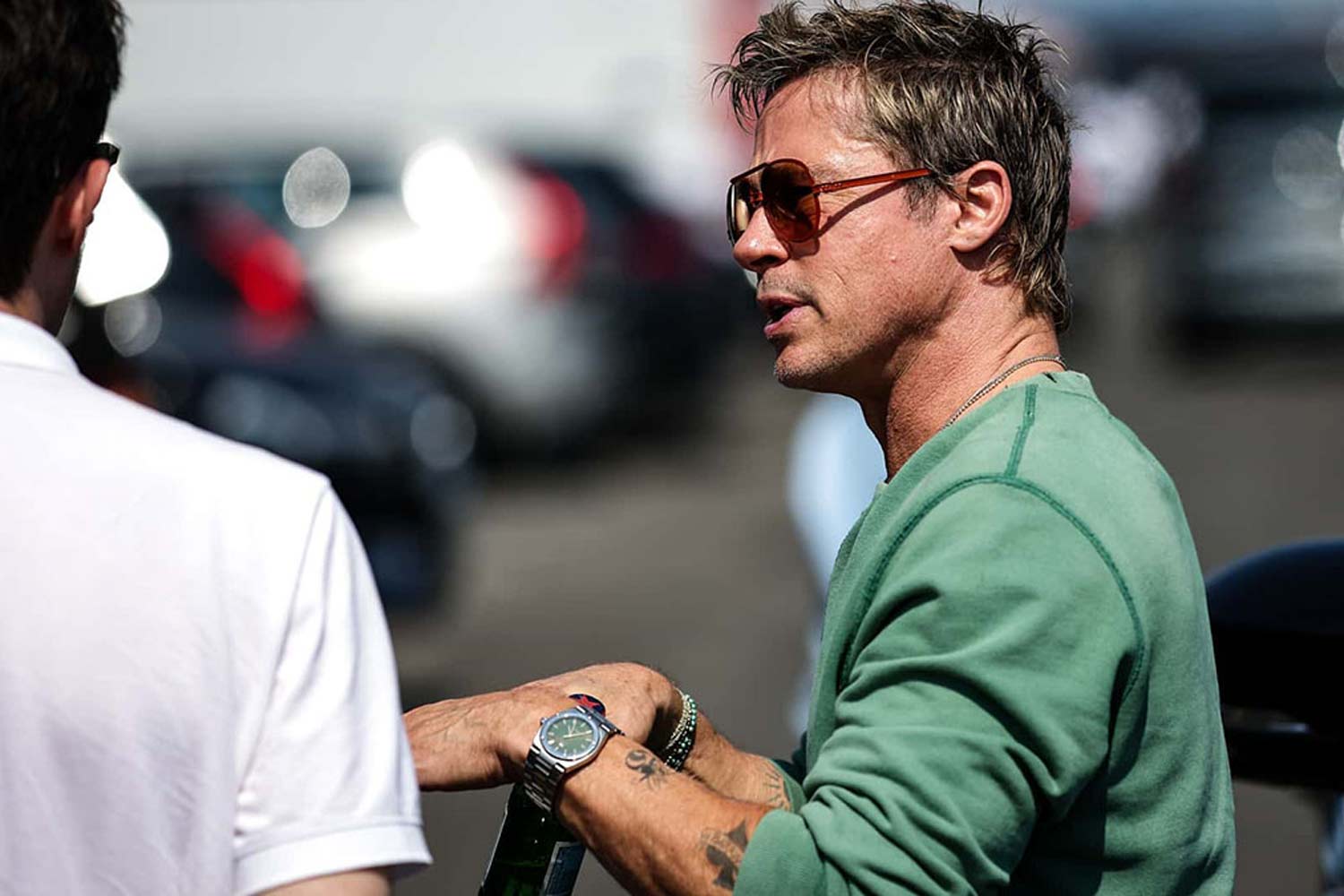
Brad Pitt wearing the custom-made Ingenieur SL that inspired the green Ingenieur Automatic 40. (Image: Getty Images)
The result was a one-off creation, made just for the film. That could’ve been the end of it. But the idea caught on and inspired the brand to release a limited edition of 1,000 pieces with the prop’s standout detail: a soft, mossy green dial, making a watch that might be the best modern Ingenieur yet.
A watch to lead on the silver screen
The appeal of the Ingenieur is immediate when handled in the metal. The case design is old-school, complete with notches on the bezel. The dial stays faithful to the 1976 original, though the signature basketweave pattern has been enlarged. And while the standard colours — black, blue, and white — are as classic as those on a Royal Oak or Nautilus, they somehow do not quite bring out the best in the design. Until now.
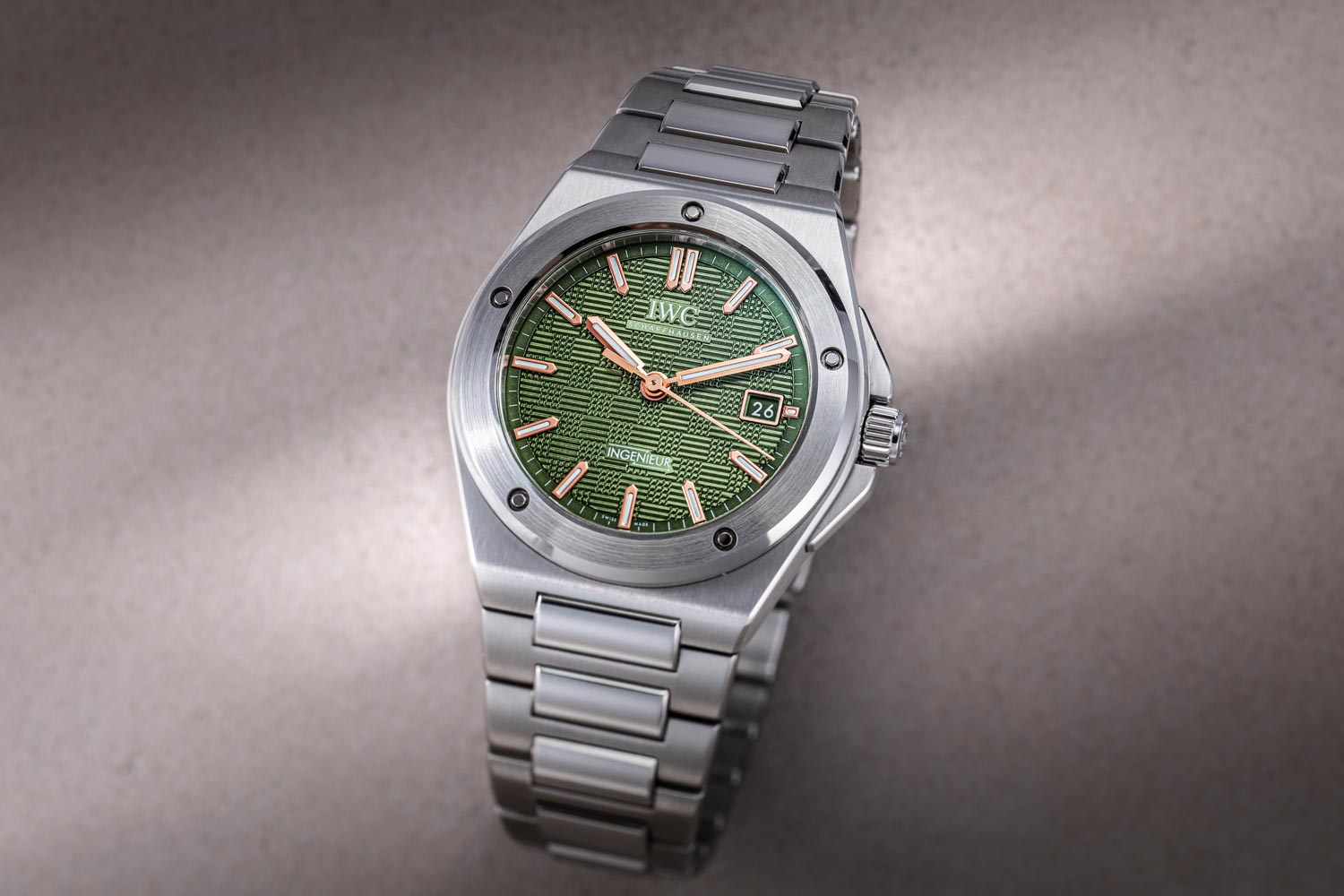
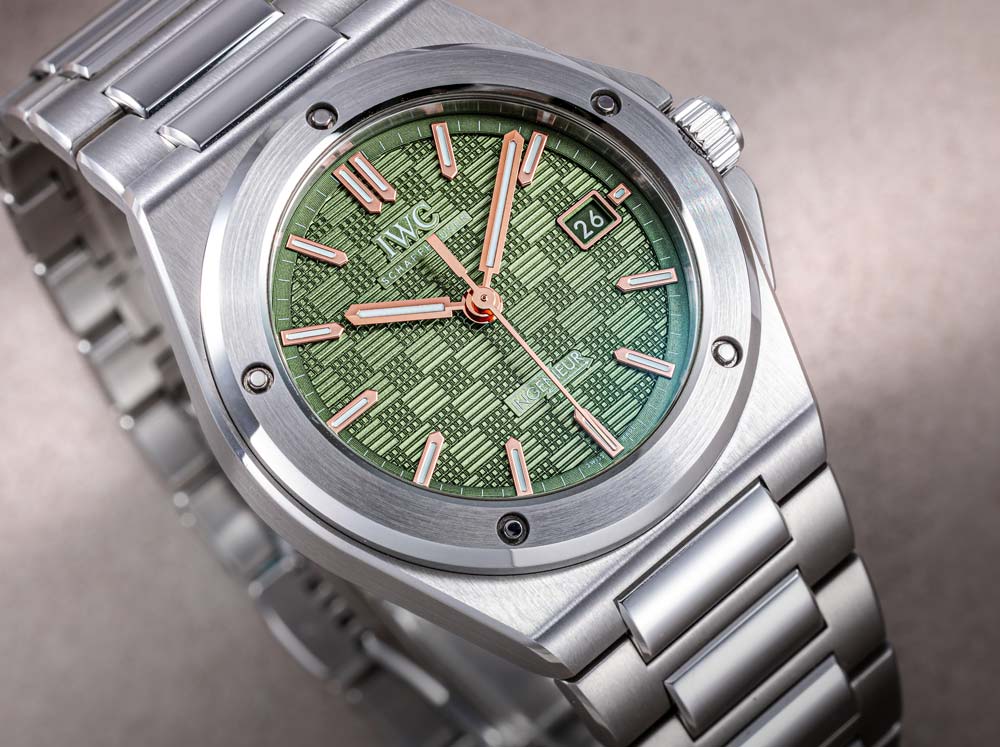
The IWC Ingenieur Automatic 40 inspired by Brad Pitt (Image: Revolution ©)
Surprisingly, the ideal colour did not come from IWC at all. It came from someone outside the brand entirely. The olive green seen in the new Ingenieur has made the watch significantly more striking, especially for those who have seen the film and connected with the story behind it.
In F1: The Movie, Brad Pitt plays Sonny Hayes, a retired racer making a comeback to save an old friend’s failing team. Ahead of filming, Pitt approached IWC to create a watch for the role. But it was not a new model he had in mind. Instead, he handed over a vintage Ingenieur SL ref. 1832 and requested a resto-mod. The term still pops up now and then in classic car culture, but in watch collecting, it’s a no-no.
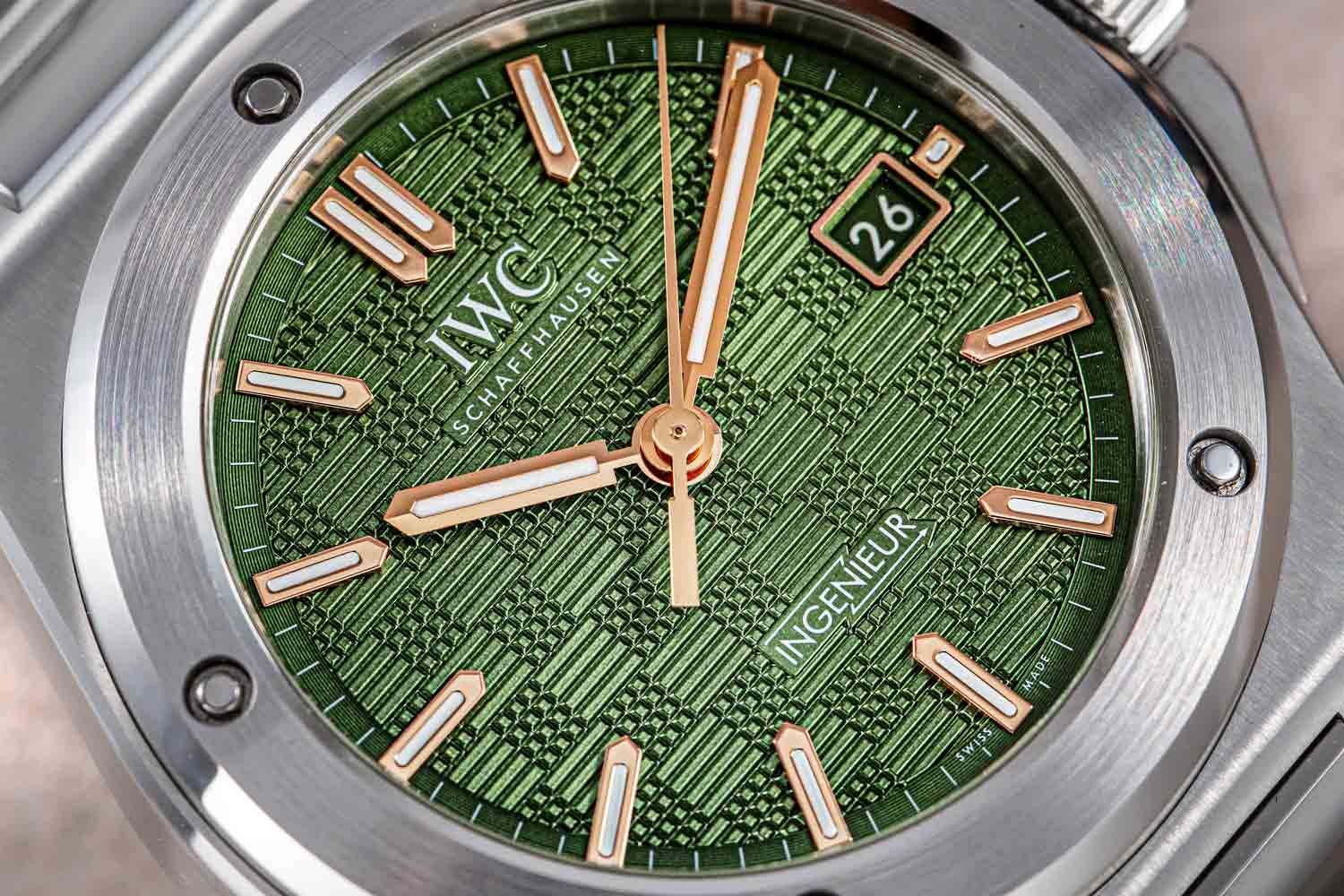
Green, gold and steel. Perfect for a luxury sports watch. (Image: Revolution ©)
Pitt wanted the watch to be slimmer than the original and fitted with a new dial in olive green. Normally, a request like this — especially involving a historically important reference — would be met with a firm refusal. But IWC saw it differently. They recognised that F1 was not just any film, and that the watch could play a meaningful role in it.
Did Brad Pitt help IWC finally get the Ingenieur right?
But deep down, we know that remaking the vintage ref. 1832 wasn’t just about creating a movie prop. It was IWC’s act of redemption, an attempt to fix a “flaw” in the original design.

Sonny Hayes on his way to work in a vintage Mercedes-Benz G500 Cabriolet, wearing the Ingenieur SL ref. 1832 remade by IWC with a slimmer case and a green dial made by Cloister Watch Company. (Image: Apple Original Films)
That “flaw” was thickness. The original ref. 1832 measured 12.5 millimetres tall, which is thick even by today’s standards, and certainly more so in the 1970s. At the time, quartz watches were making cases slimmer, and even mechanical rivals like the Nautilus ref. 3700 came in at 7.5 millimetres, while the Royal Oak ref. 5402 was just 7.15 millimetres tall. In that era, an ultra-thin case paired with a wide flat profile was what made an integrated-bracelet sports watch feel truly modern.
And although the Ingenieur SL ref. 1832 was designed by Gérald Genta and had all the right elements, it was simply too thick. So why was it built that way?
To be fair, that so-called flaw had a purpose in its historical context. The Ingenieur SL was never made for stylish jet-setters. It was built for scientists and engineers. Unlike Patek Philippe and Audemars Piguet, who used the ultra-thin Jaeger-LeCoultre cal. 920, IWC opted for its own in-house antimagnetic movement, the cal. 8541ES. That movement needed a soft iron inner cage to protect against magnetism, which added bulk. It also featured the brand’s Pellaton automatic winding system, which further increased the height of the case.
But Pitt is an avid fan of vintage sports watches. He has been spotted wearing the Vacheron Constantin ref. 222 and the Patek Philippe Nautilus ref. 3700 — both known for being extra-thin. So it’s no surprise that Pitt would want a thinner watch. Hence his audacious request for IWC to remake the vintage Ingenieur SL in a slimmer form.
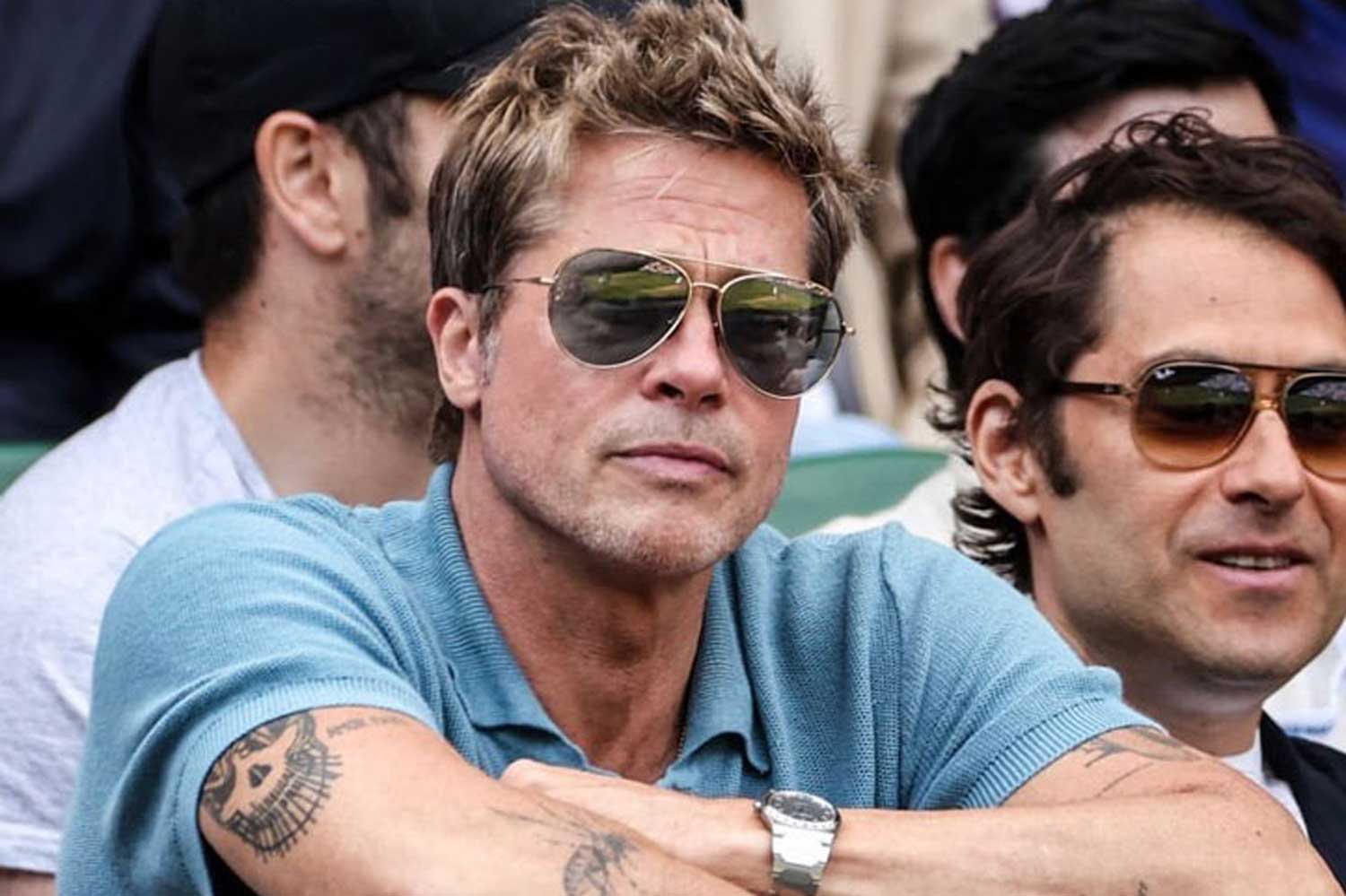
Brad Pitt seen wearing a stainless steel Vacheron Constantin 222 at the 2023 Wimbledon Finals. (Image: Getty Images)
To make the watch thinner, IWC had to develop an entirely new case for the ref. 1832. The watchmaker decided to remove the soft iron inner cage that had previously served as a Faraday shield.
As for the dial, Brad already had someone in mind to make it, a specialist workshop in New York. It might sound unbelievable, commissioning the case from IWC and the dial from a third party, but somehow he brought it all together. And that is how we ended up with the olive green Ingenieur, worn faithfully by Sonny throughout the film.
In fact, Sonny wore the watch religiously, even to sleep. It is a thrill for watch fans to catch glimpses of it while being taken on an emotional roller coaster throughout the film. However, he takes the watch off before going on track and places it carefully in front of a photo he cherishes.
There are no spoilers in this review, but one funny jab is worth mentioning. After winning the Daytona 500 (and no, this is not a key moment since the film is about Formula 1), Sonny storms off the scene. Someone tries to hand him a box containing the winning watch, which we all know would be a Rolex Daytona. Without even looking back, he says he already has a watch. There’s no argument that the Daytona still sits comfortably on the throne of sports chronographs. But the moment lands well, much like that scene in Casino Royale when Vesper Lynd sees Bond’s watch on the train and asks if it is a Rolex, to which Bond coldly replies, “Omega”.
A different green for the limited edition
Fans with a sharp eye will probably notice that the watch worn in the film has a slightly darker shade of green than the limited edition produced for the public. That does not take away from the fact that the retail version is still beautiful. And the reason why is actually quite simple.
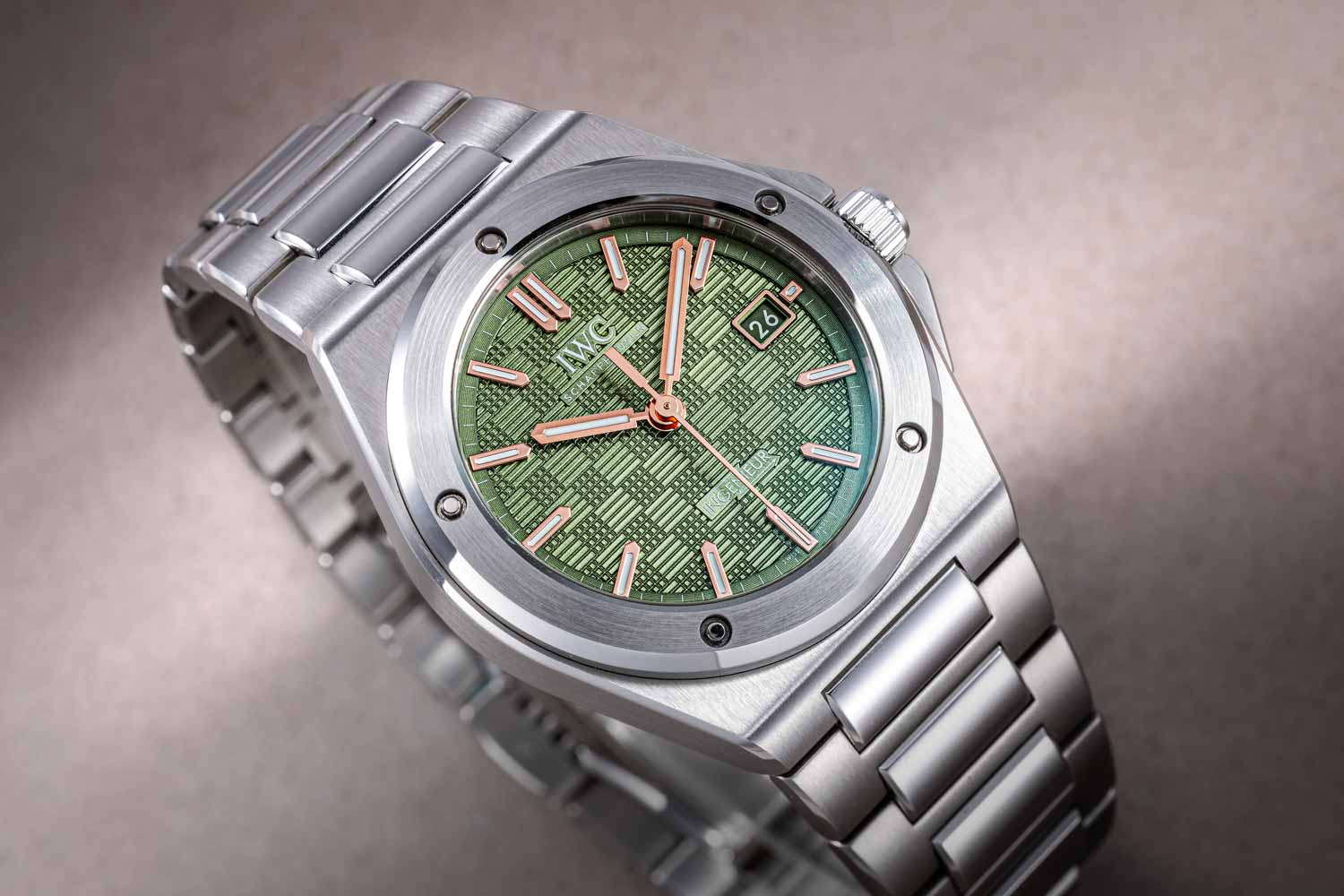
Stunning and nearly perfect. (Image: Revolution ©)
First, the green is done really well. I know it has become a cliché to say that a good dial changes colour under different lighting conditions, but that alone does not guarantee quality. In this case, the shade of olive green is beautiful, understated, and elegant to begin with. It shifts from a cheerful, minty green in bright light to a deep, dark tone that closely resembles the one worn in the film. Now that is a range of colour worth appreciating.
Second, the dial gets gold-toned applied markers and hands, and that makes all the difference. I’ve always found the finishing on the standard Ingenieur a little lukewarm. Technically flawless, yes, but they just don’t catch the eye. This change in colour completely transforms their presence. Gold and green are a natural pair, but what matters here is how well it’s been done. The tones are balanced carefully so the watch never feels overly warm or too rich. Instead, it stays fresh and youthful, with just enough luxury to remind you this is a serious sports watch, done right.
A solid case and bracelet
Apart from the new dial, the rest of the watch is identical to the regular production model. The Ingenieur is available in 35mm, 40mm, and 42mm, and in terms of proportion, the 40mm version feels the most balanced. It also helps to know that the original from 1976 measured 40 millimetres across, which may not seem large today but was considered oversized or “jumbo” at the time.
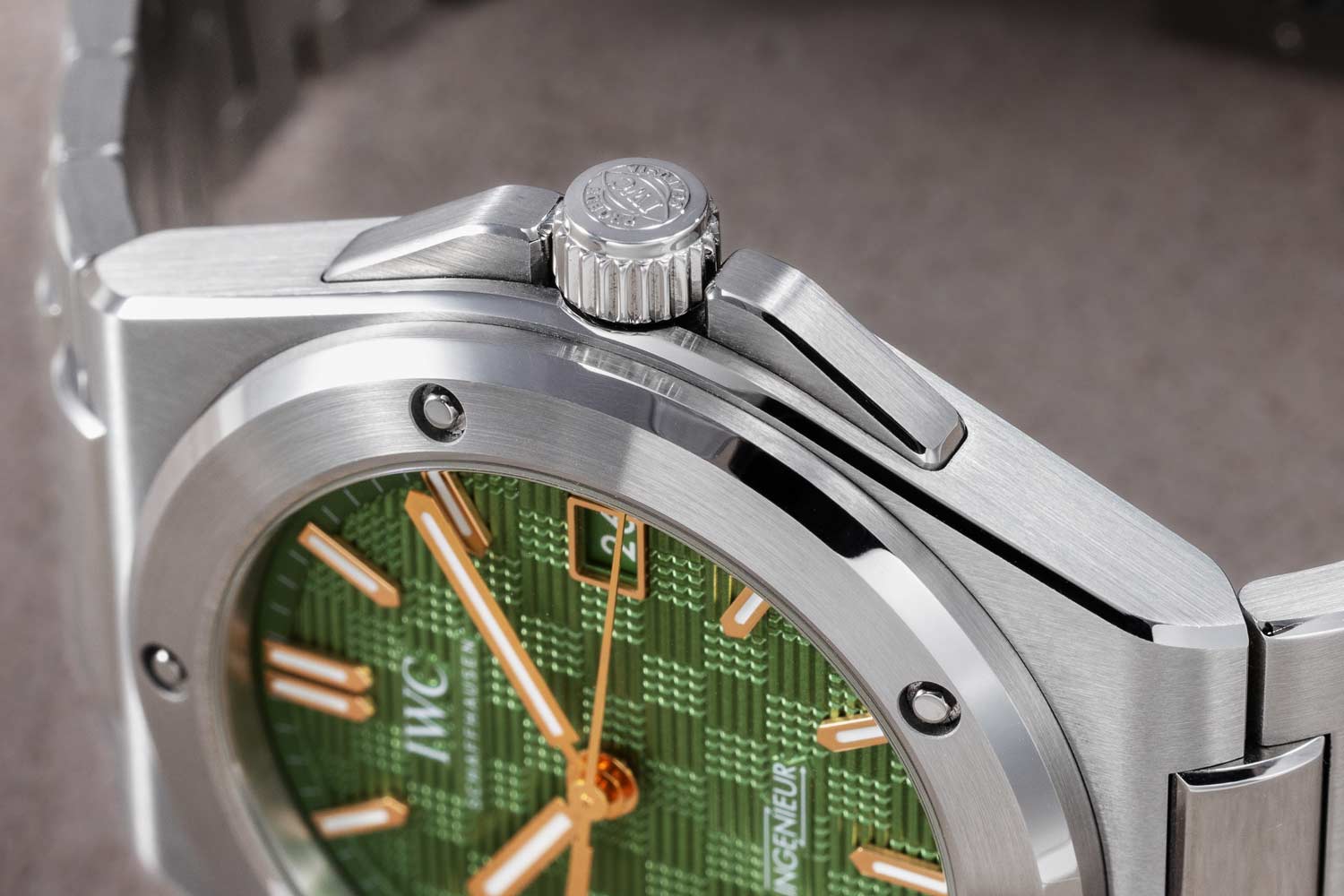
Polished bevels everywhere, just the kind of detail you expect from a well-made luxury sports watch. (Image: Revolution ©)
The watch feels solid in the hand, though it wears slightly thicker than the numbers might suggest. That is not necessarily a good or bad thing. There is no denying that it is still relatively slim at just 10.7mm, especially at this price point. It is not quite the thinness you might expect from a Royal Oak or Nautilus, but close enough. The reason it feels thicker is the flat case back, which leaves the case middle visually and physically chunkier. Many watches with curved or domed backs can appear thinner from the side, even if their actual thickness is greater. The upside here is a weightier, more substantial feel on the wrist.
As for the case finishing, it is exactly what you would expect from IWC. The surfaces are clean with no distortion, which suggests the case is most likely machined rather than stamped. Along the lugs is a polished bevel, a detail the brand consistently executes with care.
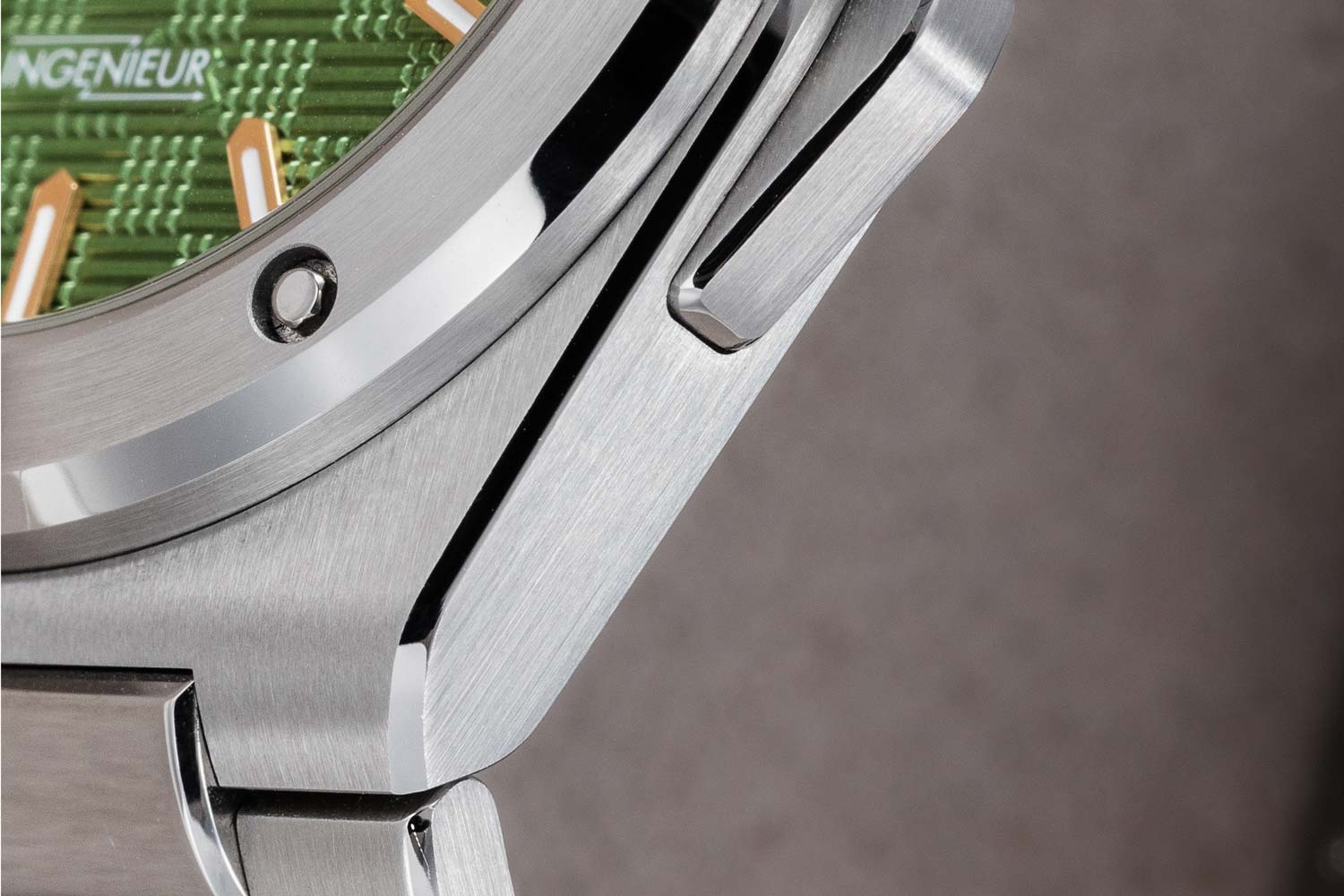
The brushing is satisfying because the surface looks flat and free of distortion. (Image: Revolution ©)
Because of its simpler case design compared to the Royal Oak, the Ingenieur has fewer angular or faceted surfaces to show off advanced finishing techniques. But IWC still managed to add depth and detail. For example, the crown guards, which were not present on the original ref. 1832, have been newly added, and the polished bevels on them are done with care. These bevels continue wherever possible, including along the flanks of the bezel and down the lugs, adding refinement to the overall design.
But if I had to nitpick, I’m not a fan of the hex screws on the bezel. The gap between the screw and the slot looks fine up close, but feels a bit off on the wrist. It’s also worth noting that this is a new detail. The vintage ref. 1832 had a concave, slightly recessed slot instead of a visible screw and slot combination.
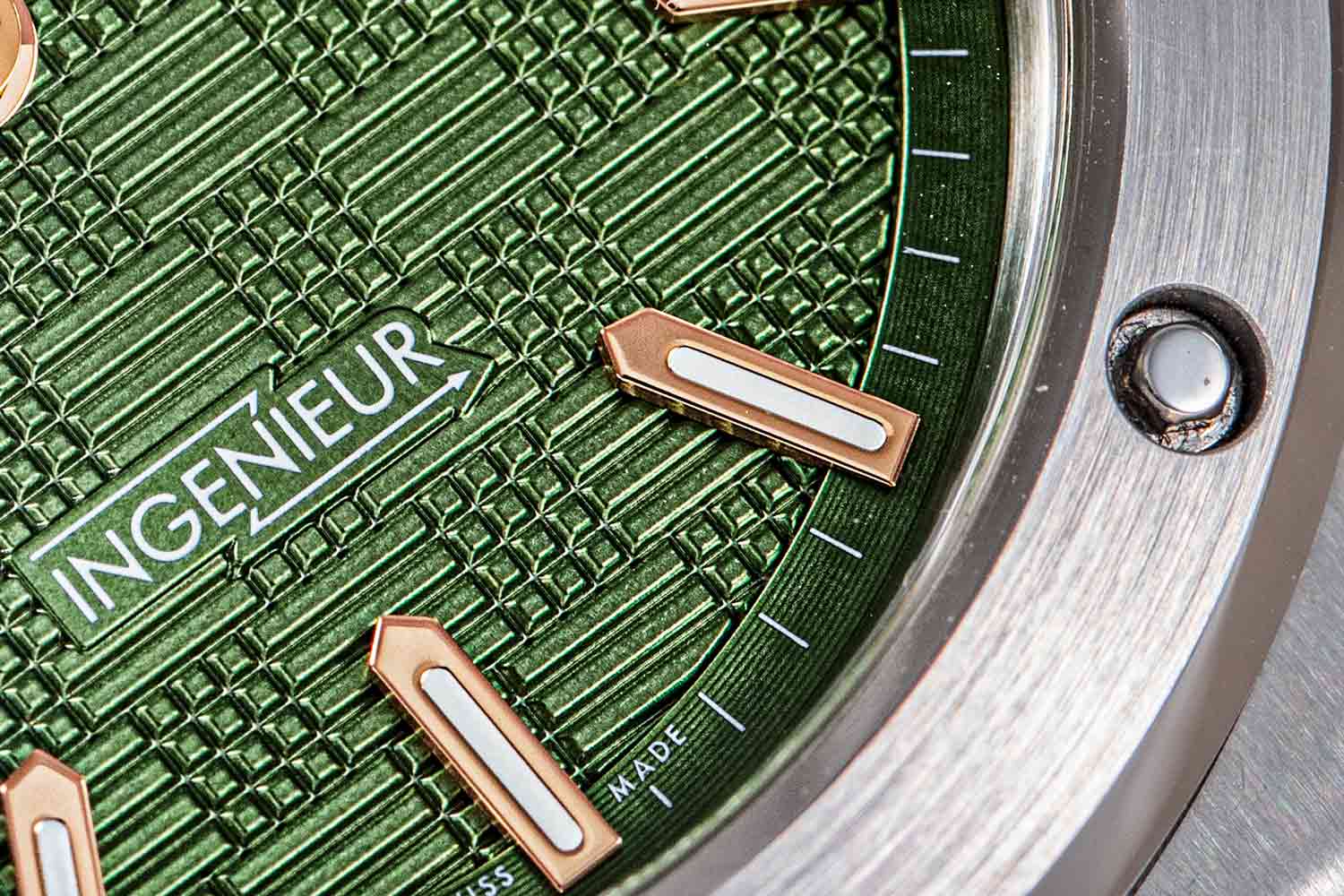
The hex-head screws are functional as they secure the bezel directly to the case. (Image: Revolution ©)
The same sense of solidity applies to the bracelet, which I would argue is finished even better than the case. It has a reassuring weight and a strong sense of precision. The links are thick and well constructed. Even the centre links are not flat; they have a subtle dome that adds to the overall heft. Each side of the centre link also features a bevel, giving the edges a sharp, defined look and keeping the domed profile from appearing too soft. The polished bevels continue along the outer edges of the bracelet, tying the whole design together with a cohesive finish.
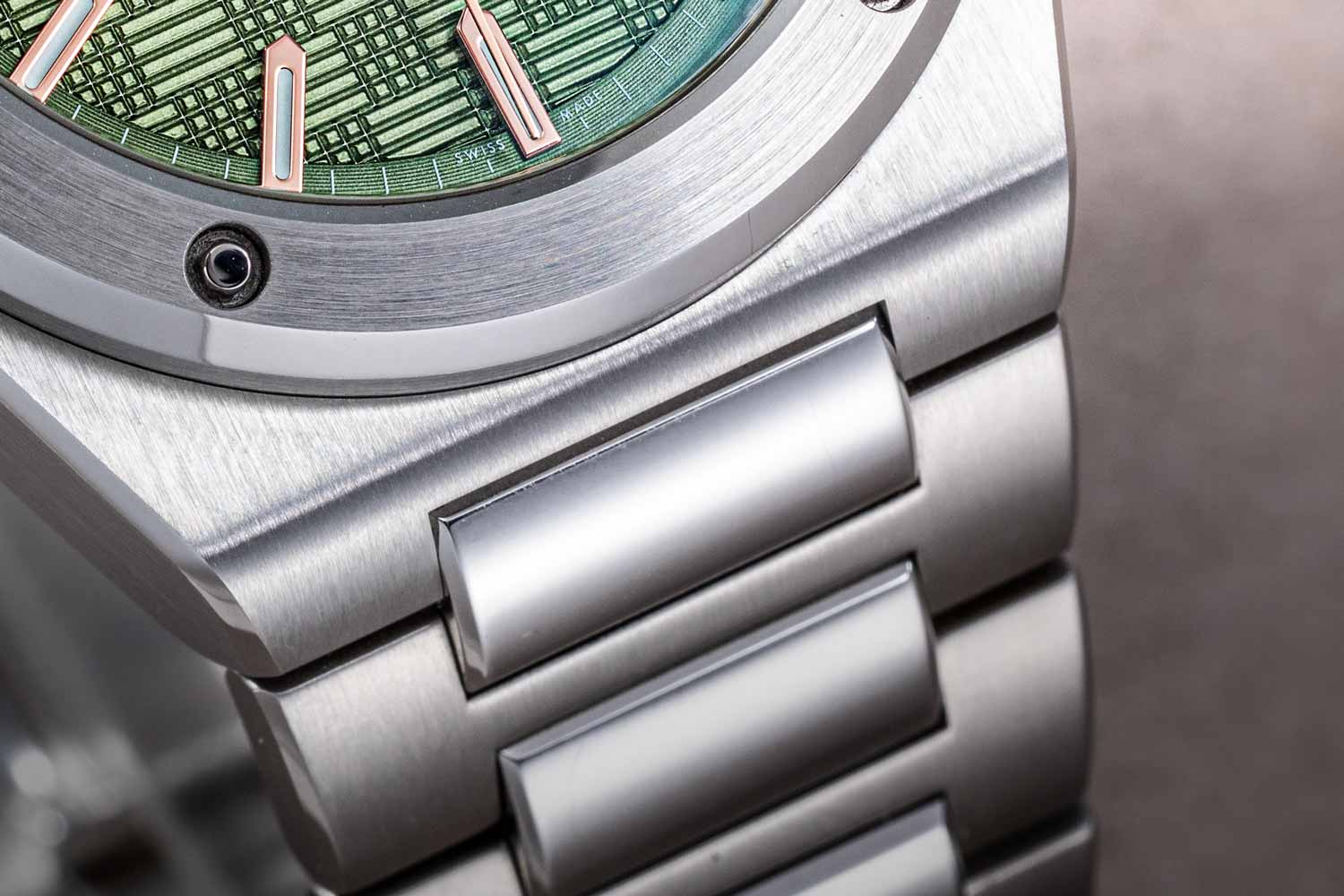
The brushing flows from the case to the bracelet. (Image: Revolution ©)
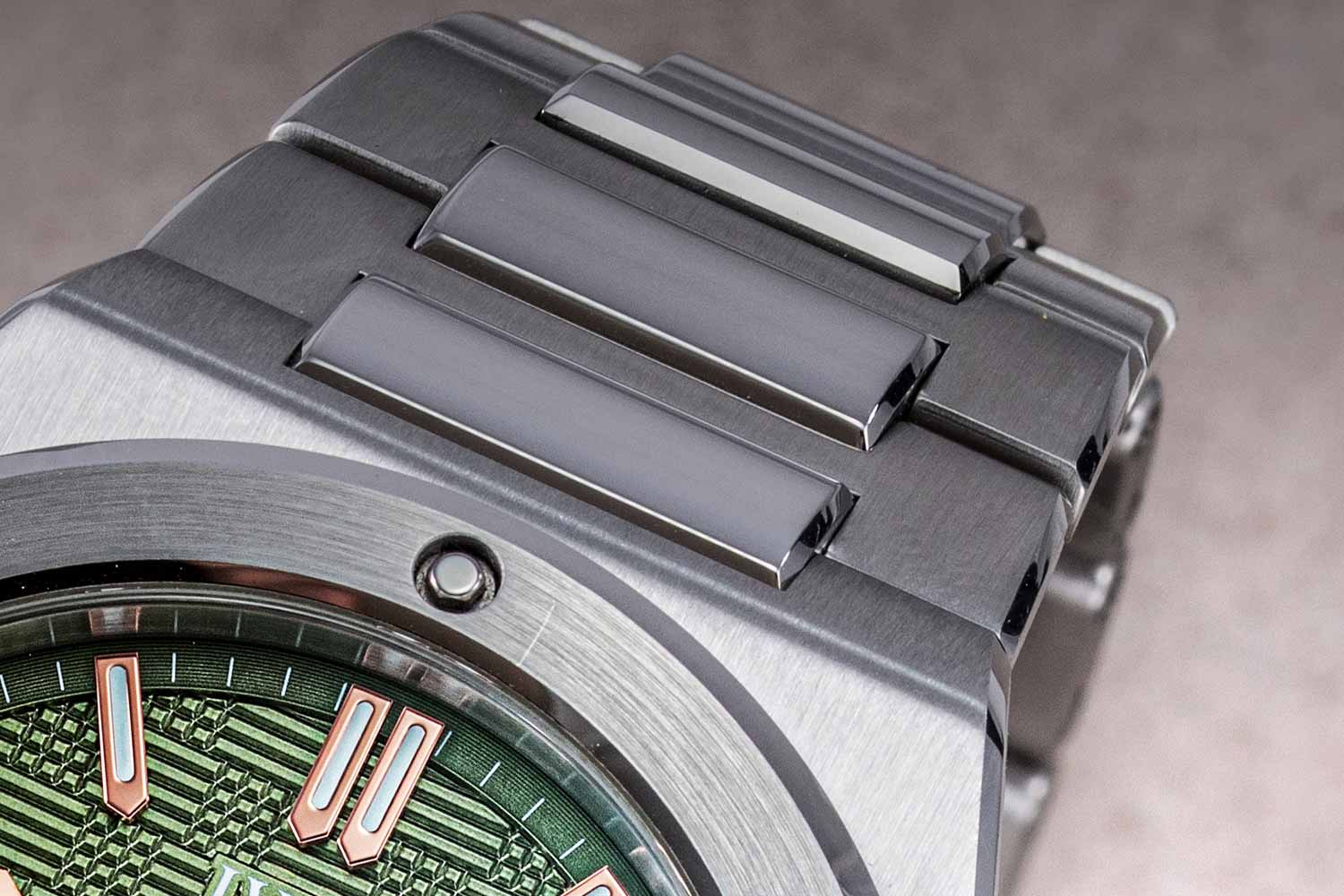
The angular nature of the centre link becomes clear up close. (Image: Revolution ©)
Finally ultra-thin
Behind the closed case back is the cal. 32111, IWC’s latest generation automatic movement, also found in the time-and-date Pilot’s Watch Mark XX. It is produced by ValFleurier, a movement maker owned by Richemont, which means the same calibre is also used by IWC’s sister brands within the group. he escape wheel and pallet fork are made of silicon, which is inherently anti-magnetic, and their lightness contributes to the movement’s five-day power reserve.
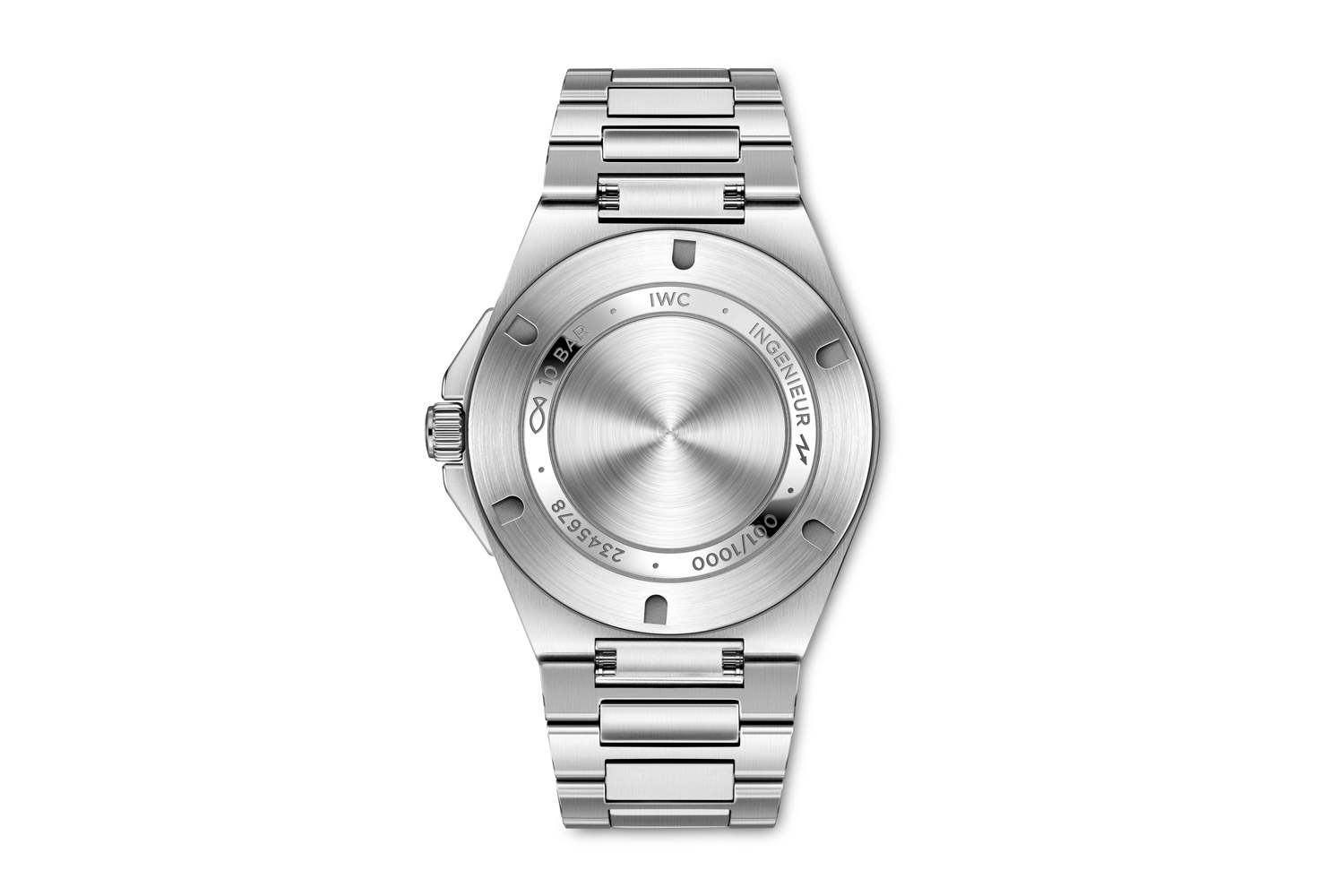
There’s nothing much to see on the back… but it’s solid. (Image: IWC)
While the lengthy power reserve is genuinely useful, the cal. 32111 remains an entry-level movement. By comparison, IWC’s more sophisticated workhorse calibres are found in its higher-end models, such as the cal. 82200 in the Portugieser Automatic 40 and the cal. 82110 in the all-ceramic Ingenieur 42. That said, the cal. 32111 is slimmer, more compact, and offers twice the power reserve of the 82000 series.
Its slimness matters. The original Ingenieur SL ref. 1832 measured 12.5 millimetres thick, but this latest model is only 10.7 millimetres tall. That is a real improvement, because an integrated bracelet sports watch needs to be thin in order to wear well. So how did IWC achieve that? Partly by using a thinner movement, and partly through smart case design.
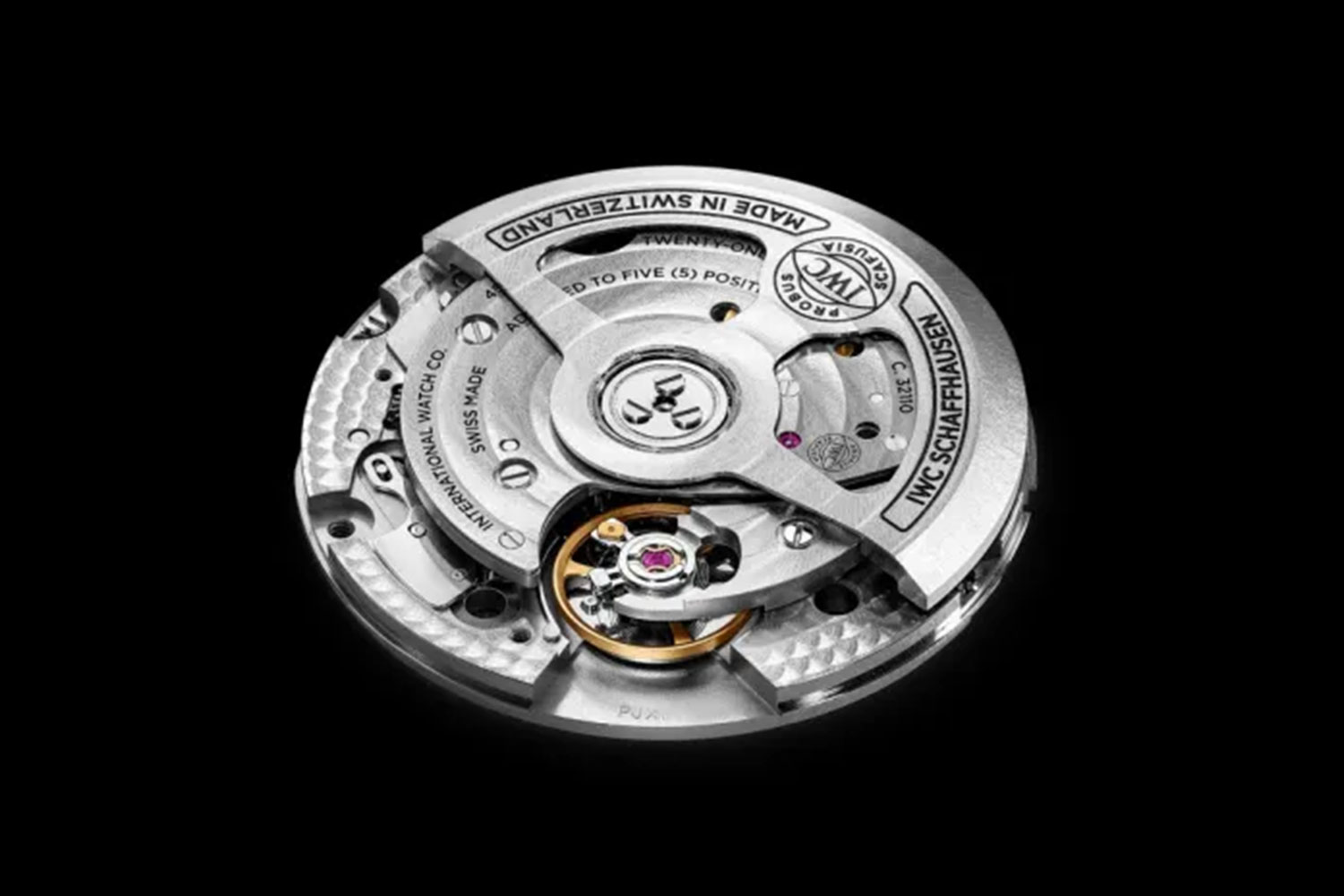
The cal. 32111. (Image: IWC)
Since this is an Ingenieur, IWC stayed true to the idea of including a soft iron inner cage. That magnetic shield has been a defining feature of the model since 1955, long before Gérald Genta redesigned it in 1976. This time, however, it is done in a clever way. The dial itself is made from soft iron, so it forms the upper part of the Faraday cage instead of relying on a separate piece. That helps reduce thickness. As a result, the Ingenieur 40 is significantly slimmer than the vintage original, yet still retains its magnetic protection.
Still, some fans might wonder whether a soft iron cage is really necessary today. With silicon hairsprings offering high magnetic resistance without added bulk, one could argue that the traditional cage is outdated. But not every brand is on board with silicon hairsprings. Even though the cal. 32111 uses a silicon pallet fork and escape wheel, the movement as a whole is not fully anti-magnetic. So IWC sees the soft iron cage as essential. It is not just a nod to tradition. For the Ingenieur, it is part of what makes the watch what it is.
Concluding thoughts
Even though F1 is centred on racing, the film is exhilarating because, at its heart, it is about people. It is about finding the strength to rise again after every setback, especially when doing so as a team. It reminds us that behind everything we take for granted, there is a group of people working hard to make it happen.
The same is true in watchmaking. It takes a capable and committed team to bring a good design to life, one that is not only pleasing to the eye but also practical in all conditions. From the case to the dial, from the movement to the bracelet, every component requires precision, care, and teamwork before the final watch reaches the store, ready for someone to try on and perhaps bring home.
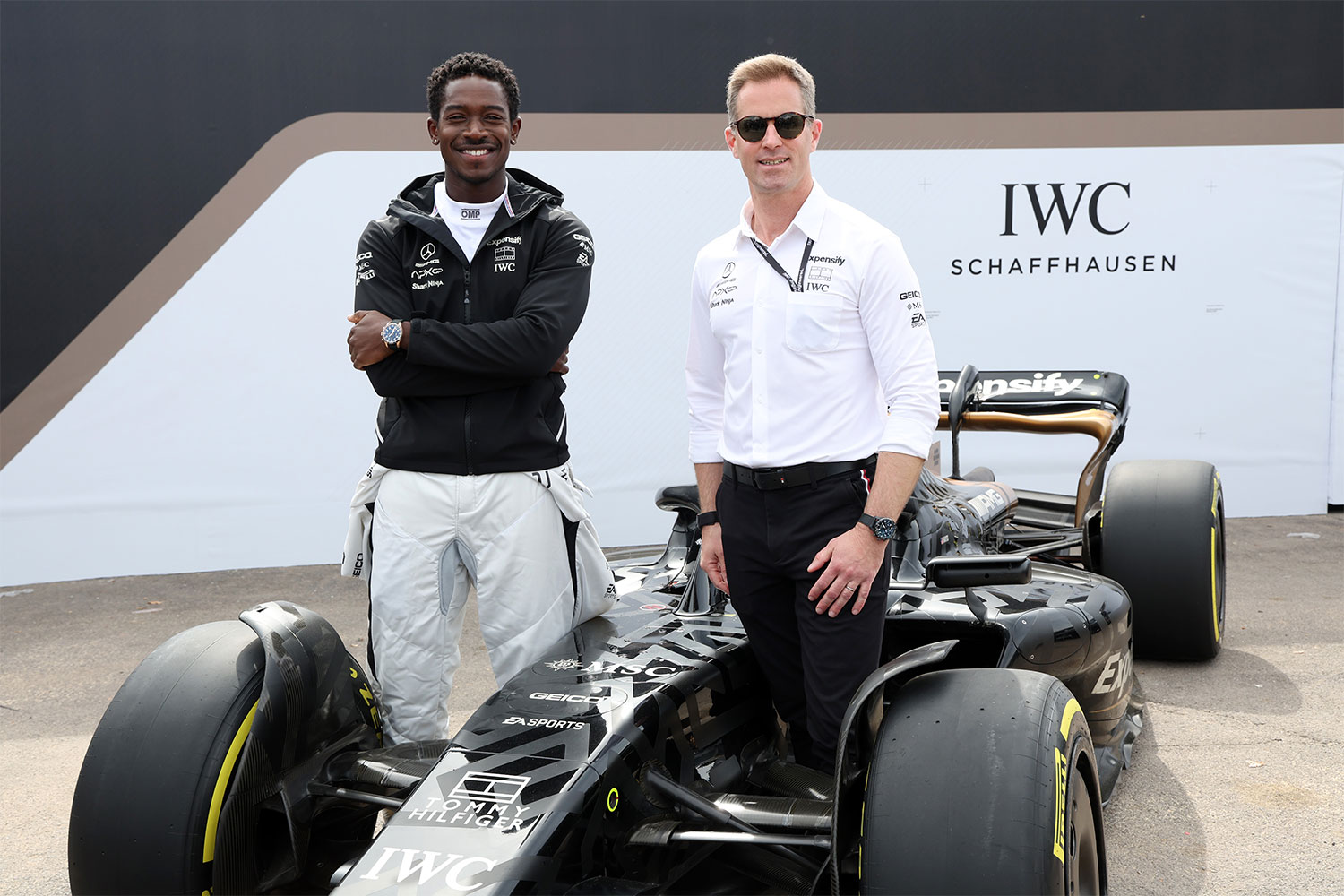
Damson Idris, who plays the younger teammate of Brad Pitt’s character in the movie F1, with IWC CEO Chris Grainger-Herr (Image: IWC)
There are plenty of emotional moments in F1, and it is hard not to feel something for Sonny Hayes and his journey.
But what truly makes the film powerful is how it inspires. It does not leave you wanting to race like Sonny. It leaves you wanting to live with more courage, to fight your own battles, to do your best, and to chase your dream — just like everyone in the film does, even the ones changing tyres in a pit stop.
That, perhaps, is the best part of the movie. The second best? Wearing the beautiful Ingenieur that came out of it.
Tech Specs: IWC Ingenieur Automatic 40 “Brad Pitt”
Reference: IW328908
Movement: Self-winding Cal. 32111; 120-hour power reserve
Functions: Hours and minutes; central seconds; date
Case: 40mm × 10.7mm; stainless steel; water-resistant to 100m
Strap: Steel bracelet
Limited edition: 1,000 pieces
Price: USD 13,600
IWC
You may also like
News
IWC’s Latest Pilot’s Chronograph Introduces A Summery ‘Miramar’ Blue
Jul 24, 2025
News
IWC’s Latest Pilot’s Chronograph Introduces A Summery ‘Miramar’ Blue
Jul 24, 2025
News
IWC’s Watches (And CEO) Star In “F1: The Movie”, Alongside Brad Pitt And Lewis Hamilton
Jun 26, 2025
News
IWC’s Watches (And CEO) Star In “F1: The Movie”, Alongside Brad Pitt And Lewis Hamilton
Jun 26, 2025

News
IWC Debuts Its First Le Petit Prince Watch In Ceramic
May 23, 2025
News
IWC Debuts Its First Le Petit Prince Watch In Ceramic
May 23, 2025