


Three Titans of Taste: What Luxury Can Learn from Rexhep Rexhepi, Goro’s, and Comte Liger-Belair
Opinion
Three Titans of Taste: What Luxury Can Learn from Rexhep Rexhepi, Goro’s, and Comte Liger-Belair

It’s an overcast day in Tokyo, but the threat of rain does nothing to dissuade the assembled adherents of Goro’s. They sit on a rail along the sidewalk, forming a line that stretches as far as the eye can see. They do not laugh or draw attention to themselves. They speak only in hushed, monastic tones. They radiate a communal energy, as if each were chanting the Harajuku equivalent to the Eastern Orthodox Prayer of the Heart — a mantra of devotion to their hero, Goro Takahashi, the first and only Japanese man to be adopted by the Lakota, a people of the Sioux Nation. As these men sit or stand, shuffle their feet, or shift from side to side during the many hours they will be there, they bring to mind a line from American author Cormac McCarthy: “They rode out at once jaunty and circumspect, like thieves newly loosed in that dark electric, like young thieves in a glowing orchard, loose-jacketed against the cold and ten thousand worlds for the choosing.”
Goro’s: A sanctuary of cult jewelry
Goro’s is not a traditional jewelry shop. You cannot enter at your whim. Instead, you must be chosen. In the morning, you arrive to submit your name for a lottery. If luck is on your side, you will be selected to wait — sometimes for eight hours or longer. Because Goro’s is not motivated by money. It has no objectives for turnover or EBITDA. Instead, it welcomes one guest at a time, allowing them to fully experience the space, which, in truth, is not really a shop. As you enter the inner sanctum of Goro’s, the walls seem to hum with a liturgy, infused with the energy of its founder, Goro Takahashi, whose soul ascended to the Happy Hunting Ground in the next realm in 2013.
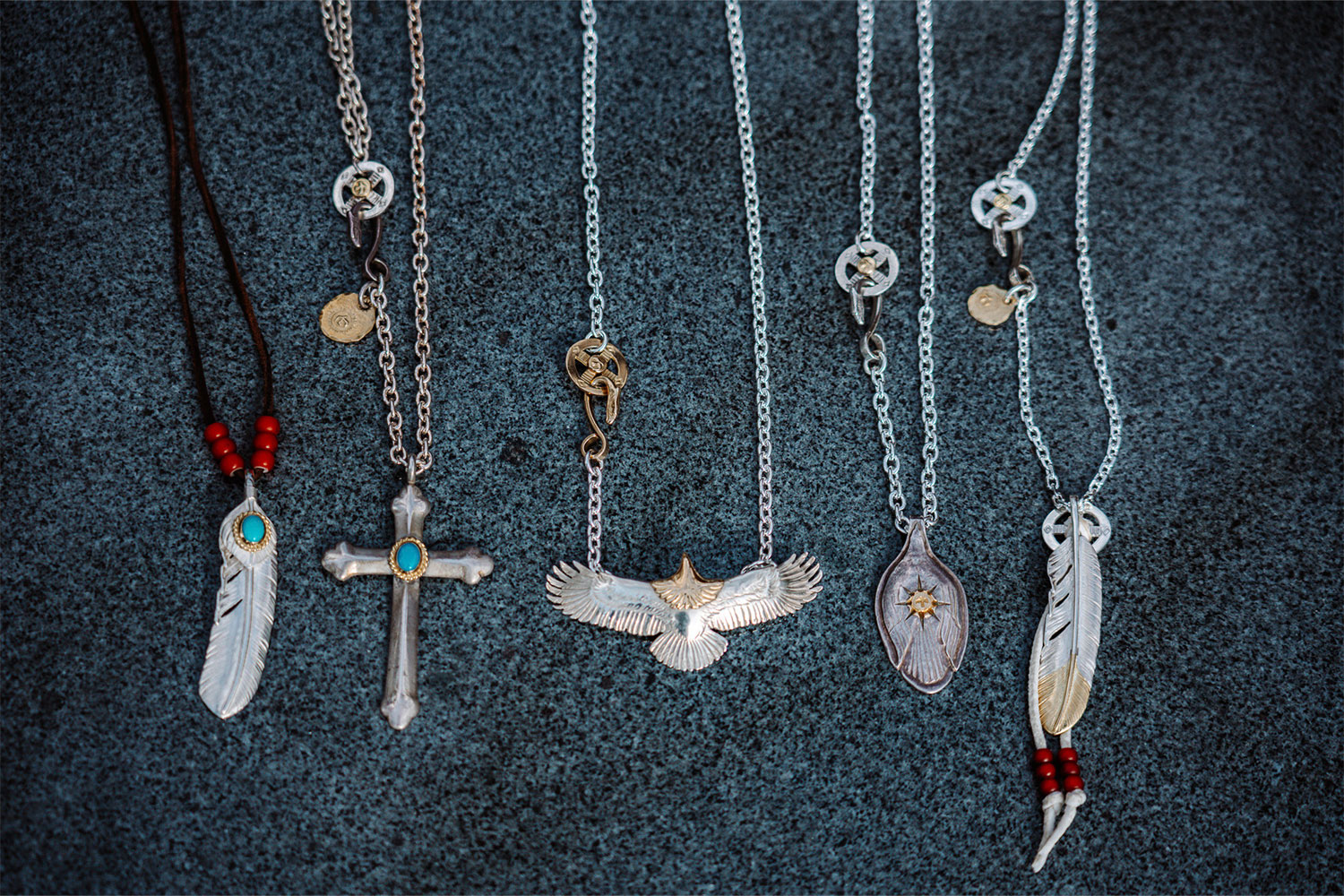
Photo Credit: DELTAone International
-
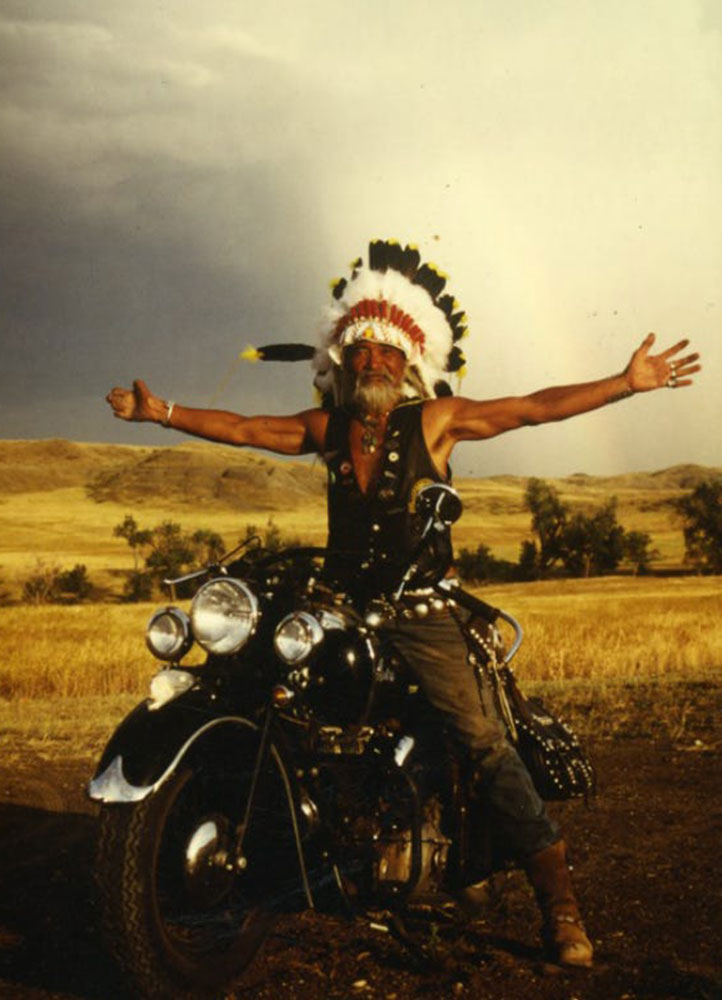
- Goro Takahashi
-
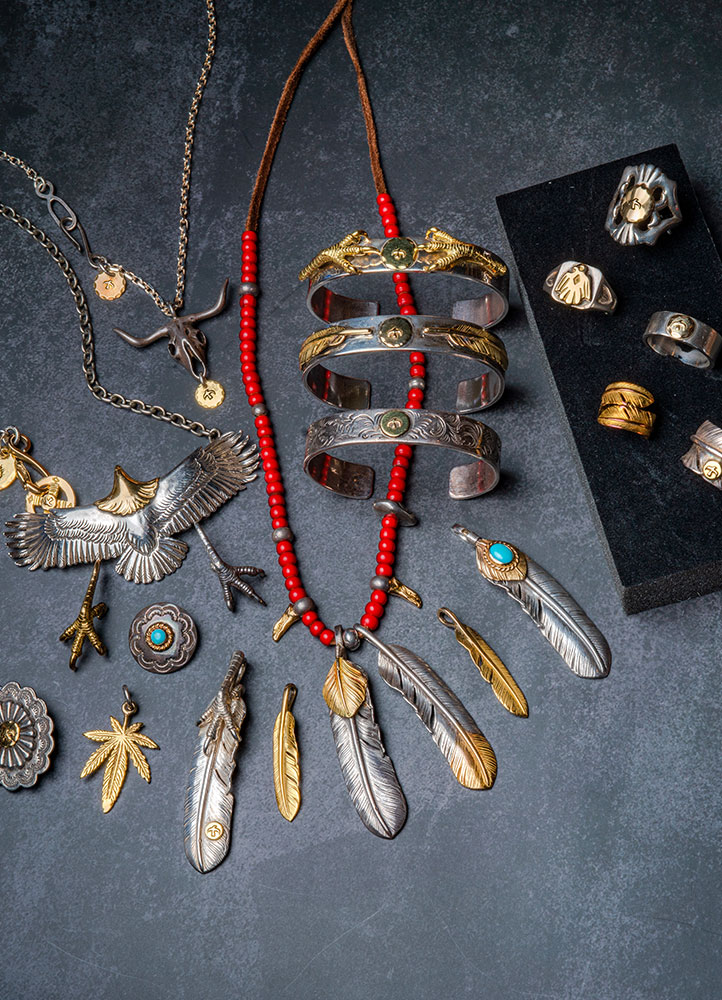
- Goro’s jewelry designs comprise of icons featuring arrowheads, birds, buffalo skulls, the sun, feathers, and Goro’s most coveted symbol, the eagle. Photo Credit: DELTAone International
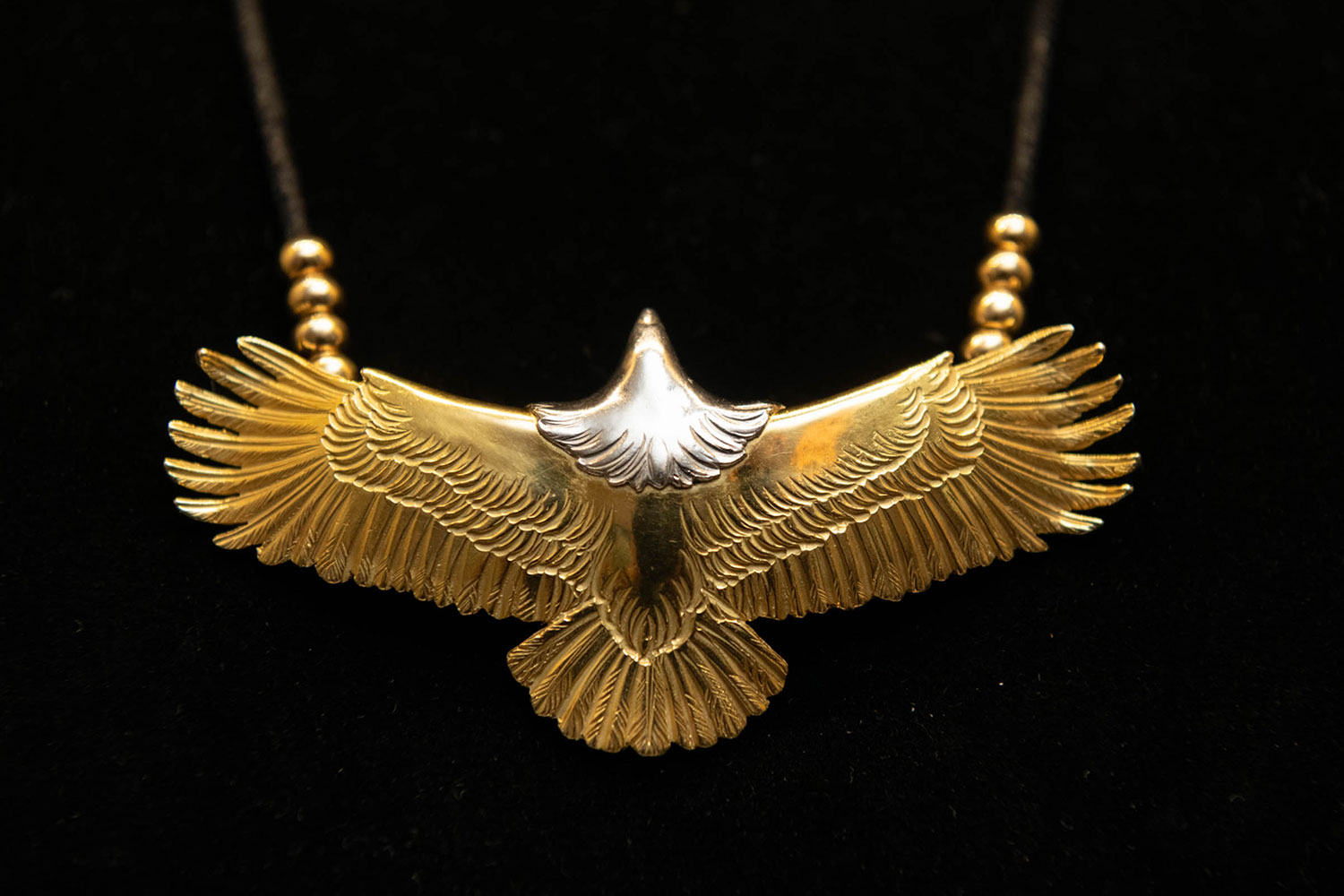
So, what is it about the designs of Goro’s jewelry that makes them so instantly appealing? It’s their primacy and their elemental force. In order to understand their symbolism, you need to understand Lakota mythology. Goro’s forms feel summoned by the omnipresent spirit Wakan Tanka, who created Maka (the Earth), Anpo (the Dawn) and Wi (the Sun). His designs are pure, stripped of artifice — primal in their essence. Arrowheads, birds, buffalo skulls, the sun, and most famously, feathers are crafted with such delicacy that they seem to move. The eagle, his most coveted symbol, came to him during his Sun Dance ceremony, where he saw the creature soaring into the sun. From this, he received his Lakota name: “Yellow Eagle.”
Walking into the shop presided over by Mito-san, Goro’s daughter-in-law, you immediately understand you are in an epicenter of powerful spirituality. You cannot simply walk in and select what to buy. Instead, you must be invited to purchase things in a hierarchical order, depending on your relationship with the store. It can take years before you are offered the chance to purchase an extra-large, gold-tipped feather. And during that time, you need to show up consistently. You must demonstrate, affirm and reaffirm your love for Goro’s. On average, it takes a decade before you are offered a full gold, large-sized feather — or perhaps the most coveted piece of all, an eagle medallion. You would have to be someone like Eric Clapton to purchase a full gold eagle. Devotees of Goro’s include John Mayer, Ron Wood, Hiroshi Fujiwara, and legions of young men who make the pilgrimage to Harajuku every day for a chance to purchase just one item. As they stand solemnly in line, each one wears feathers, arrowheads, or a rare eagle pendant around their neck — arranged in a way that both honors the prevailing Goro’s tradition and expresses their own inchoate individuality.
There is a reticence amongst Goro’s collectors to speak too much about it — almost as if, to borrow from Fight Club, the first rule about Goro’s is that you don’t talk about Goro’s. Says Ken Koshiyama, head of fine watchmaking at Chopard L.U.C, “As someone who loves Goro’s, you feel a sense of responsibility to not introduce the brand to everyone, but to people that you know will genuinely appreciate it. It is also about respectfulness, about understanding that collecting Goro’s takes time, that you need to develop a relationship with the brand.”
Rexhep Rexhepi: A vision in time
The power of exceptional design to stir emotion, provoke, uplift, edify and transform is real. Take, for example, the Chronomètre Contemporaine created by Rexhep Rexhepi and its capacity to manifest emotion. In 2018, Rexhepi presents this watch at the Baselworld fair. He lays it on the table before him. A digital photograph is taken, transmitted through the magic of TCP/IP, and within seconds, appears on screens around the world. One such display — located 9,454 kilometers away — belongs to one of the art world’s biggest stars, L.A.-based artist Wes Lang. His heart pounds. Desire for the watch slams into him like a wave off Ehukai Beach on Hawaii’s North Shore.
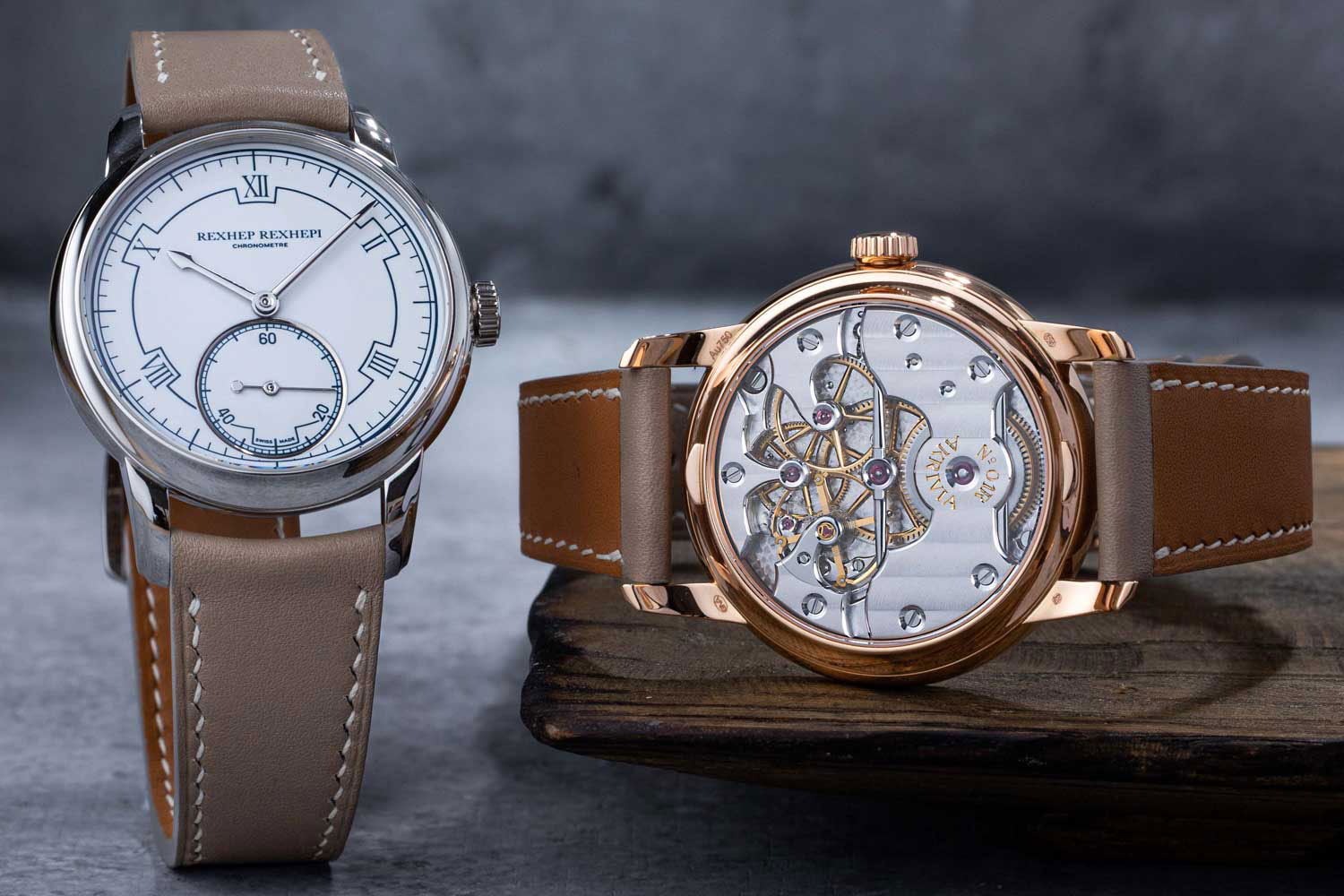
Rexhep Rexhepi Chronometre Contemporain in platinum presented in 2020 (left) and in pink gold released in 2018 (right)
Says Lang of his first impressions of the watch, “Every detail of the CC1 was so profoundly considered and so perfectly executed. The mirror polishing of the concave bezel, echoed by the thick bezel on the otherwise graceful lugs. The iconography of the dial, which is at once classic yet refreshingly original. The detail of how he stylized the hour track to intersect with the seconds subdial, yet both of these retain full resolution of their details. If he had lost a single hour marker or seconds mark at this juncture, the watch would have somehow lost its meaning as a chronometer. But he kept every detail in, and not only that, he even found the perfect placement for the ‘Swiss Made’ signature. This was design genius at its best.”
Lang is so moved that he immediately sends a request to purchase the 60,000 Swiss franc watch. To his surprise, he is told he has been allocated the very last platinum piece Rexhepi will make. Even better, Rexhepi, a longtime fan of Lang’s work, is coming to Los Angeles and will bring the watch with him. Just like that, a friendship is born. Says Lang, “Rexhep and his wife Annabelle showed up looking like a gorgeous couple at my house, and we spent almost every day of their trip together. When you come to really love someone who has created something that moves you so powerfully, it’s very special. Not many watches or people can do that.”
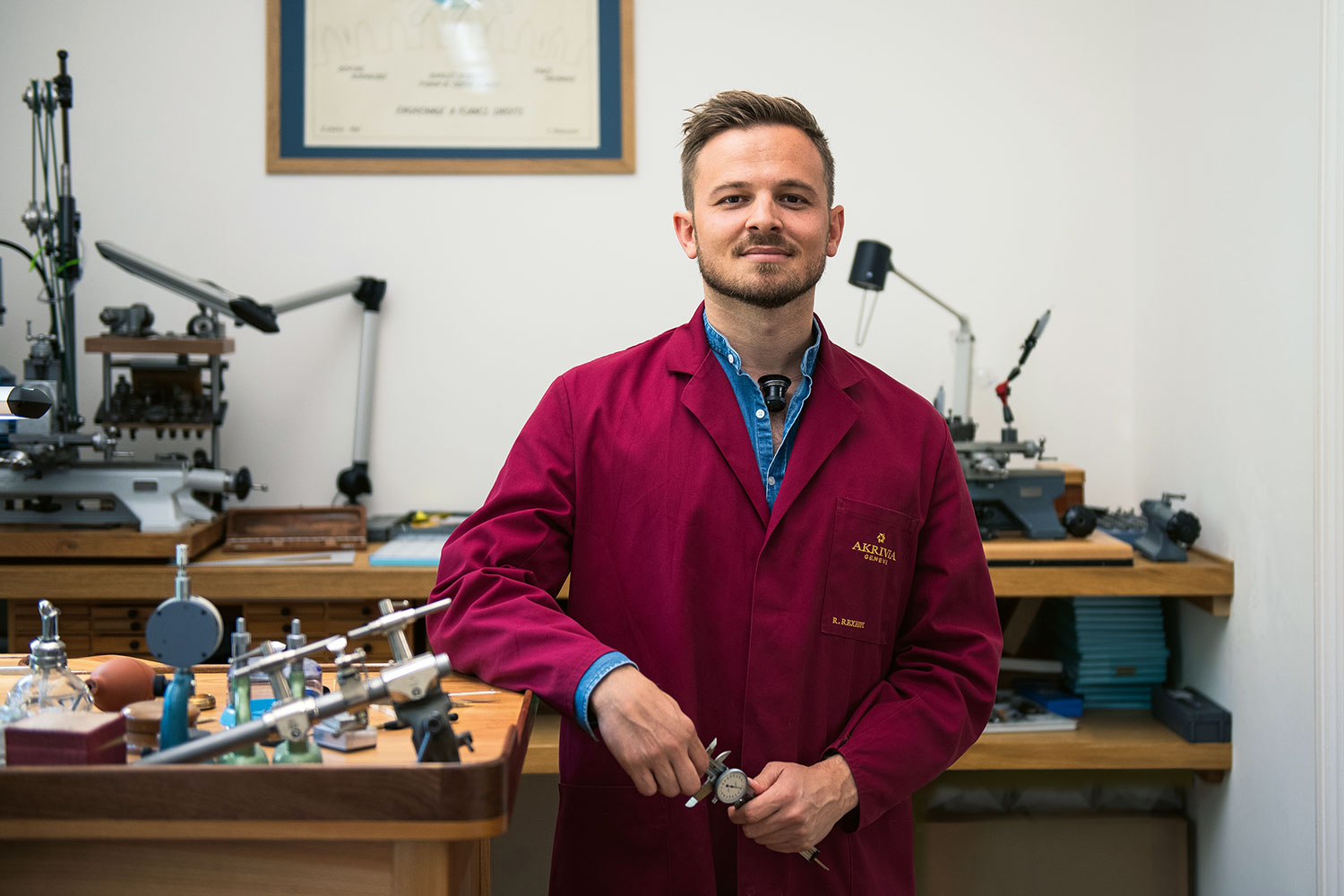
Watchmaker Rexhep Rexhepi at his atelier, Akrivia
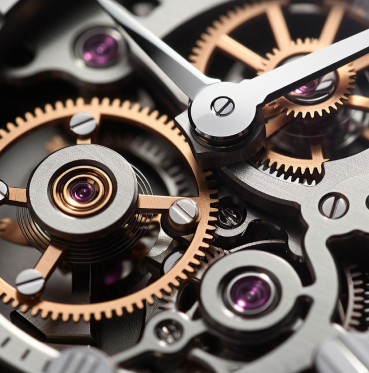
The design genius of the CC1 lies in its movement. Like the first two transcendent trumpet notes of Miles Davis’ “So What” from Kind of Blue, a movement’s first impression should reveal everything — yet leave you wanting more. Why is the caliber of Rexhepi’s CC1 the most beautiful time-only movement in existence? It comes down to geometric harmony. Look at the back of the watch — what do you see? Whether or not you understand watch movements, your eye instinctively registers five circles laid out in a beautiful pattern. If you were to map a Venn diagram of these five overlapping circles, you would find them to be a perfect expression of geometric harmony. Each circle bisects the other with precision, creating a balanced composition. Further, because Venn diagrams are used to demonstrate logic, this subtly links the movement to the concept of rational order. But beyond aesthetics, these five wheels reduce the watch movement down to its purest essentials.
Michael Tay, Rexhepi’s retailer in Asia, a key supporter in the creation of the CC1, and one of his closest friends, says, “There is a sense of poetry in this movement that is harmonious and essential.” The wheel at the top is the barrel, the source of power. Beneath it sits the great wheel, which drives the third wheel at the bottom left. This, in turn, drives the fourth wheel — also known as the seconds wheel — positioned at the bottom center, which powers the escape wheel sitting on its own tiny bridge. This then transfers energy to the balance wheel at the bottom right. The fact that the third wheel and balance wheel are very close in size creates a brilliant sense of visual symmetry. Even the placement of the rubies of the watch is perfectly symmetrical. Add to this the elegant execution of the lithe, curvaceous bridges, replete with provocatively acute internal angles and sharp points to demonstrate Rexhepi’s otherworldly, transcendent ability with finishing, and you’ve got a singularity and maturity of voice that is virtually unrivaled in watchmaking.
Comte Liger-Belair: A legacy in every bottle
The ability to evoke deep emotion through craftsmanship is not confined to jewelry or watches. The first moment you taste Louis-Michel Liger-Belair’s wines, you will never be the same. The world will forever be divided into before and after Comte Liger-Belair’s ethereal Vosne-Romanées. I say this as someone who has largely given up drinking wine for health reasons. There are moments when I recall the electrifying journey of his elixirs across my palate so vividly that I am lost completely in reverence. Though I am far from an accomplished wine writer, I will attempt to describe this sensation. In 1970, Led Zeppelin’s concert tour brought them to Reykjavik, Iceland. A civil servants’ strike nearly cancelled their show, but the local university stepped in, ensuring that the event went ahead. The result was one of the most epic performances of their career. Robert Plant wrote the lyrics, “The hammer of the Gods. We drive our ships to new lands. We fight the hordes. Sing and cry. Valhalla I am coming,” for his masterpiece “Immigrant Song” to commemorate the experience. It begins with an intense, wailing war cry, powered by a relentless pounding, almost orgiastic riff created by Jimmy Page, John Bonham and the immortal John Paul Jones. The result is sheer sonic energy, evoking the image of a flight of Valkyries descending from the sky at full charge.
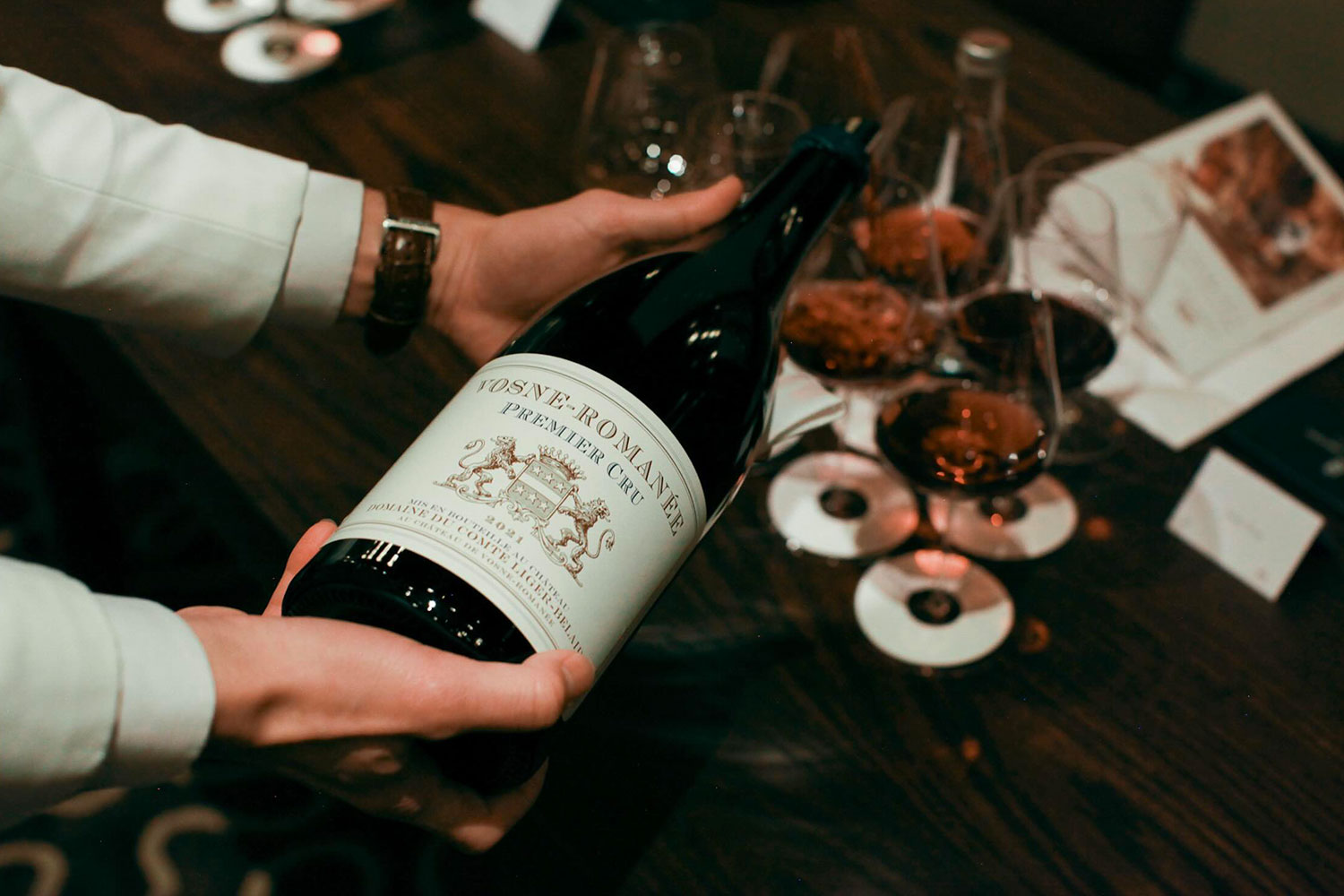
As Rolling Stone’s brilliant Lester Bangs puts it, “Plant’s double-tracked wordless vocal crossings echoing behind the main vocal like some cannibal chorus wailing in the infernal light of a savage fertility rite.” That was what the first taste of Liger-Belair’s Clos du Château felt like to me — like an army of one thousand Valkyries blitzing across your palate, creating a bridge of light to Valhalla.
Trailblazers who are defining their eras
One quality that unites Goro Takahashi, Rexhep Rexhepi and Liger-Belair is that each of them represents a defining voice in their chosen métier. And they achieved this by drawing from a unique part of themselves to create something distinct, familiar and yet totally original. What is remarkable about them is that their origin stories are defined by one individual who set out to accomplish the seemingly impossible. Goro started out as a leatherworker who made a pilgrimage to the American Southwest to improve his craft. There, he was introduced to silver smithing and eventually developed a spiritual connection with the Lakota Nation. Upon his return to Japan, he became the defining voice of cult silver jewelry through a unique blend of Lakota inspiration and Japanese craft. Over the decades, his jewelry evolved from cult curiosity to pieces that transcend their category, becoming objects of true cult devotion.
Rexhepi was an Albanian refugee fleeing from the Kosovo War. His mother sent him to Switzerland to live with his father, and it was there that he fell in love with watchmaking. He would rise to become the most sought-after watchmaker of his generation through his unique take on neoclassical watchmaking. Louis-Michel Liger-Belair is descended from a noble family that was one of the largest landowners in Vosne-Romanée, though they had never worked the land or made wine. Yet, he possessed an indomitable will to craft wine according to his own vision. Unlike Bordeaux, where the great domaines were owned and operated by nobility, Burgundy was once the domain of monks and later, farmers. So, when Liger-Belair decided to become a winemaker — with his signature rakish red trousers and aristocratic bearing — he was initially met with skepticism. That was until people tasted his wine, and word spread like wildfire about a man with an extraordinary vision for precision, length, and an almost otherworldly ability to extract it from his grapes. Similarly, when Rexhepi first launched his brand Akrivia, he struggled for two and a half years to sell his first watch. It wasn’t until 2018, when he unveiled his first “classic timepiece” at the encouragement of Michael Tay, that the world finally recognized his genius.
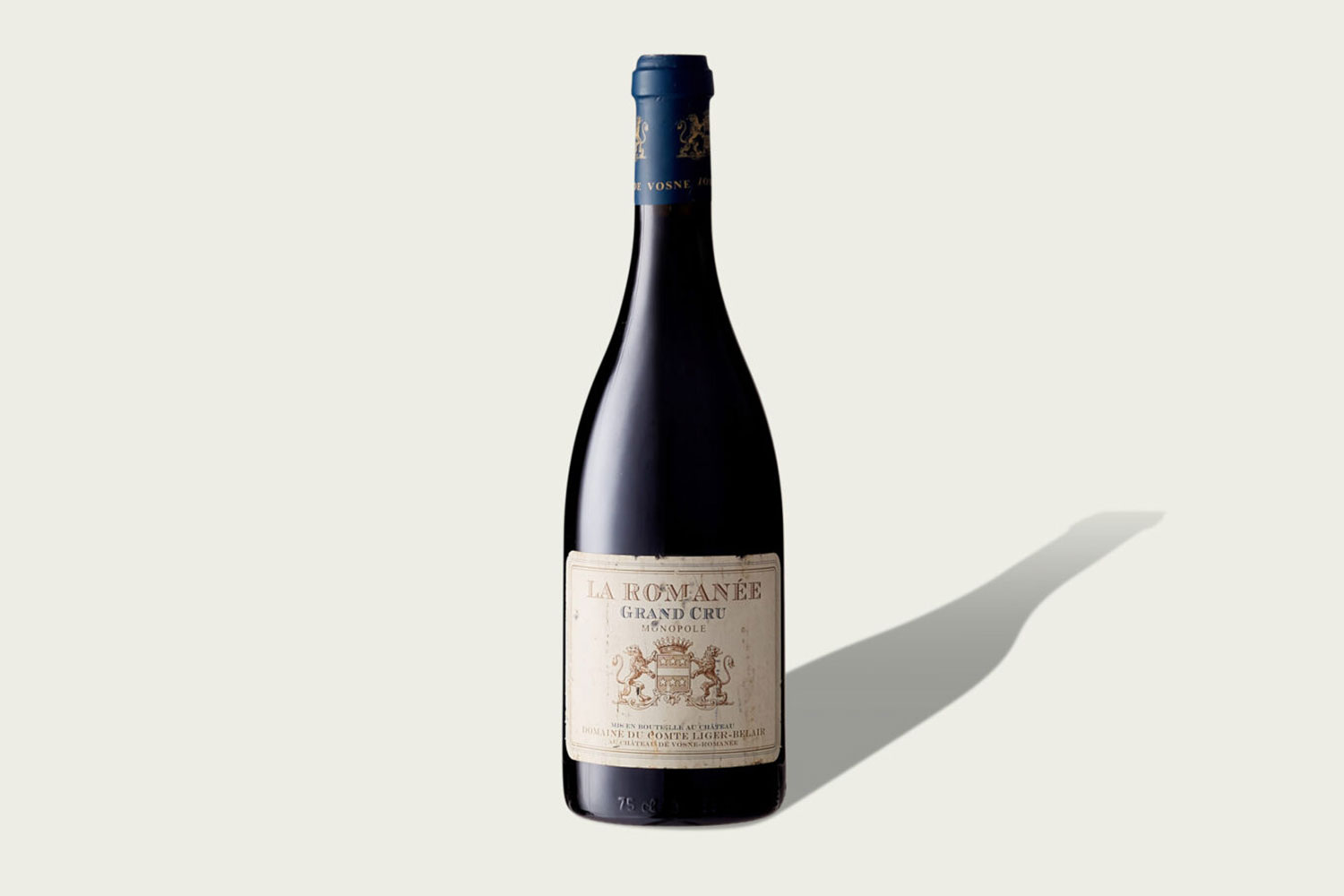
Each of these businesses operates with no interest in maximizing revenue or profit. Goro’s jewelry can only be purchased new at its shop in Harajuku. Rexhepi maintains a waitlist in the thousands, but is content to produce only around 50 watches a year. Liger-Belair creates just 300 cases of his La Romanée. While their products are often resold at auctions or through numerous resellers for massive multiples of the original price, this phenomenon does not drive them. Says Rexhepi, “My motivation is only to create the very best watches I can and to leave a lasting legacy in this wonderful industry that has given me everything — my home, my life and my career.”
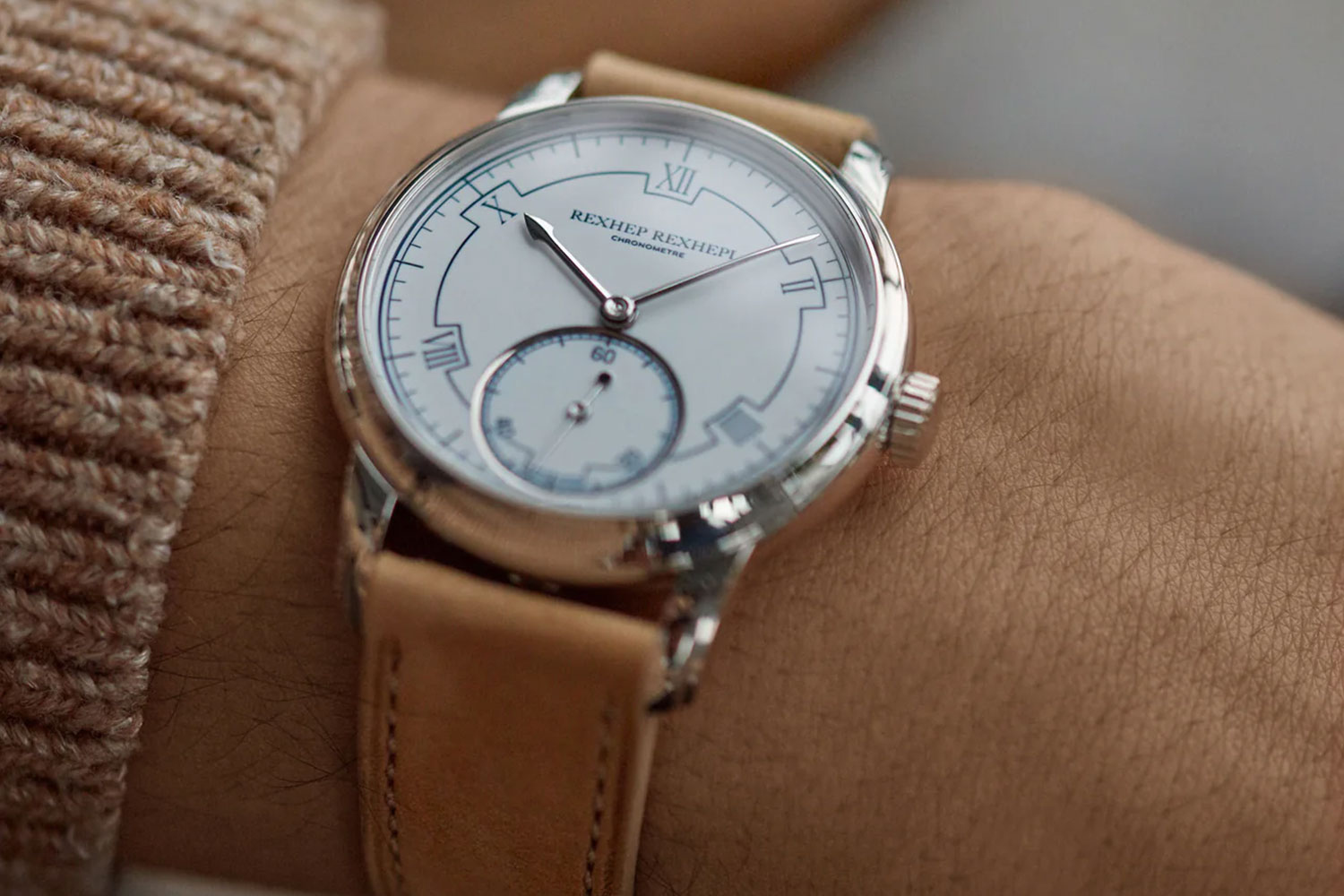
Rexhep Rexhepi Chronomètre Contemporain I
More than anything, each of these individuals is driven by an internal metronome focused on the relentless pursuit of excellence. It was their courage to pursue their seemingly impossible dreams that elevated them to their revered status today. They are game changers and trailblazers. But what truly set them apart was their willingness to be pioneers, a quality that defines their work and influence. As Rexhepi puts it, “To keep going forward with faith in your own vision,” regardless of the hardships. This was what enabled them to ascend to the realm of legends today. In a luxury market on the brink of transformation, it is essential to highlight these inspirational individuals — people who succeeded because, for them, there was simply no other option.
Rexhep Rexhepi

You may also like

Reviews
Geneva Report: Gem-Set and Jewelry Watches from the 2024 Watch Fair
May 19, 2024
Reviews
Geneva Report: Gem-Set and Jewelry Watches from the 2024 Watch Fair
May 19, 2024
News
First Impressions: Rexhep Rexhepi Chronomètre Antimagnétique for Only Watch 2023
Aug 30, 2023
News
First Impressions: Rexhep Rexhepi Chronomètre Antimagnétique for Only Watch 2023
Aug 30, 2023
Video
Unveiling Akrivia’s Only Watch 2023 | In Conversation with Rexhep Rexhepi
Aug 28, 2023
Video
Unveiling Akrivia’s Only Watch 2023 | In Conversation with Rexhep Rexhepi
Aug 28, 2023