

Girard-Perregaux Updates The Laureato For Its 50th Anniversary
Reviews
Girard-Perregaux Updates The Laureato For Its 50th Anniversary

This year marks the 50th anniversary of one of Girard-Perregaux’s most important watches – the Laureato. This may come as a surprise, but the watch prepared in commemoration is not a simple variation of an existing reference, nor a mere change of livery, but a re-examination of the Laureato in its entirety. The Laureato Fifty arrives as both a tribute and an evolution, conceived to revisit proportion, construction, finishing and performance at every level to place the Laureato squarely among the archetypes of the segment.
As Girard-Perregaux’s Managing Director Marc Michel-Amadry puts it, “The watch has been redesigned while drawing inspiration from the original 1975 model. From the case to the bracelet, and from the dial to the movement, this anniversary piece celebrates that legacy — a timepiece that bridges the past while offering a vision for the future, with a highly architectural and contemporary design and construction.”
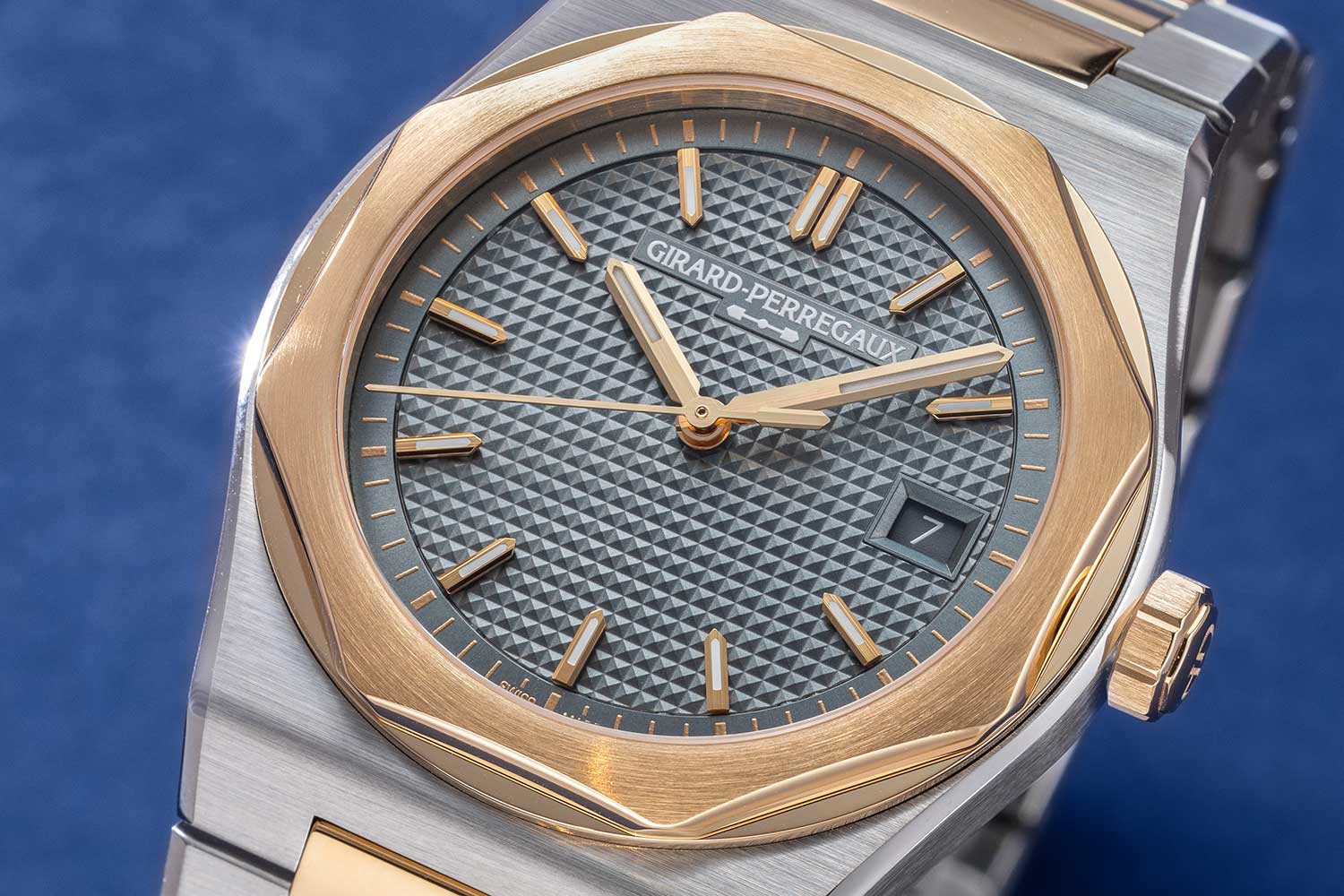
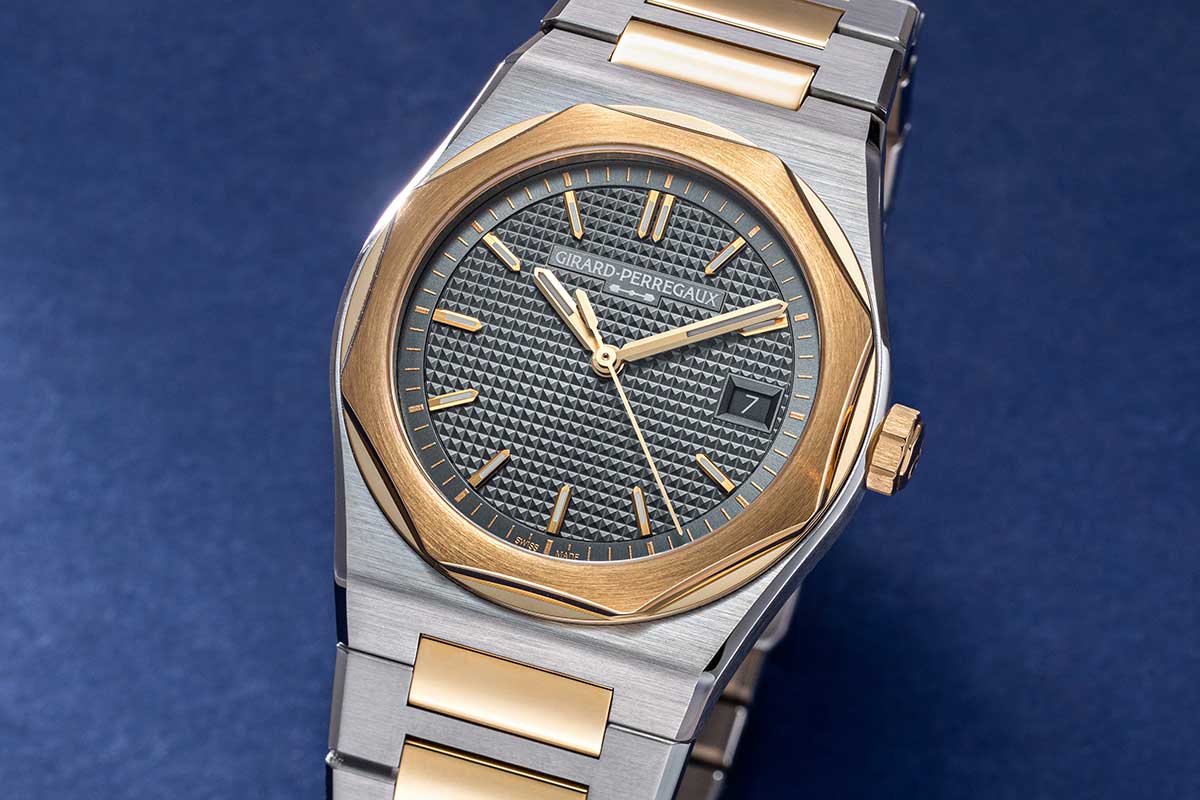
Girard-Perregaux Laureato Fifty (Image: Revolution ©)
The Laureato, as no one needs reminding but is still worth repeating, made its debut in 1975, in the same era as the first generation of integrated bracelet, stainless steel luxury watches. Unlike its peers, the Laureato was designed in-house and equipped with a manufacture movement right from the beginning. Introduced as the GP Chronometer, it was a thin quartz watch powered by the chronometer-certified in-house caliber, derived from the landmark GP 350. It represented the company’s early leadership in quartz, being the first quartz movement ever to operate at a frequency of 32,768 hertz, which would become the universal standard for quartz timekeeping to this day.
The name “Laureato” was adopted only later, inspired by the Italian word for graduate and used by Italian collectors before becoming the official name. In Italian, laureato means “graduate” or “crowned with success,” derived from the Latin laureatus, “crowned with laurels” — the ancient Roman emblem of victory awarded to soldiers, athletes, and later scholars. The tradition lives on in Italy, where students are crowned with laurel wreaths during their graduation ceremonies to mark their academic achievement. To christen the watch thus, in the uncertain climate of the 1970s, was both symbolic and hopeful — a quiet invocation of fortune and faith in a destiny crowned with success. Visually, it set its own course. Its raised octagonal bezel atop a circular plinth gave the watch its distinctive look, and the two-tone integrated bracelet with an inlaid strip of yellow gold running continuously down the center of each link was particularly technically demanding to produce.
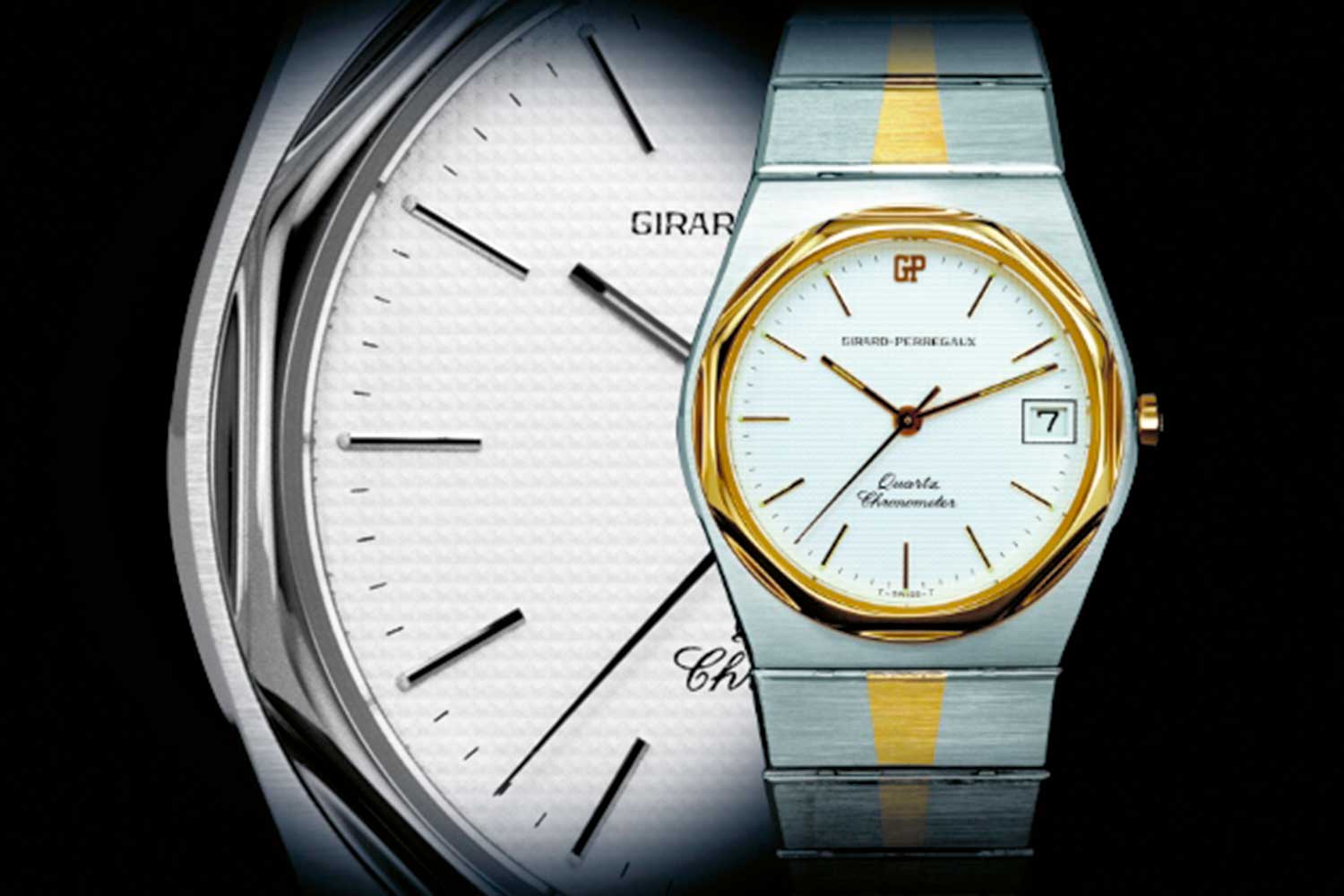
The original 1975 GP Chronometer
The first mechanical versions of the Laureato were released only in 1995, with the in-house ultra thin Caliber GP03100 in a 36mm case and a bracelet with polished cushion center links that echoed the shape of the Clous de Paris pattern on the dial. A year later came the Laureato Olimpico Chronograph, and in 1997, the first Laureato Tourbillon with three gold bridges, fusing in one stroke two of the brand’s most recognizable signatures — the quintessential ’70s sports-integrated design and the 19th-century invention that defined Girard-Perregaux at the highest level of watchmaking. In the 2000s, the Evo3 series pushed the line toward a more contemporary profile and larger proportions, keeping the design language alive as tastes shifted.
The Laureato was revived in 2016 to celebrate the brand’s 225th anniversary, reopening a collection that had largely fizzled out from the catalog and paving the way for a new range of sizes, materials and complications. The 42mm Laureato is powered by the self-winding Caliber GP01800, while the 38mm version stuck to the 3000 family of movements, specifically the Caliber GP03300, first introduced in 1998.
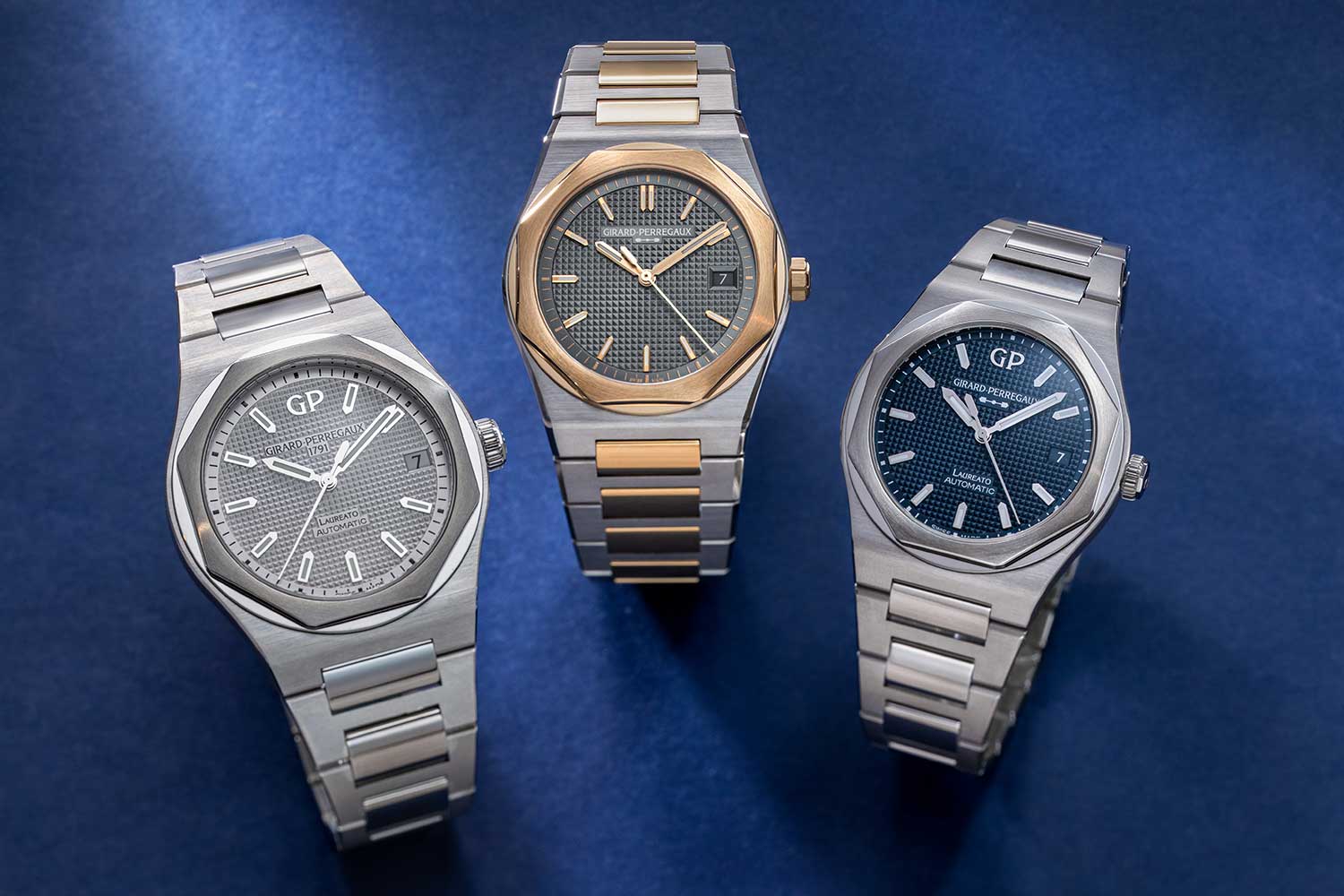
A side-by-side comparison of the existing Laureato 42mm, the new Laureato Fifty 39mm, and the Laureato 38mm (Image: Revolution ©)
The latest chapter in the story is the Laureato Fifty. The upgrades are substantial, inside as much as out, and on the wrist, it is a very different watch altogether, save for the essence of the design. It is essentially a superlative expression with sharper geometry, elevated finishing and a surer sense of identity.
The Laureato levels up the case, bracelet, and dial
The first thing to note is that it comes in a new size of 39mm, and like the original, it is bimetallic in steel and yellow gold. The proportions are excellent. At 9.8mm in height, it is slimmer than all current versions of the watch, including the 42mm at 10.68mm and the 38mm at 10mm. Water resistance has been uprated from the typical 100 meters for the category to 150 meters.
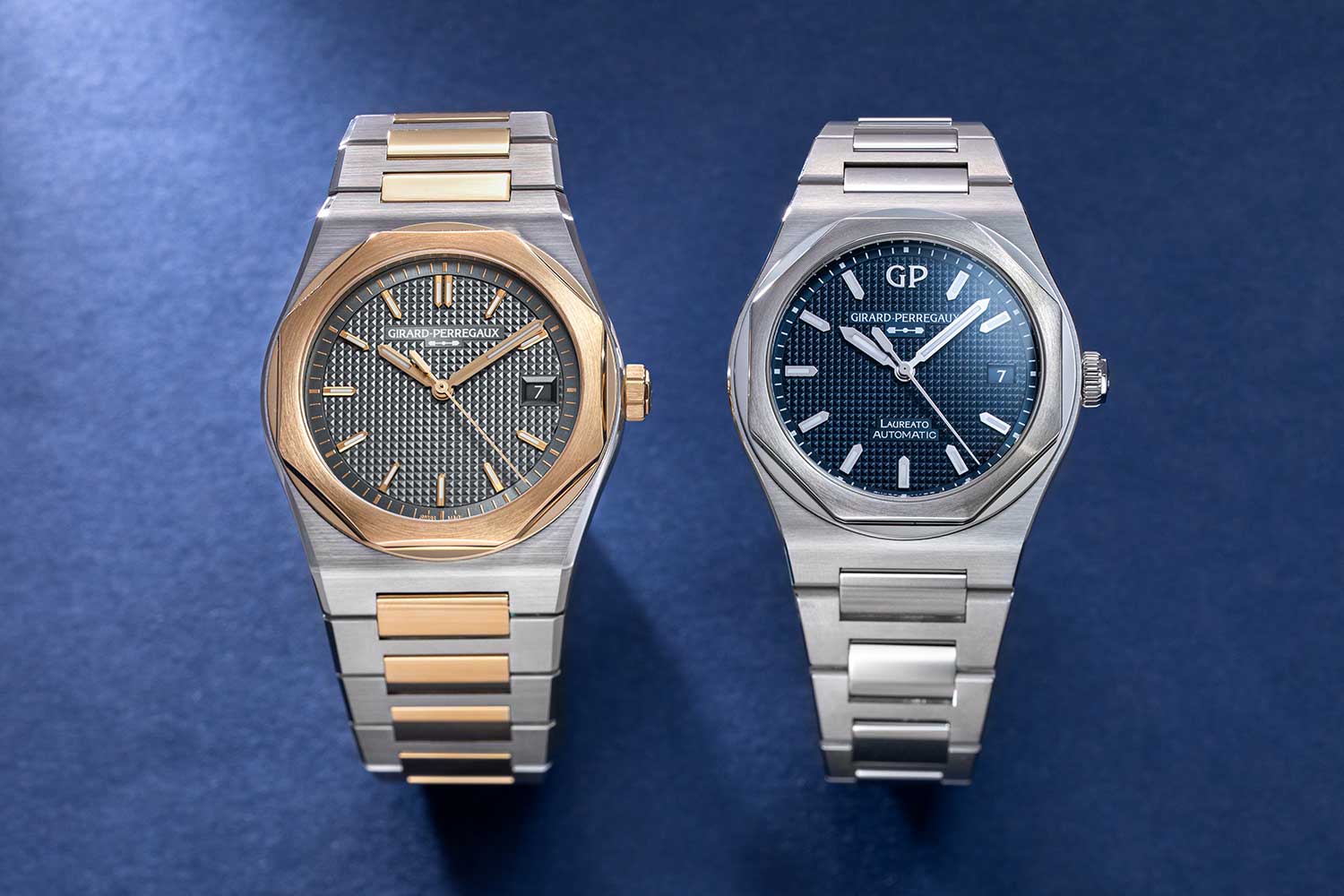
Girard-Perregaux Laureato Fifty and Laureato 38mm (Image: Revolution ©)
The tonneau case itself has been subtly reworked; the lugs have been given a sharper, more angular profile. It’s a small change, but one that alters the geometry of the watch in a way that is immediately perceptible on the wrist. The lines are taut, the transitions crisp and the case, as a whole, is more assured.
Then there’s the iconic faceted bezel made up of two parts — a circular base that’s been mirror polished and an octagonal structure atop which has been reworked with greater definition. The outer edges of the octagon are drawn inward in a gentle concave camber that’s been polished, but there’s a short transitional facet where two concave arcs meet that wasn’t present before. The effect is subtle; you sense at once the bezel is different but it’s hard to pinpoint without a side-by-side comparison. The crown has also been reworked. It is octagonal to echo the bezel, with a mirror-polished face bearing the “GP” monogram, brushed flanks and sandblasted grooves that accentuate its geometry.
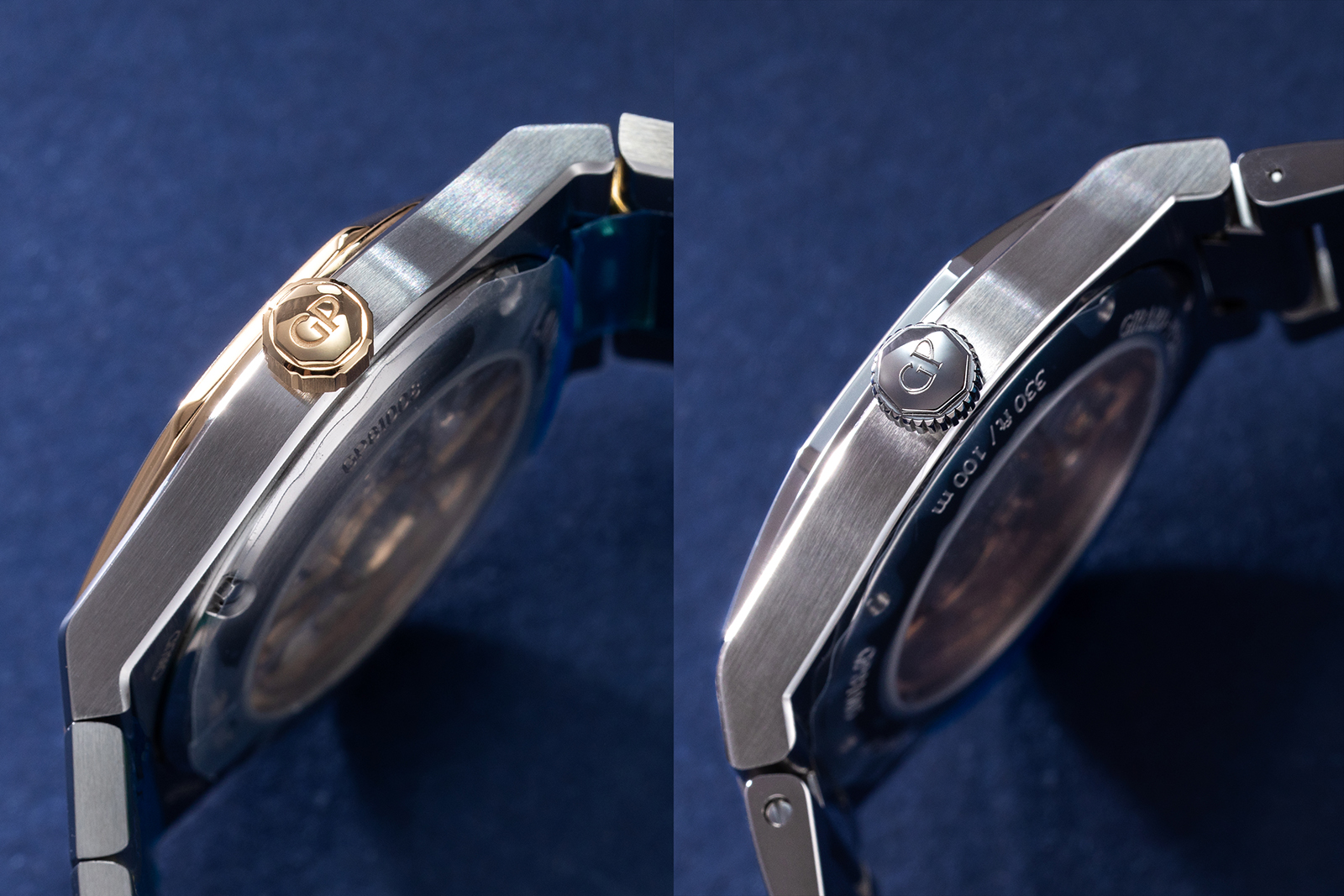
The lugs break with a sharper downward rake while in the previous model (second image), the lugs slope more gently with a rounder transition (Image: Revolution ©)
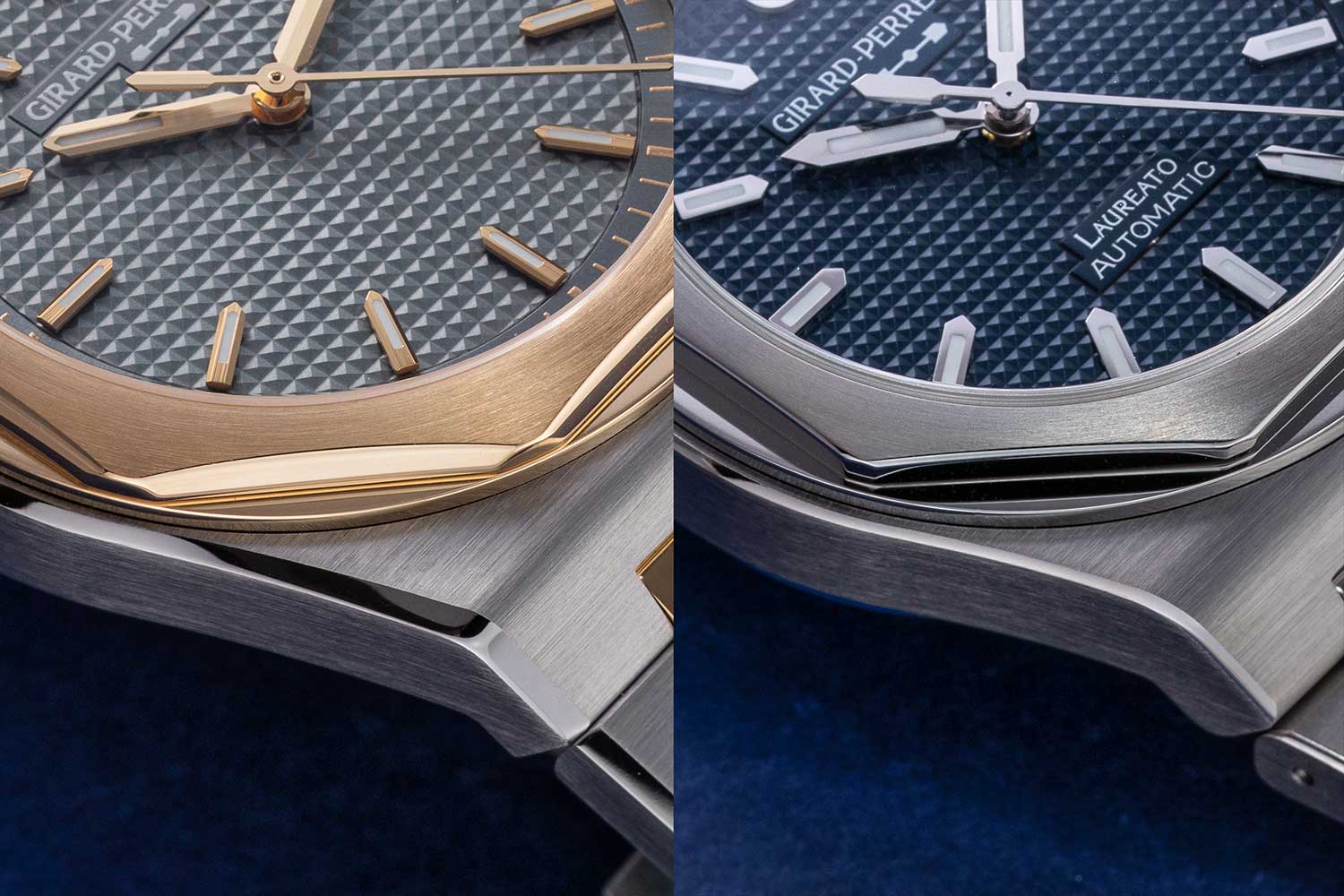
A closer look at the octagonal bezel. The outer edges of the octagon are drawn inward in a gentle concave camber that’s been polished and there is a transitional facet where the two concave arcs meet that was absent in the 2016 version (Image: Revolution ©)
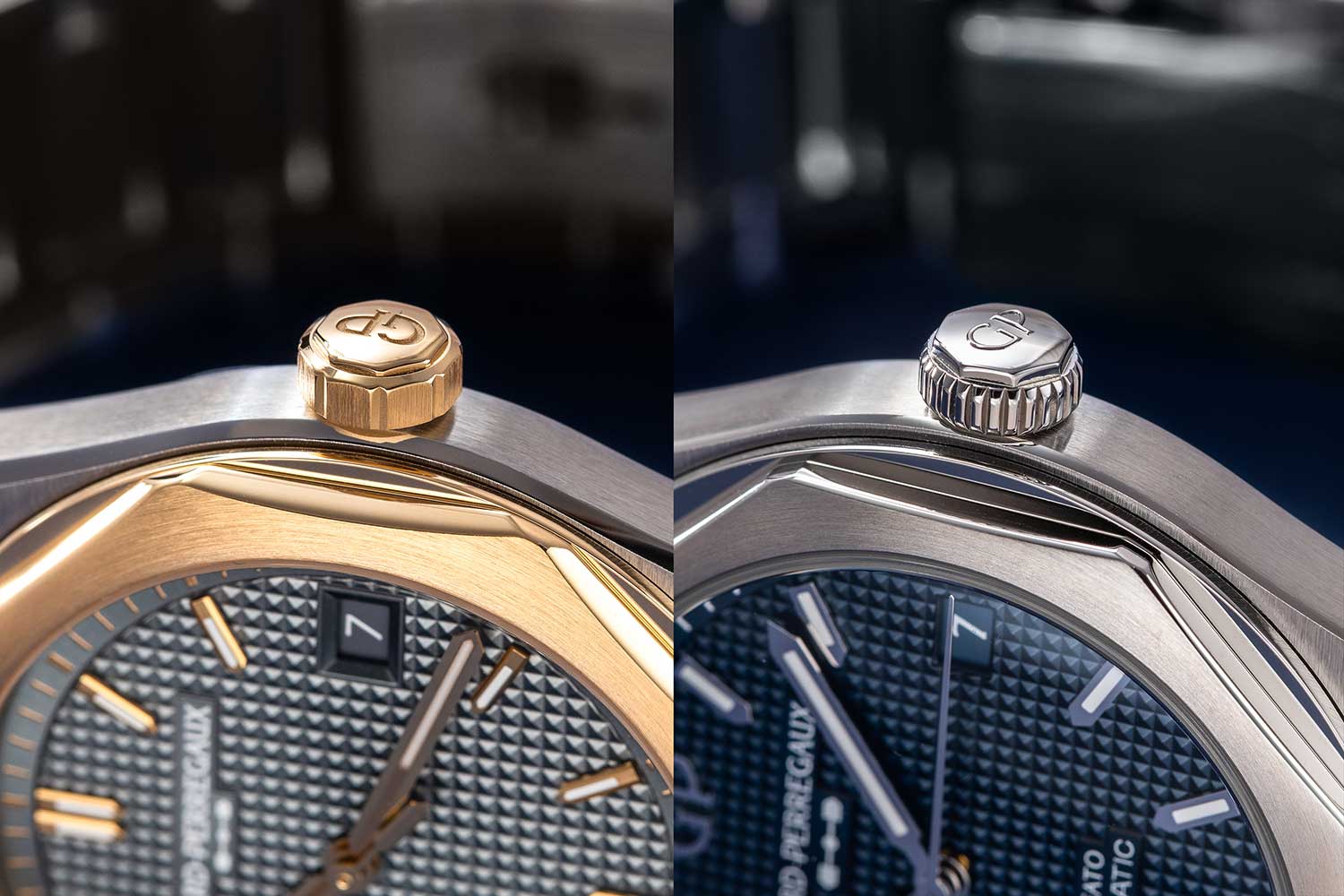
The crown has been redesigned to echo the shape of the bezel (Image: Revolution ©)
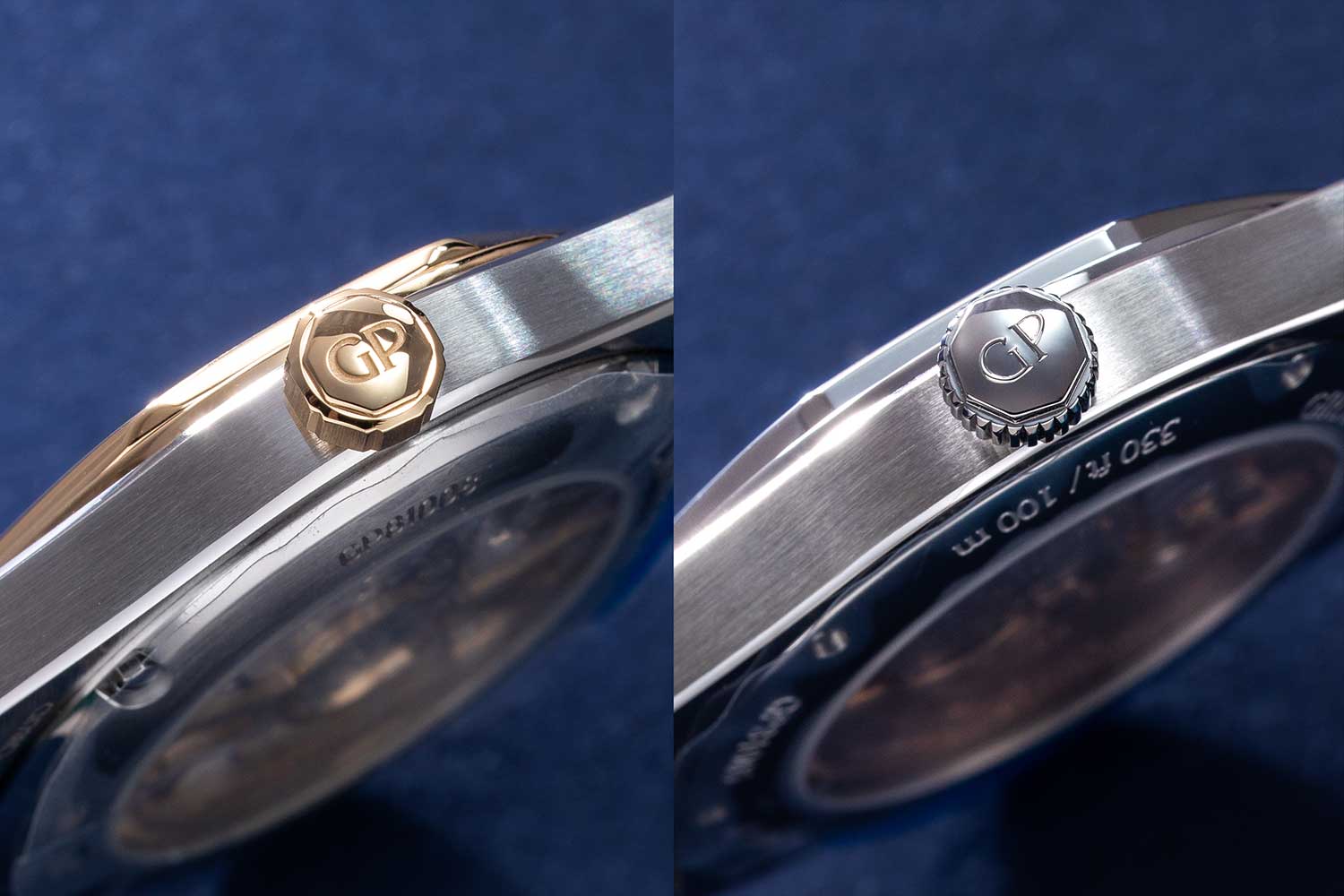
(Image: Revolution ©)
The case finish has also been significantly improved. The lengthwise polished bevel is much more generous and pronounced; you don’t have to search for it, and it extends uninterrupted along the bracelet. Overall, the edges separating the brushed and polished surfaces are razor sharp, giving it a complexity and sophistication that the current generation only hints at.
In the standard Laureato, the end link directly under the case was noticeably thinner than the repeating links that followed. In the Laureato Fifty, the links that follow are now proportionally matched. They are shorter, producing a far more coherent integration between case and bracelet. The result is comfort while having less play as well. Tolerances are tighter and mating faces meet with precision. The bracelet drapes cleanly but firmly on the wrist and nothing yields more than it should.
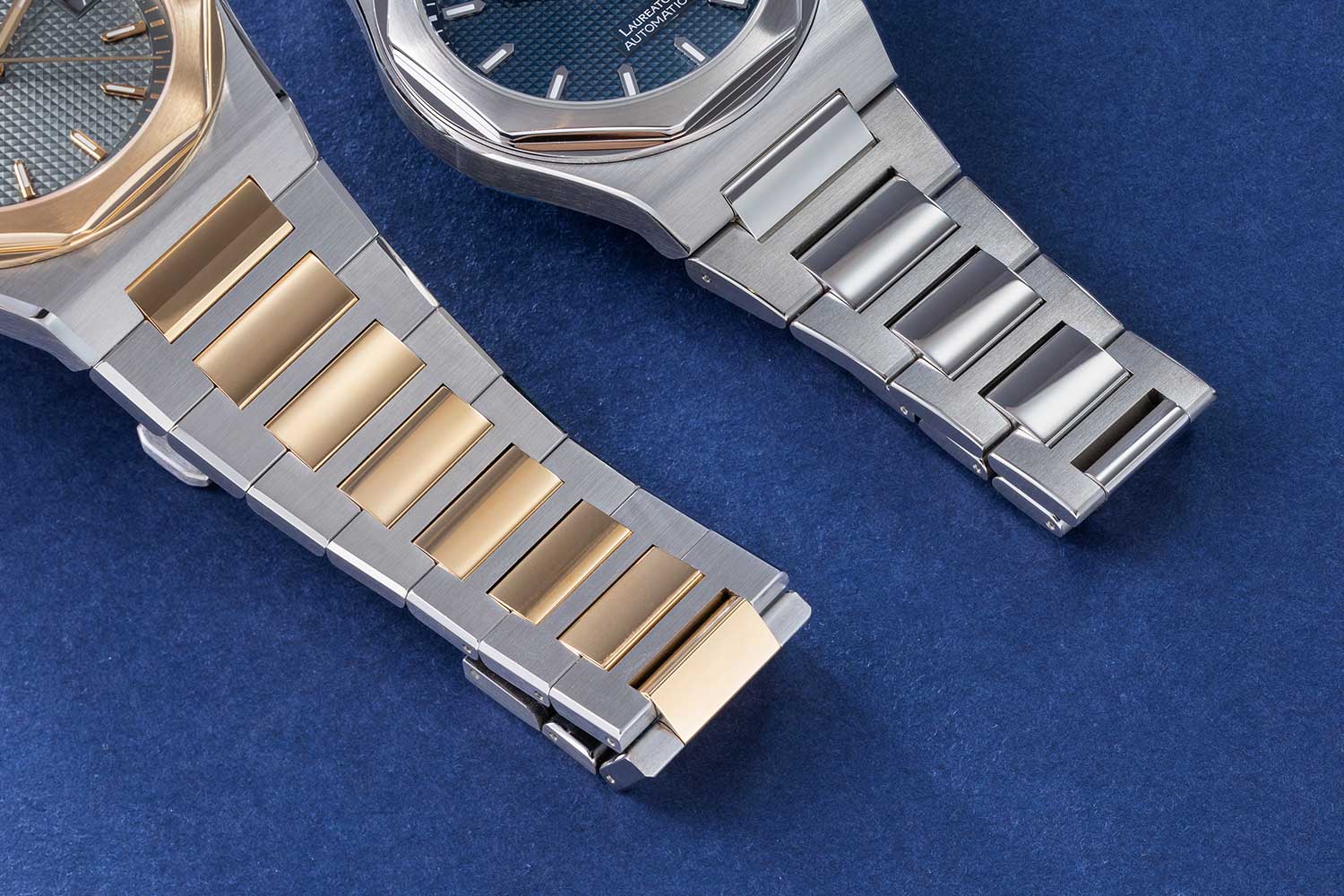
The unmissable lengthwise polished bevel flows from the case into the bracelet (Image: Revolution ©)
One thoughtful detail is the clasp. Where the current type closes sequentially, the new twin-trigger double-folding clasp brings both blades together in unison so they meet to form the brand’s double-arrow bridge — a motif that also appears on the underside of the clasp. The push-pieces have an octagonal shape, echoing the bezel. Importantly, in addition to half-link adjustment, the clasp is now equipped with a micro-adjustment system that allows up to 4mm of extension on the go.
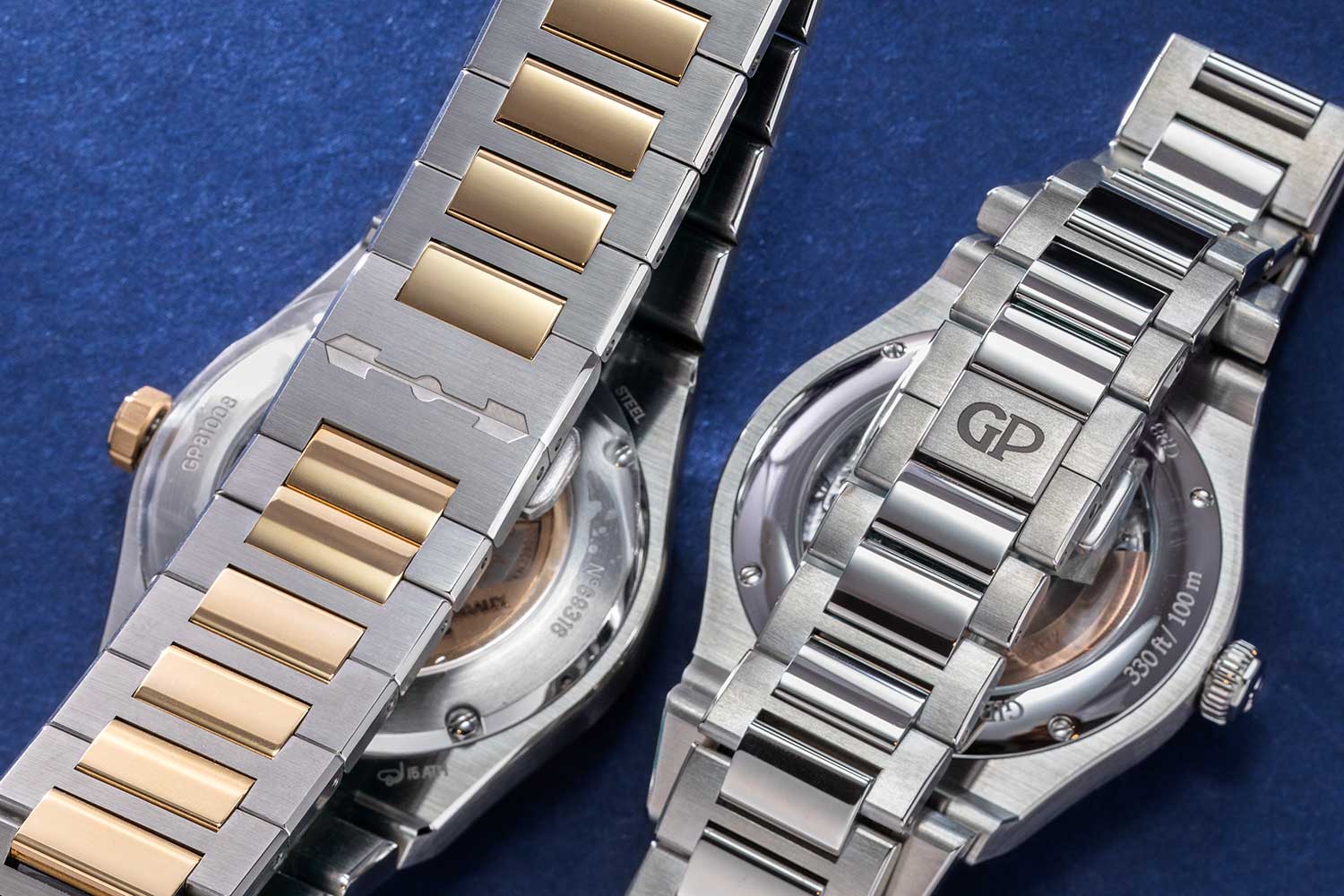
The blades of the clasp close to form the brand’s iconic double-arrow bridge (©Revolution)
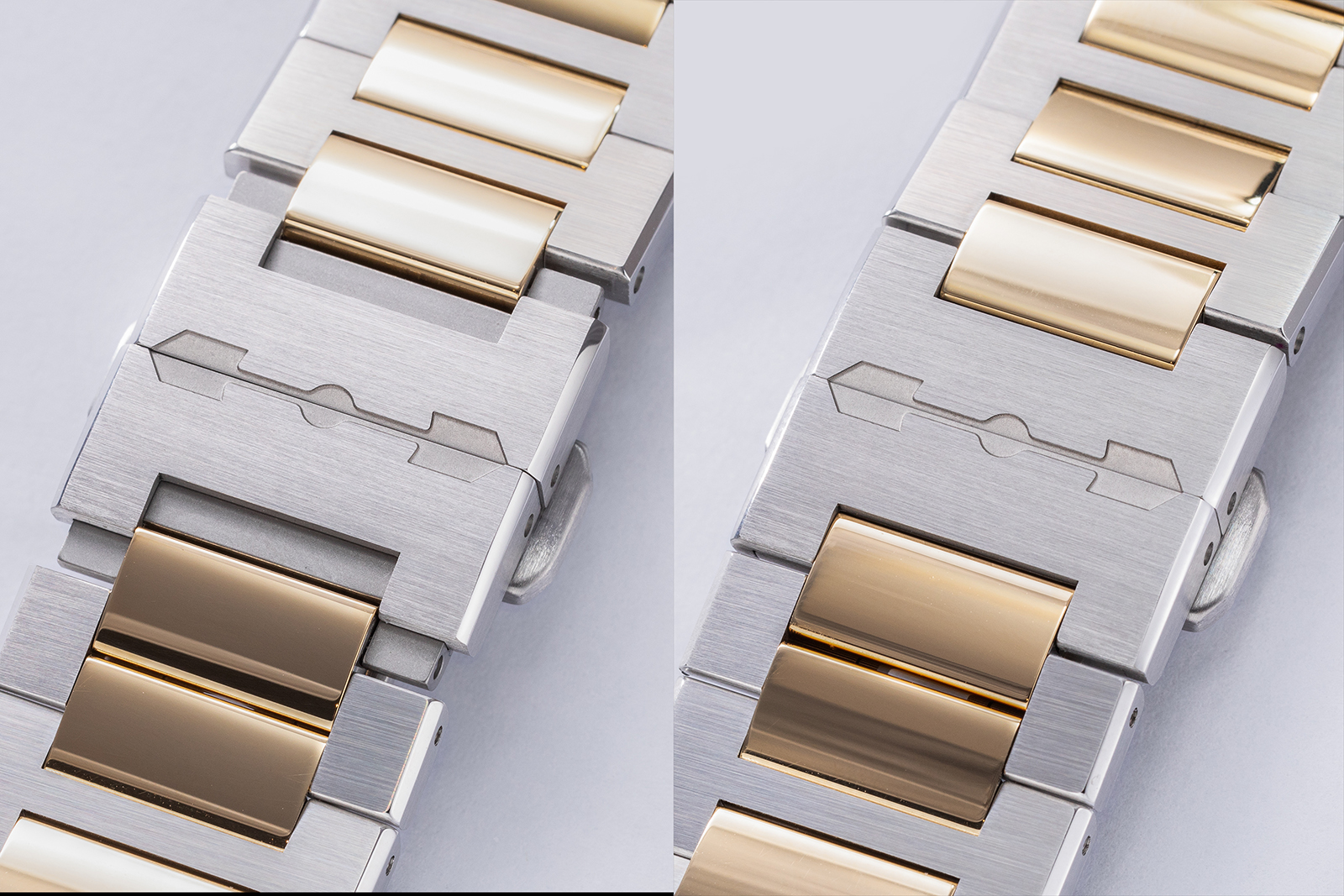
The bracelet features a discreet micro-adjustment system that extends up to 4mm, easily operated by pulling and sliding for a perfect fit (Image: Revolution ©)
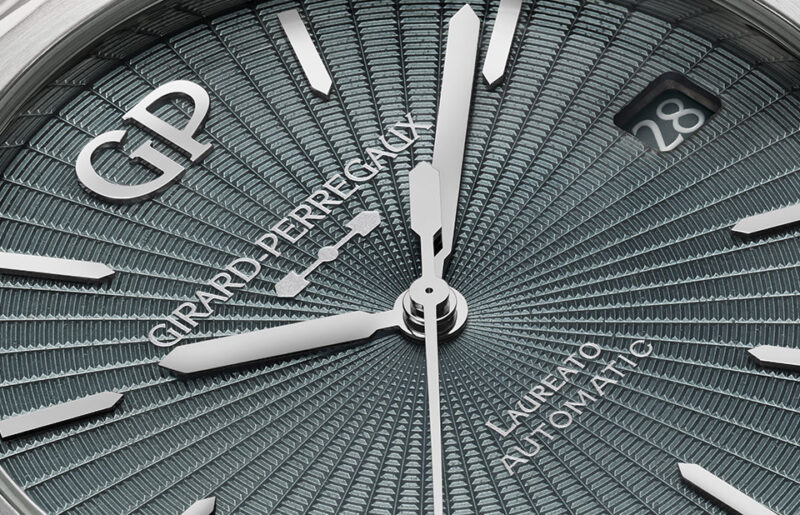
The dial work has also been finetuned. The Clou de Paris motif has been slightly enlarged to enhance the play of light. The minute track is thicker and the GP monogram at 12 gives way to a pair of applied indexes. The quality of appliques has been refined; the arrowhead hour markers are slimmer and faceted. The hands, including the arrow-shaped seconds hand, are faceted as well. The “Laureato Automatic” line has been dropped, which leaves the dial cleaner and more assured, while the model name now resides on the caseback.
Notably, the date window has a frame reminiscent of the 1975 version. It is a thoughtful detail, with the date disk matched in color to the dial so that the display integrates quietly into the design.
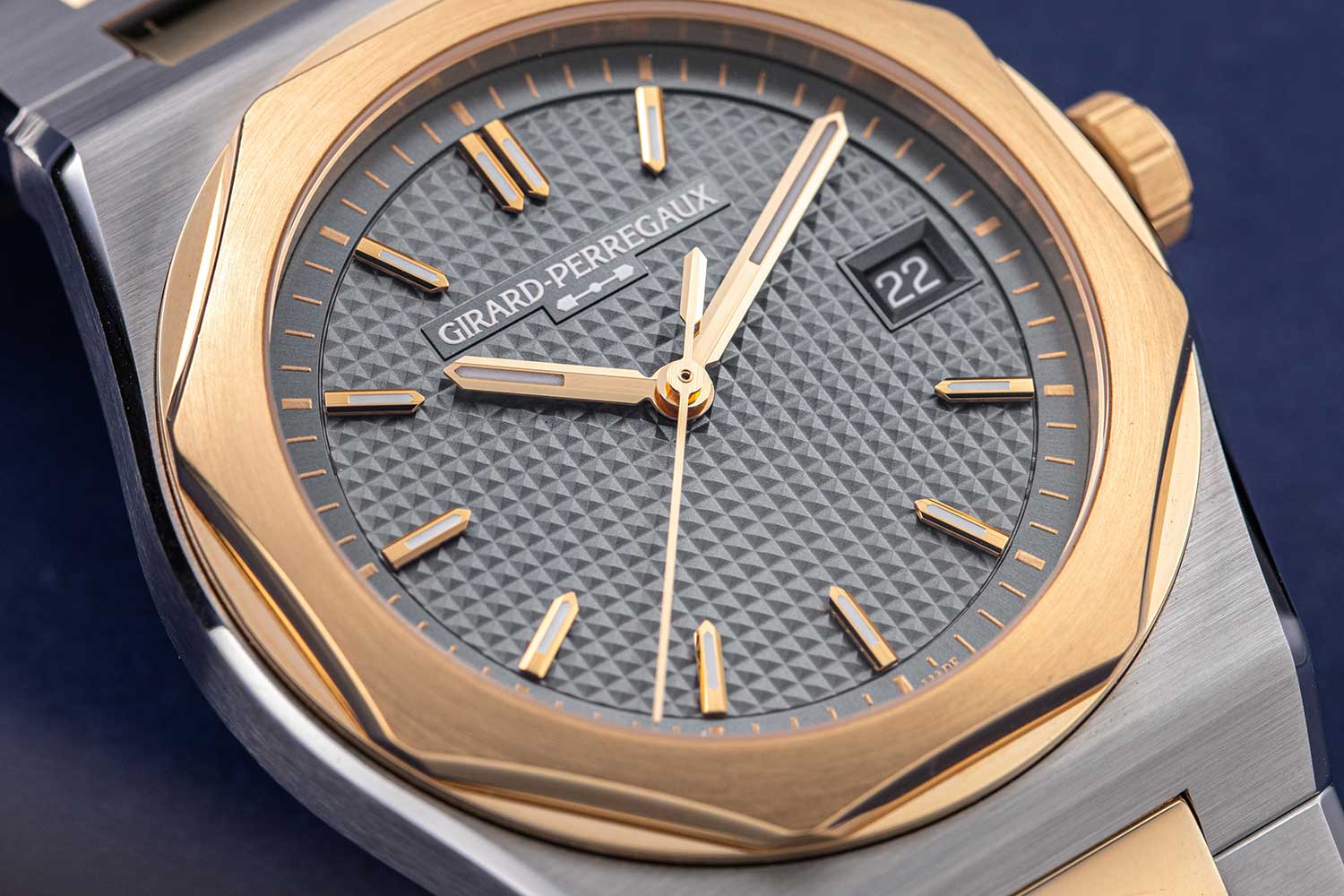
The dial has been thoroughly reworked with faceted indices and hands, a slighty larger Clous de Paris pattern and a framed aperture for the date (Image: Revolution ©)
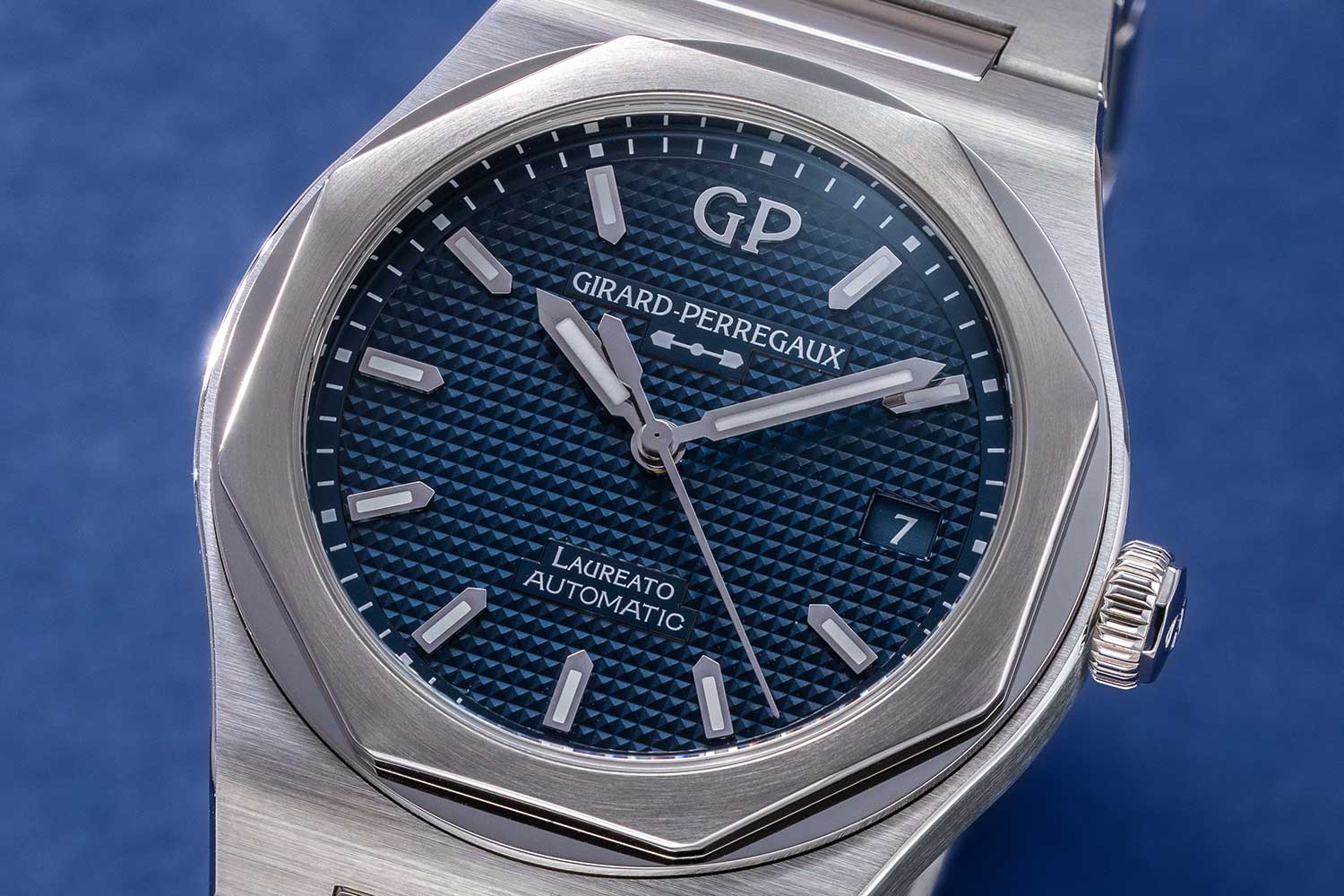
Laureato 38mm (Image: Revolution ©)
The making of the dial involves a total of 50 steps. It begins with stamping, during which the Clous de Paris motif is pressed into the metal surface using an engraved die. This creates the signature grid of small, pyramid-like studs that catch the light at different angles. Next, the dial undergoes a sunray finish, achieved by brushing fine, radiating lines from the center outward to create a subtle play of reflections. The outer ring of the dial then receives a satin finish.
After the decorative work, the surface is subjected to several treatments to prepare the metal base. This includes cleaning and smoothing processes, followed by a PVD color treatment that gives the dial its final tone, and a protective coating to preserve the finish and ensure long-term durability. Once the surface treatments are complete, the various elements of the dial are assembled, each having been prepared separately.
The watch feels purposeful and dignified in hand and on the wrist. It keeps its bones, the elements that made it special, but with its execution raised to a level that makes the design feel fully realized.
Introducing the new Caliber GP4800
Inside, the new self-winding Caliber GP4800 makes its debut for the first time. In many ways, the new movement is a modern reassertion of Girard-Perregaux’s identity as a maker of industry-oriented calibers. It restores a role the brand once played with authority, supplying slim, dependable automatics to its own watches and across the industry. This stands apart from the haute horlogerie calibers such as the Tourbillon with Three Gold Bridges and minute repeaters, or the R&D-heavy calibers such as the Constant Escapement. The emphasis is foundation, a caliber conceived to serve as the brand’s new standard bearer. “We need to continue to demonstrate that GP is a movement maker, an engine maker that continues to innovate and continues to bring better movements,” explains Michel-Amadry.
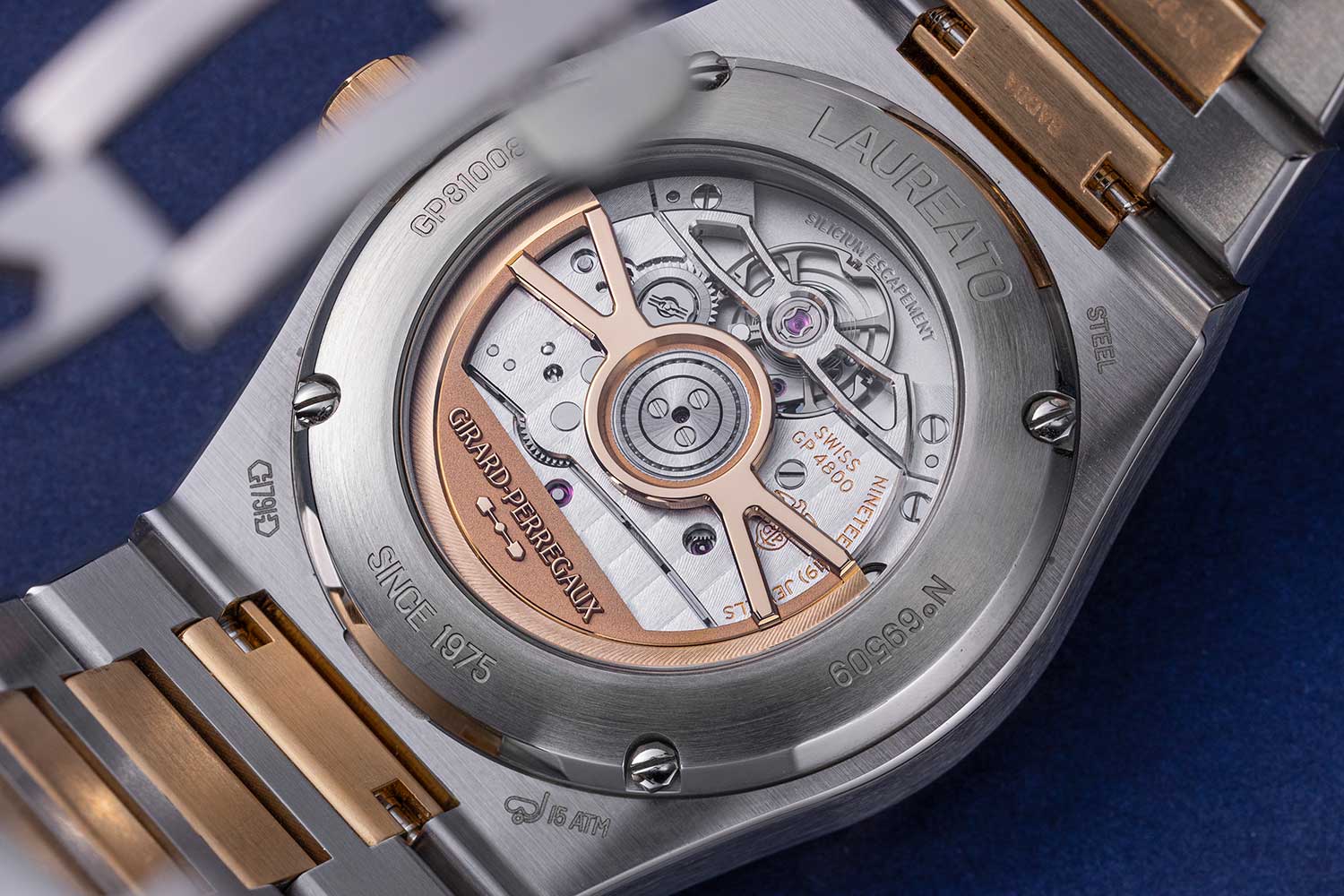
Girard-Perregaux Laureato Fifty is equipped with the all-new Caliber GP4800 (Image: Revolution ©)
Notably, the movement was conceived around the idea of three horizontal bridges, echoing the architecture of the Three Gold Bridges. The balance is held beneath a full skeletonized bridge, the central bridge carries both the winding train and gear train, and a third bridge above secures the barrel. While not immediately apparent, this design requires quite an unusual gear train arrangement to preserve a clean separation between the three horizontal bridges.
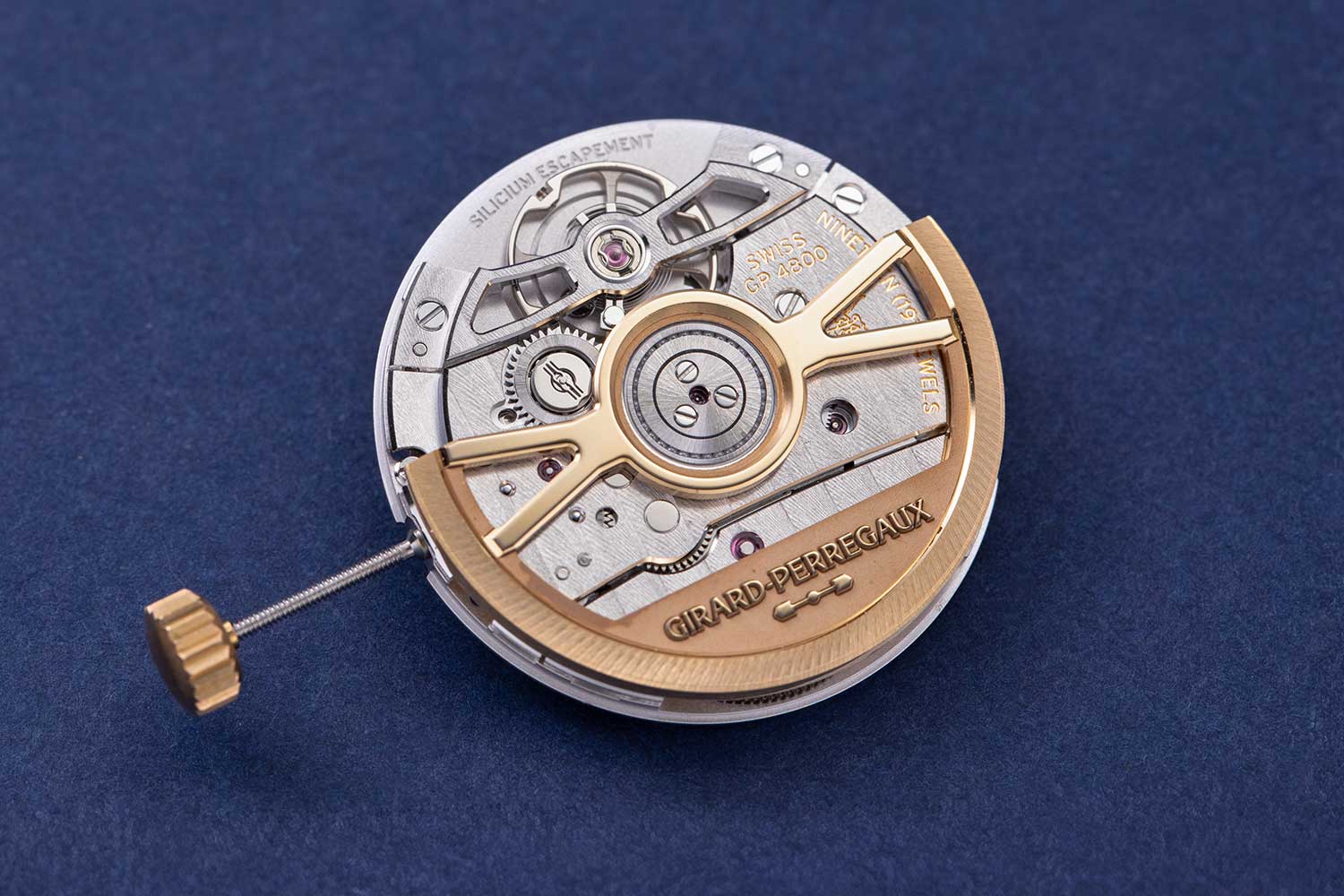
The Caliber GP4800 was conceived with three horizontal bridges, a design that required a less than straightforward gear train layout (Image: Revolution ©)
As such, the gear train is fundamentally different from the Caliber 3300. To optimize space, both movements were designed such that neither the fourth wheel nor the center wheel is located in the middle. But in the Caliber 3300, the train is laid out laterally on the baseplate, enabling it to be traced visually on the bridge side. The escapement ends up positioned adjacent to the balance wheel. The third wheel drives the central seconds pinion while the center wheel pinion drives the minute wheel in the motion works.
However, in the GP4800, the escapement has to be located laterally above the balance, rather than next to it, so that the escape wheel can be supported by the central bridge. The center wheel is located below the barrel rather than above. It drives the third wheel pinion on the dial side, and the third wheel pinion, in turn, drives the friction wheel in the motion works. This construction also enables the third wheel pinion to be shorter. At the same time, the third wheel drives a central seconds pinion. The fourth wheel, in turn, overlaps the barrel above, driving a silicon escapement.
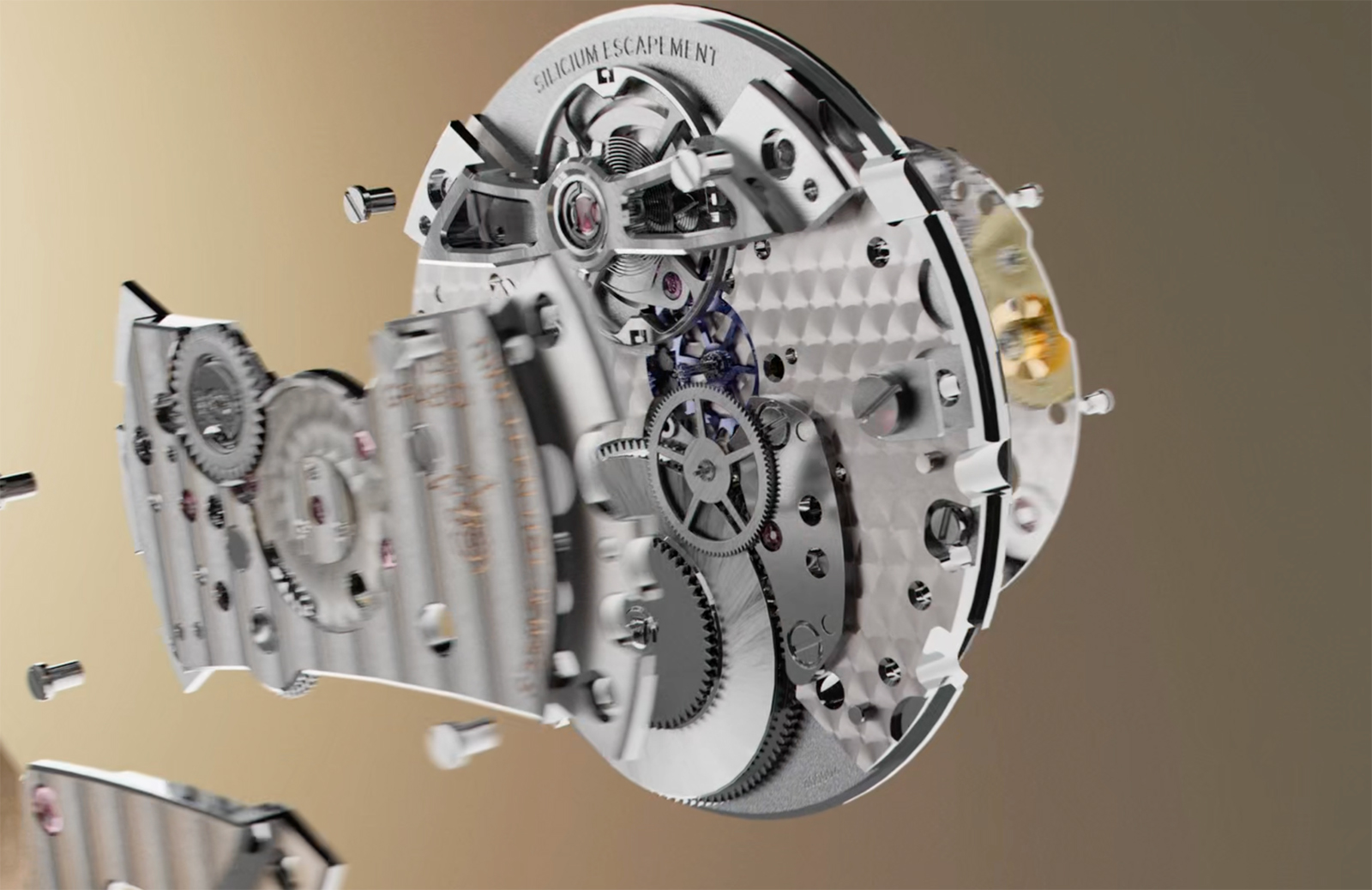
The fourth wheel is positioned above the barrel to drive the silicon escapement, while the center wheel lies beneath it, under a retaining plate. The latter drives the third wheel pinion, which in turn drives the motion works.
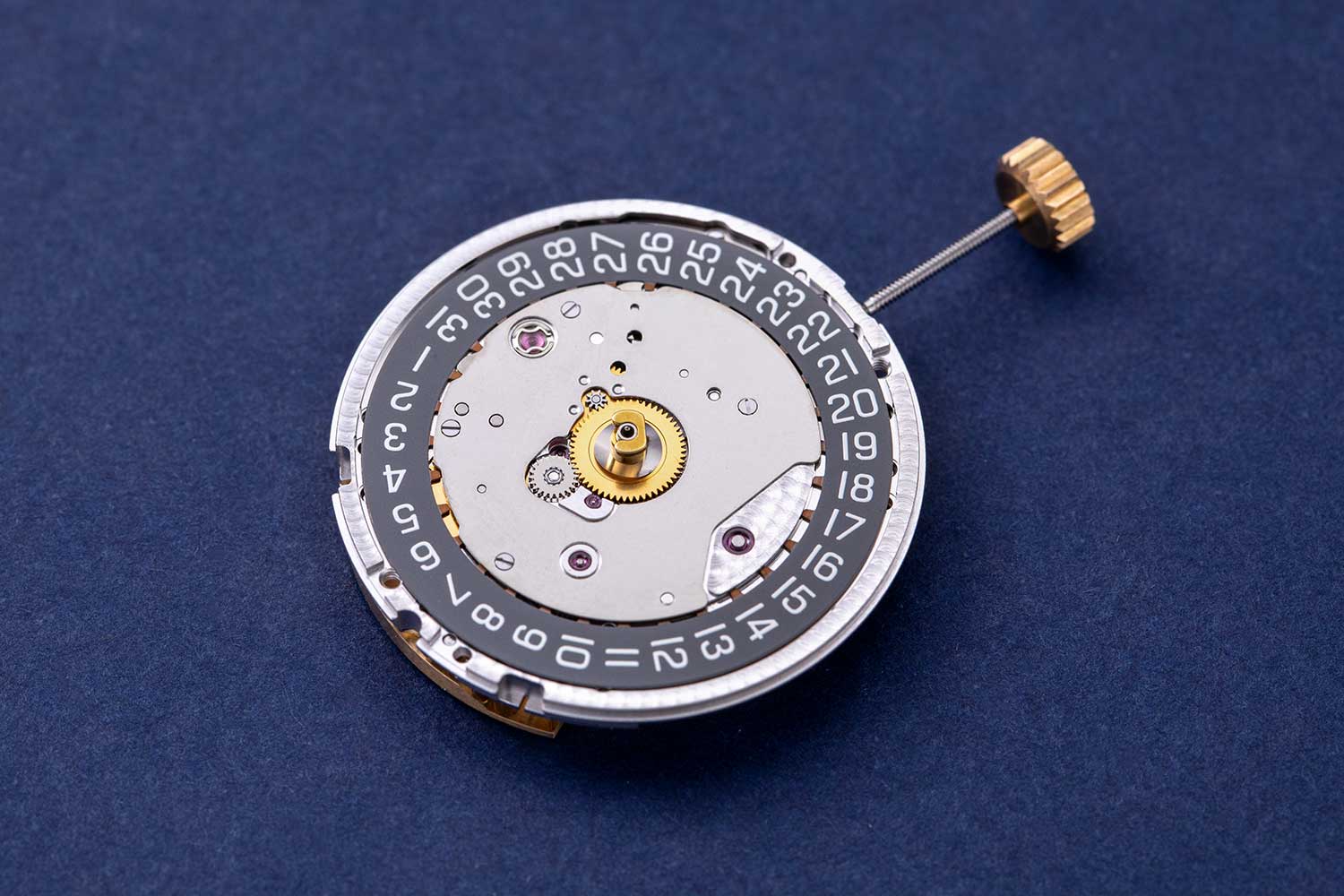
Under-dial works of the Caliber GP4800, showing the third wheel pinion driving the friction wheel in the motion works (Image: Revolution ©)
Indeed, the regulating organ is up to date. The balance is free sprung with regulating screws while the escapement adopts silicon for the lever and escape wheel, bringing low friction, low inertia and strong resistance to magnetism.
Winding is handled by a full 18K gold rotor mounted on a ceramic ball bearing. It is by far the best method to suspend an oscillating weight. Loss of energy due to friction is virtually zero although assembly, needless to say, is much more delicate. The weight winds in one direction only, meaning that it turns freely in one direction while in the other, it drives the automatic winding train, which in turn winds the mainspring. As such, the automatic winding mechanism is simpler, more compact. The clutch that disengages the reduction train during manual winding is itself mounted on a ball bearing, ensuring smooth and low friction operation.
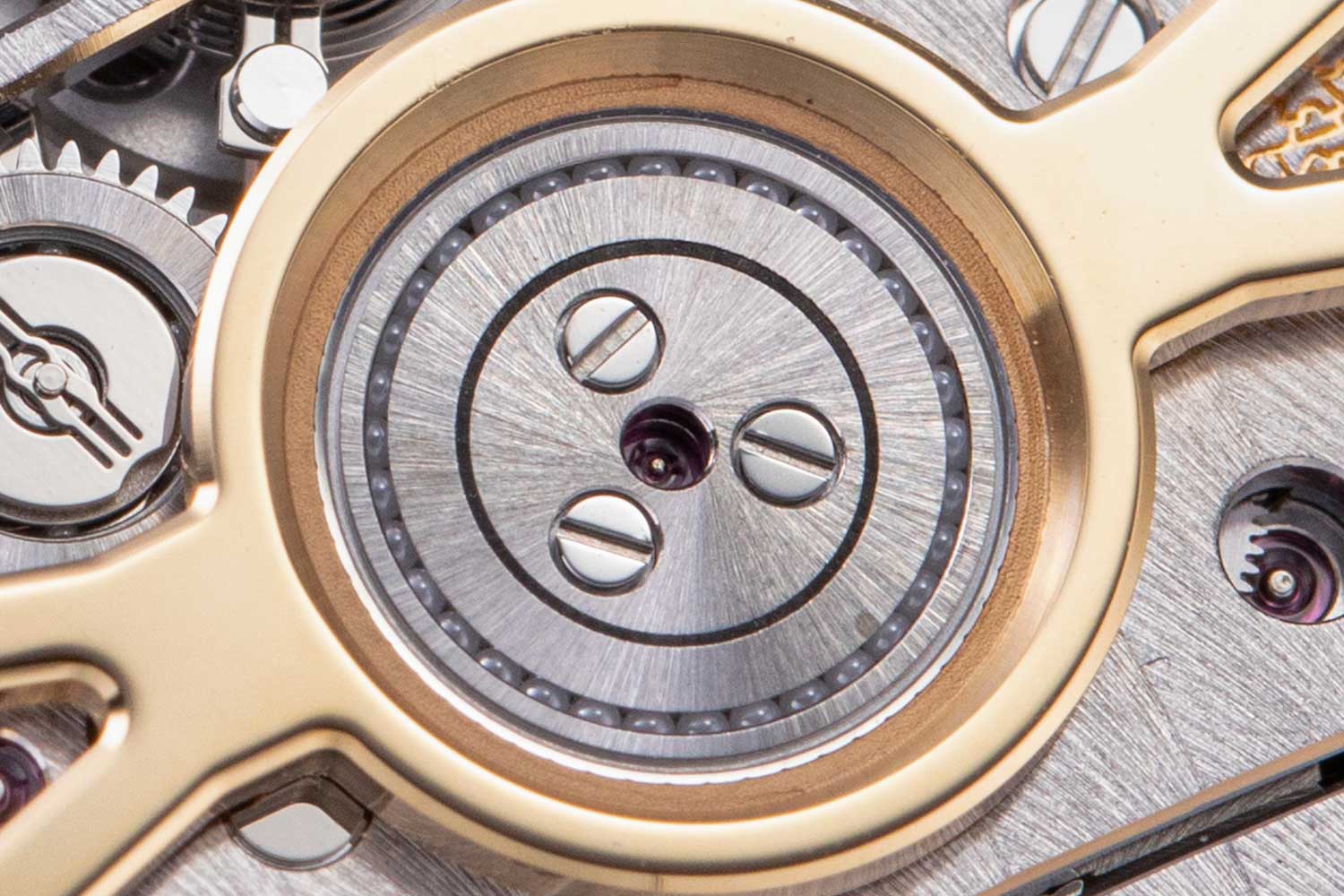
The full 18K gold rotor is mounted on a ceramic ball bearing (Image: Revolution ©)
The rotor, being the visual center of the movement, is decorated with a considered mix of sunray finishing, traits tires (straight graining) and polishing, with its hub decorated with snailing. Elsewhere the finishing is crisply industrial, with neat striping on the bridges and milled bevels. The baseplate is decorated with perlage, while the recessed portion around the balance is sandblasted to keep the mood contemporary.
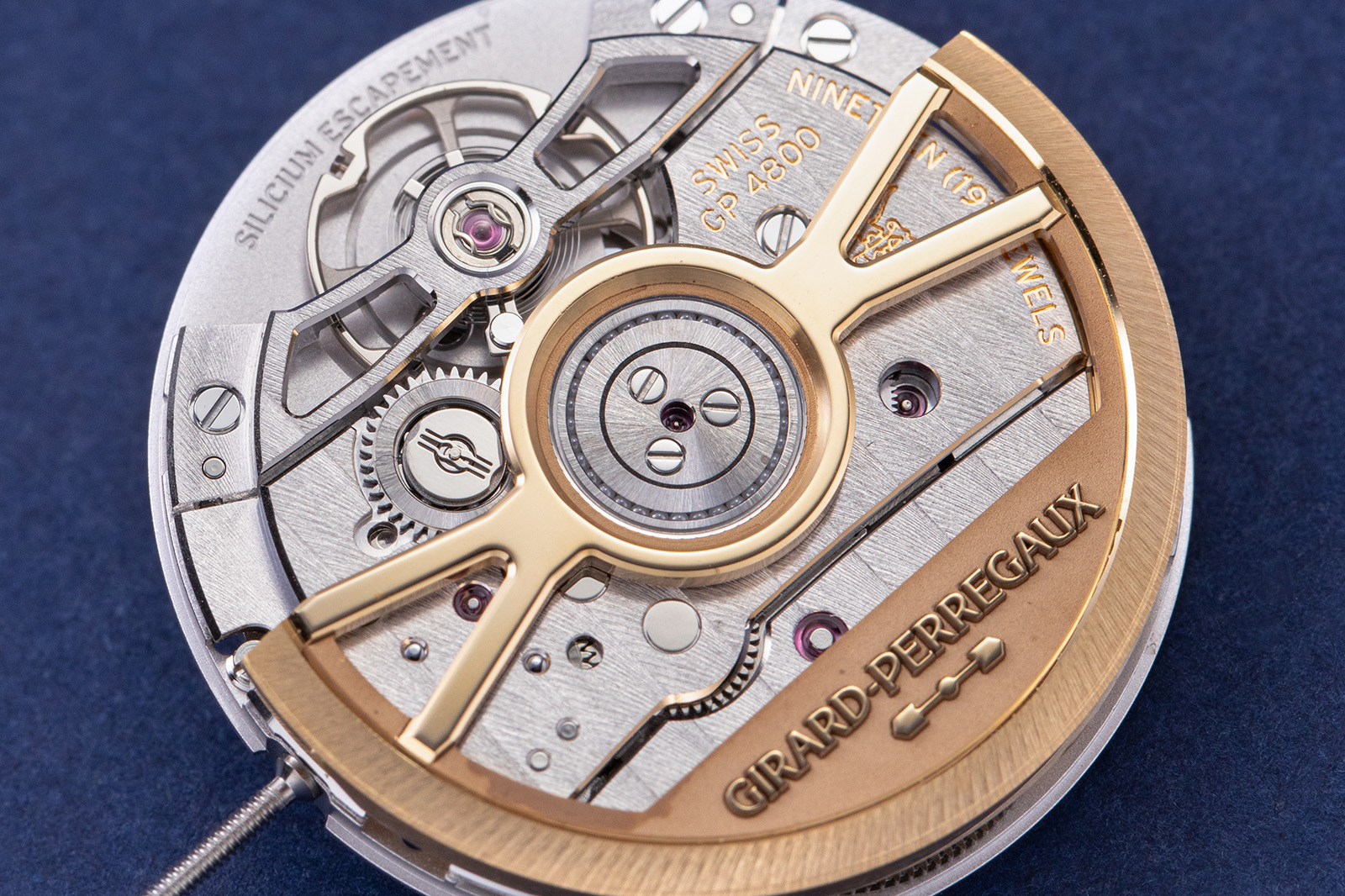
(Image: Revolution ©)
The Laureato Fifty is a one-off limited edition for 2025. Michel-Amadry explains, “In 2026, we will continue to evolve the Laureato collection, showcasing our full expertise in watchmaking and craftsmanship.”
The broader direction for the brand is equally clear. “We want to continue to develop more new movements, more new high complications, but we need to keep a certain focus on the territories in which we operate, because you cannot try to do and be everything. The Three Gold Bridges is our movement — it’s something special. We will have a lot of novelties in that context, because this is a territory that is ours, and we need to continue to innovate, not just capitalize on what we have done so far. We also want to embody ultimate precision; high frequency and the Constant Escapement will be important going forward.”
As Michel-Amadry concludes, “We’re not a marketing powerhouse. Our watches and authenticity have to speak for themselves. We just need to reveal what we are. If there is one word that defines Girard-Perregaux, it is integrity.”
Tech Specs: Girard-Perregaux Laureato Fifty
Reference: 81008-63-3412-1CM
Movement: Self-winding Caliber GP4800; 55-hour power reserve; 4Hz or 28,800vph
Functions: Hours and minutes; central seconds; date
Case: 39mm × 9.8mm; 3N yellow gold and steel; water-resistant to 150m
Dial: Sunray gray with Clous de Paris pattern; 3N gold-plated pink gold indexes with luminescent coating
Strap: 3N yellow gold and steel bracelet with triple folding clasp, featuring up to 4mm of fine adjustment
Price: SGD 41,200, or CHF 25,500
Availability: Limited edition of 200 pieces
Girard-Perregaux

You may also like
News
Girard-Perregaux Unveils Laureato Infinite Grey With Grand Feu Enamel Dial
Jul 3, 2025
News
Girard-Perregaux Unveils Laureato Infinite Grey With Grand Feu Enamel Dial
Jul 3, 2025
News
Girard-Perregaux’s New Laureato Aston Martin Edition Has One of the Most Insane Dials You’ve Ever Seen
Feb 21, 2025
News
Girard-Perregaux’s New Laureato Aston Martin Edition Has One of the Most Insane Dials You’ve Ever Seen
Feb 21, 2025
News
The Final Edition Of The Girard-Perregaux Casquette 2.0 Makes Us Long For A Digital Retrofuture
Oct 31, 2024
News
The Final Edition Of The Girard-Perregaux Casquette 2.0 Makes Us Long For A Digital Retrofuture
Oct 31, 2024