

The Language Of Catherine Eberlé-Devaux
Interviews
The Language Of Catherine Eberlé-Devaux

Summary
When I started this series of articles on the “silent forces” who work behind the scenes yet form the vital infrastructure of Swiss horology that is so crucial to our enduring success, and even our very survival when times are fraught with challenges, I thought immediately of my friend Catherine Eberlé-Devaux, who performs a Herculean role in consistently uplifting the industry. I first met Catherine in her role as Heritage Director at TAG Heuer.
Our first conversation was incredibly memorable, and within moments I was blown away by the depth and scope of her knowledge. I had brought up the idea of creating a Heuer Bundeswehr watch together, and she immediately brought up the fact that some of these watches were called “Sternzeit Reguliert” as they were regulated to “star time” rather than to civil time, which I’ve always found fascinating. I was even more surprised to discover that she was not originally from the watch industry but had gotten her start in the shoe business.
From shoes to Swiss watches: An unlikely beginning
She had started off almost straight out of school as the digital marketing person for La Botte Chantilly, one of the most historic shoe retailers in Lille, France. When she realized that their website needed to be coded, instead of outsourcing the job, she simply taught herself the basics of coding and did it.
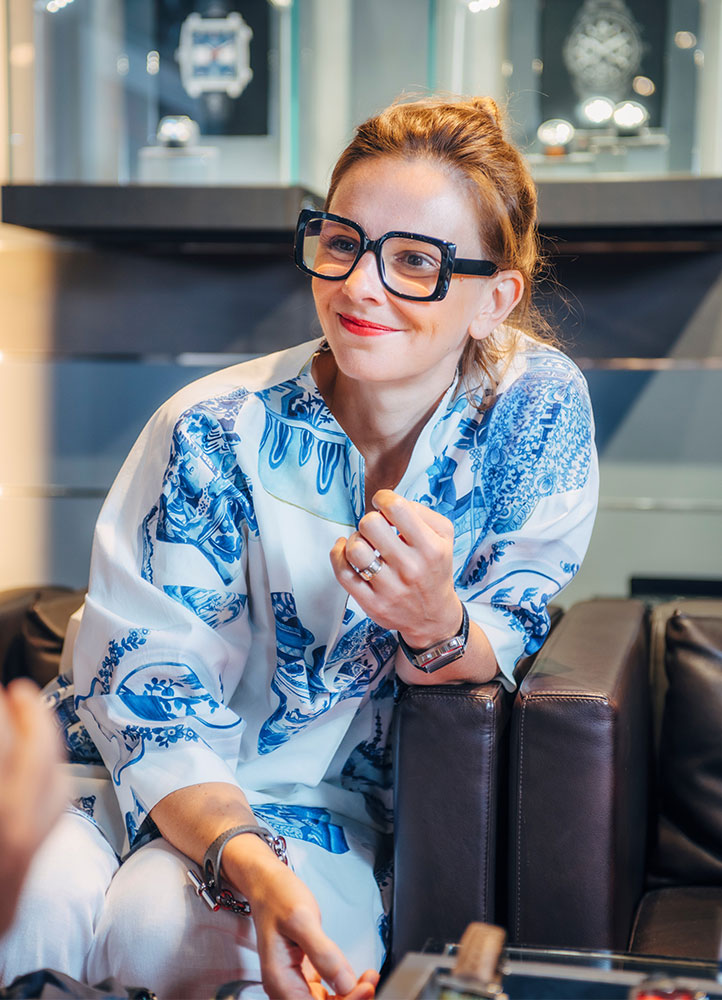
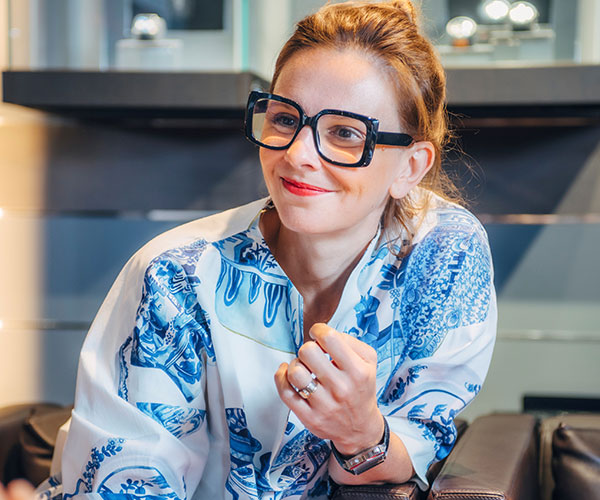
Catherine Eberlé-Devaux
Catherine has an incredible capacity to learn and use information. From there, she became the Heritage Director at TAG Heuer, not in response to a job search but by proposing to the brand a role which didn’t exist before but was needed. Very fortunately, they took her up on the offer, and she soon became a much beloved fixture in our industry.
One person whose attention she caught early on was Jean-Claude Biver, who rang her up two months into her probation period to tell her how much he appreciated her work. After seven and a half years at TAG Heuer, she was recruited by Antoine Pin to join him as the Director of Watch Communications for Bvlgari in 2021.
Shaping the narrative at Bvlgari
There, she oversaw some of the most exciting moments in Bvlgari’s watchmaking history, including the unveiling of the astounding Octo Finissimo Ultra, the world’s thinnest mechanical watch, in Rome. Having dinner with her and Alexander Friedman before e-scootering through the streets of Rome to intercept the watch on arrival for an impromptu advance viewing is a truly great memory.
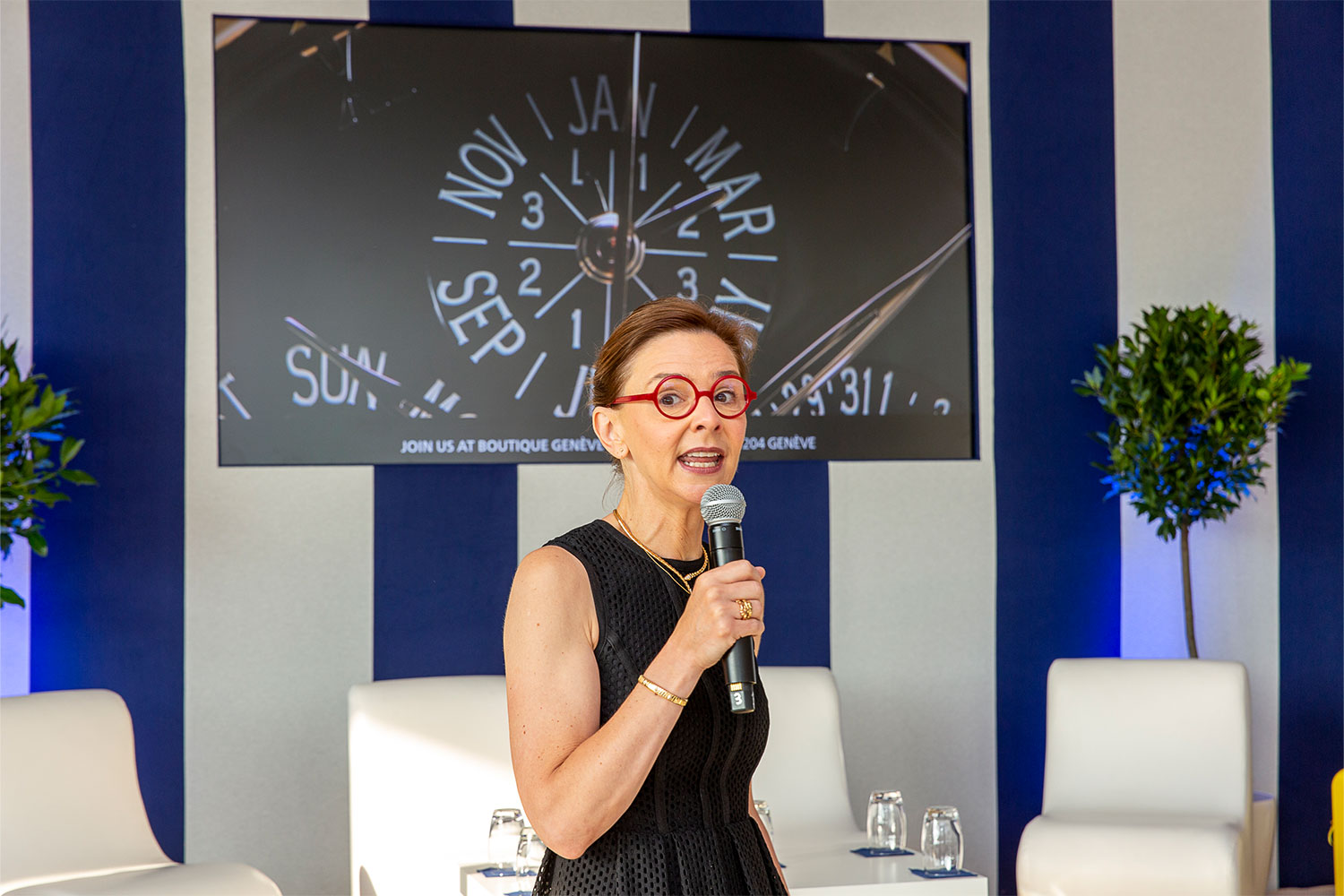
Eberlé-Devaux in action at Geneva Watch Days 2024
Beyond her communications role at Bvlgari, Catherine also takes on a massive task as the key organizer of Geneva Watch Days, together with her former boss, Françoise Bezzola. Since 2021, when most other people are awakening from the somnambulism of their summer holiday, Catherine has ensured that this key moment in the watch calendar goes off without a hitch, putting her boundless energy into this late summer and early fall reunion for those of us who love watchmaking, and making sure that it continues to evolve and succeed. During a challenging year like 2025, initiatives like Geneva Watch Days and individuals like Catherine are more vital than ever.
For this reason, above all, she is the third leader to be featured in this series on the Silent Forces of the Watch Industry.
What was your first job?
I started with shoes, which is still a big passion for me. I spent 15 years at a shoe retailer in France called La Botte Chantilly in Lille. I started there in 1999 when the Internet was still in its infancy. Lille was a very big military base and the store, which was founded in the 1890s, initially produced footwear for the army. By the time I joined, we sold high-end brands for men, women and children. The first thing that I did was encode the website and also encode the database. I learned how to use HTML and I just did it. I had gone to school for international marketing, but I’ve always loved to learn new skill sets and this was an opportunity that I enjoyed. Code is a tool, and I really liked the idea that if you learn its language, you could make it do what you wanted. It demonstrated to me that the ability to communicate is so important.
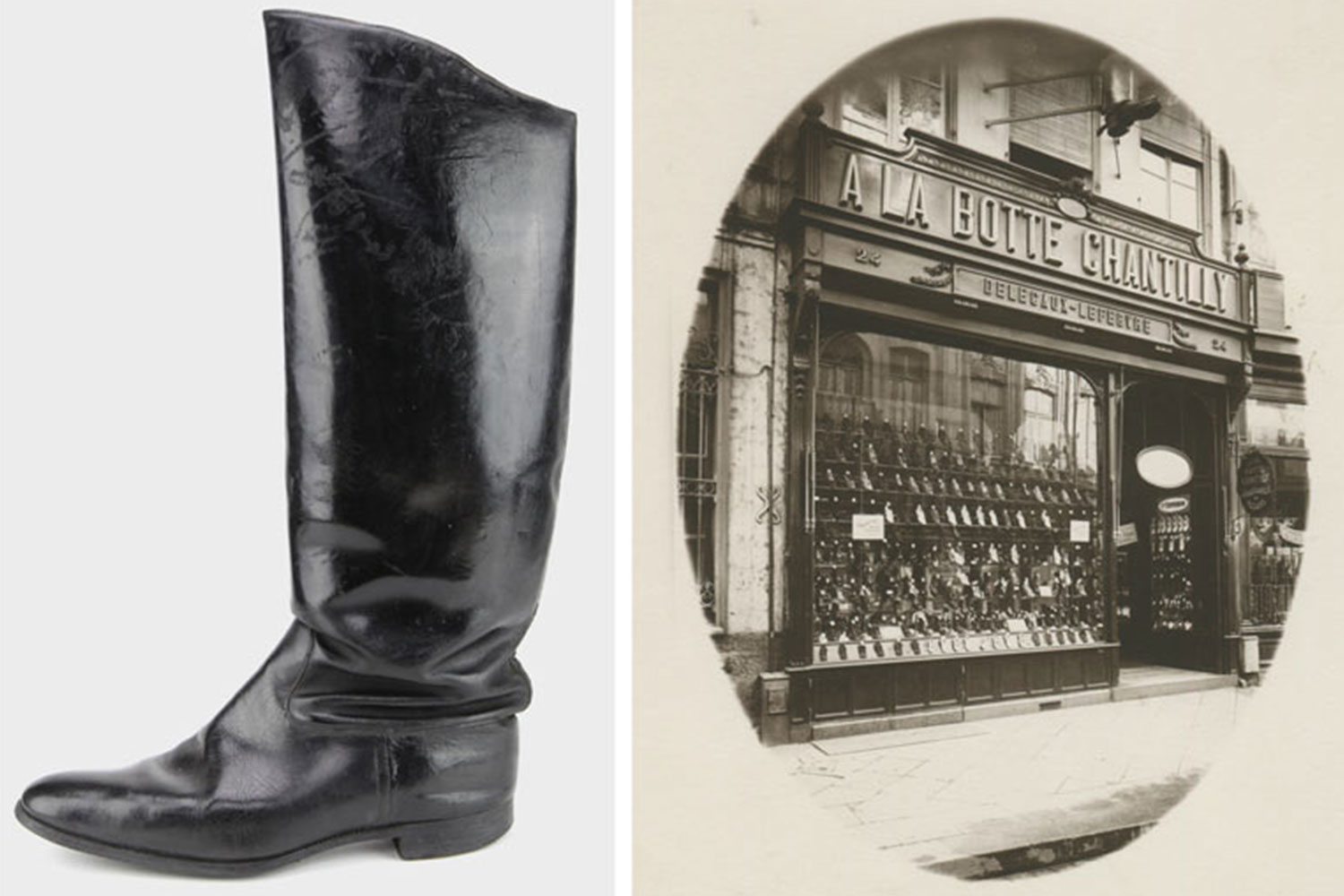
À La Botte Chantilly started as a small workshop of custom-made cavalry boots (called ‘Chantilly’ boots, from the town of the same name) for officers stationed in Lille (Northern France). (Image: La Botte Chantilly)
We were a small independent business, but we had the idea that if we were early adopters for the Internet, this could be very important for our future. It was really exciting to witness the growth of e-commerce in those early days, and in five years, our e-commerce business was larger than that of the physical store. Next, we created the social media channels for the business on Facebook, LinkedIn and all the others.
This occupied the first 15 years of my professional life.
How did you end up in watches?
At some point, I was turning 40, and I thought that I could either keep going in shoes in Lille until I retired, or I was going to need to change my life completely and do something else. My first thought was to move to an HR agency, because this is something I really love to do. To me, HR is about strategy. When someone is leaving, do you replace them one-to-one, or do you use the opportunity to acquire new talent and change your organization? But my real dream was about patrimony. I thought that history, culture and the artistic mood of the time influenced much of the business strategy of any luxury brand. Bringing this kind of social and cultural aspect to business was something I thought could be very important. But as I had no competence in this area, I thought this would remain a dream.
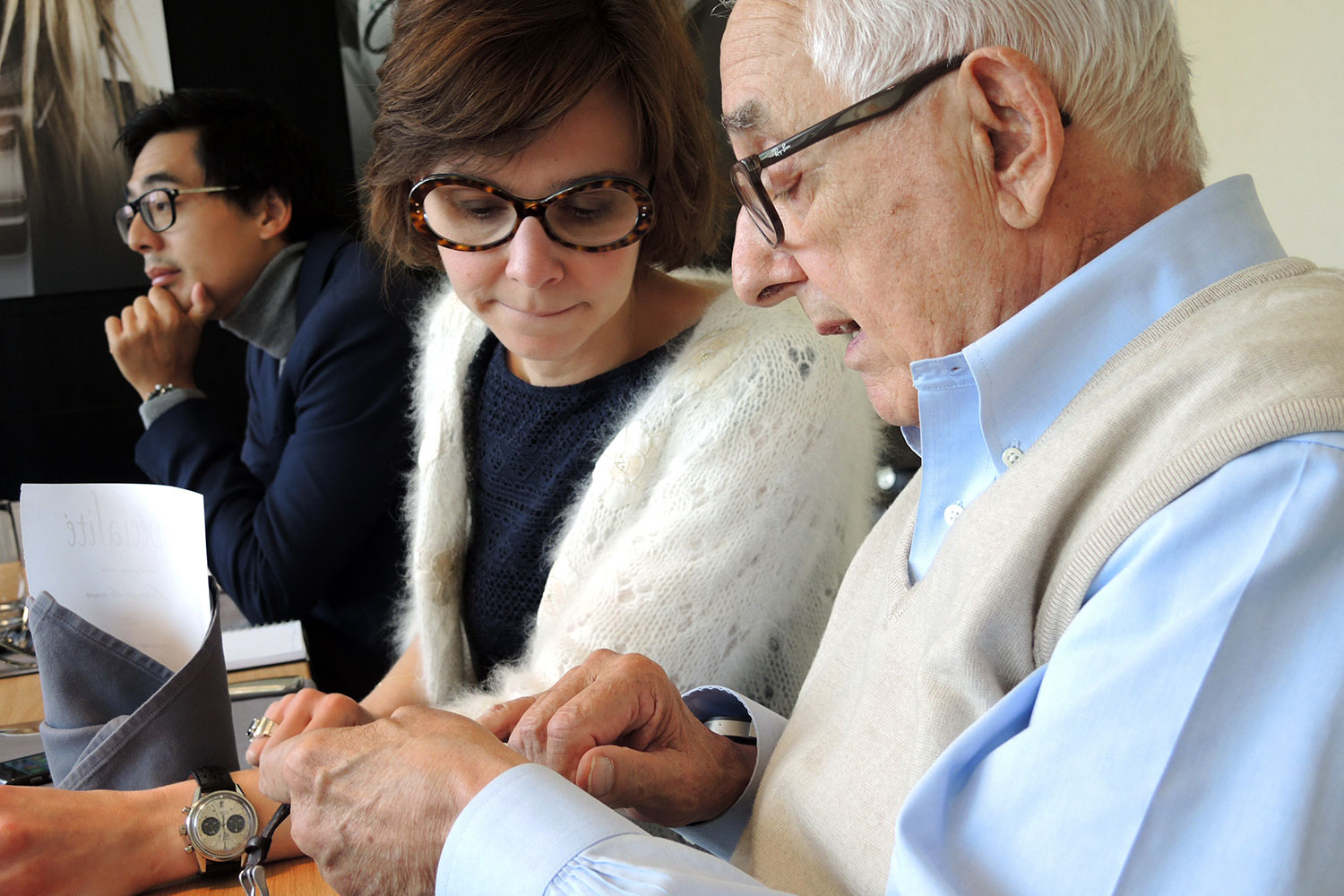
Catherine with Jack Heuer (right) in 2016, when she was the Heritage Director at TAG Heuer
Then I met a very inspiring coach based in Neuchâtel, and she could see I was truly in love with patrimony. I got an interview at TAG Heuer, thanks to her. They already had the museum, but they did not have a team for heritage.
I started as a content manager, so I wrote all the text for the press releases and digital posts. In order to do that, I had to learn heritage, and I had to learn watchmaking. These things came to me much more naturally than I thought they would, because of the “craft” dimension of watchmaking. It was the craft aspect of shoes that was my passion, and so I found a bridge into the watch world.
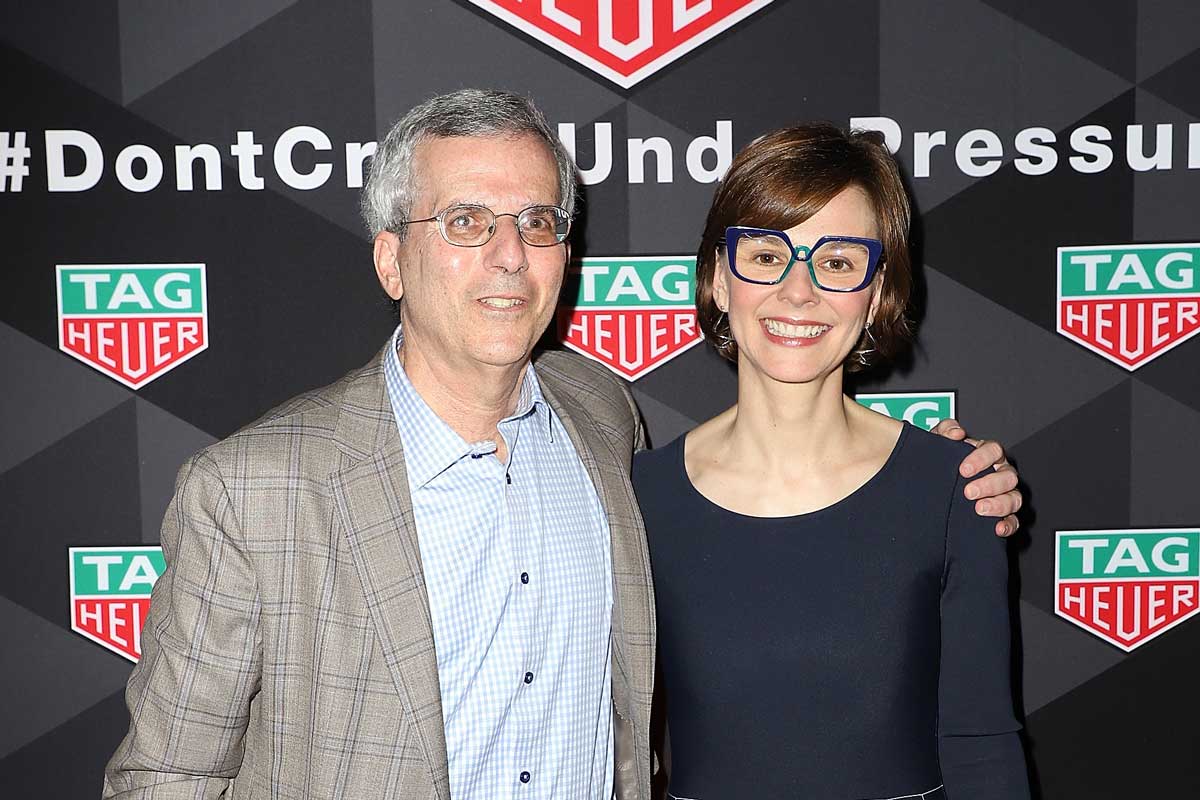
Founder/Owner OntheDash, Jeff Stein (left), and Heritage Director of TAG Heuer, Catherine Eberlé-Devaux (right) attend the Museum in Motion TAG Heuer Grand Opening Party on February 15, 2018 in Miami, Florida. (Photo by John Parra/Getty Images for TAG Heuer )
I received a very warm welcome by the watchmakers at TAG. They invited me to come inside [their manufacture], to learn, to even try, and soon I found a huge passion. I owe them a lot.
What was your favorite part about the role of Heritage Director at TAG Heuer?
What I really loved was understanding the relationship of history and what was happening culturally, and the evolution of the wristwatch. For instance, I liked to look at the decisions that Jack Heuer took in the context of the world at the time, and also to look at what the others did to see how his decisions made the difference. I liked to see how the best leaders are reactive to the world around them. Even the birth of the wristwatch is fascinating. The reality was that men might never have adopted the wristwatch if it wasn’t for World War I, which was when they realized that this kind of timepiece was a liberation, as it was so much easier to perform on the battlefield or in the hospital. The first to respond to this had an advantage. I loved that watches had a crucial role in the advancement of civilization, such as the creation of the railroad system. Without watches, we could never have coordinated the railroads, taken to the air in planes or crossed the oceans in ships. Those who achieved the best watches in terms of accuracy understood this.
Who inspired you?
My first boss was Françoise Bezzola. She taught me that stress is useless. That was a big lesson for me. She was super transparent, and she showed me that stress comes from a lack of transparency.
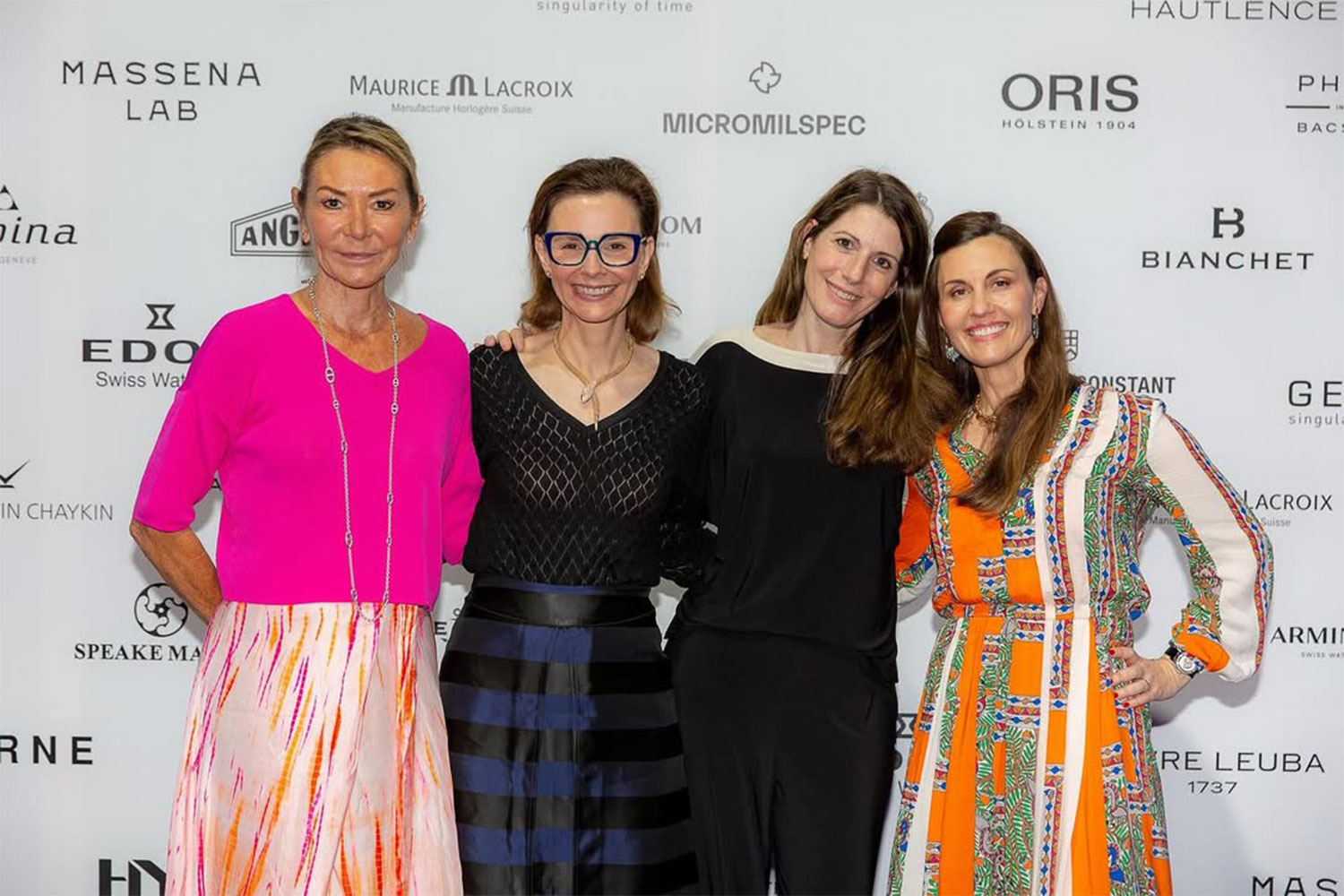
Françoise Bezzola (left) with Eberlé-Devaux (second from left) and FHH Vice President, Aurélie Streit (far right) at Geneva Watch Days 2023. (Image: @aurelie.streit)
Because you have to anticipate that you haven’t asked for this or shared that, it creates a lot of pointless distraction. She is someone very important to me, and it is a pleasure to work on Geneva Watch Days with Françoise.
I also had the chance to work for Valérie Servageon. What a leader! I knew how to do my job and how to go the extra mile, but she showed me how to put the cherry on top of the cake. She never goes one extra step; she always goes two. And her expectation was that everyone would go the extra two steps. I really loved this because some people are internally motivated to achieve excellence, and she is that type of person. I hope that following her example has helped me bring this to my work as well.
Tell me about the funny phone call you received from Jean-Claude Biver.
I worked for Mr. Biver, who is a legend, and he taught me how to speak to someone like him with his reputation and aura. I had been in TAG Heuer for two months when he called me. He didn’t have my number, but he was able to reach me though the company operator. She rang me and said there was Mr. Biver on the line. I thought it was a joke at first.
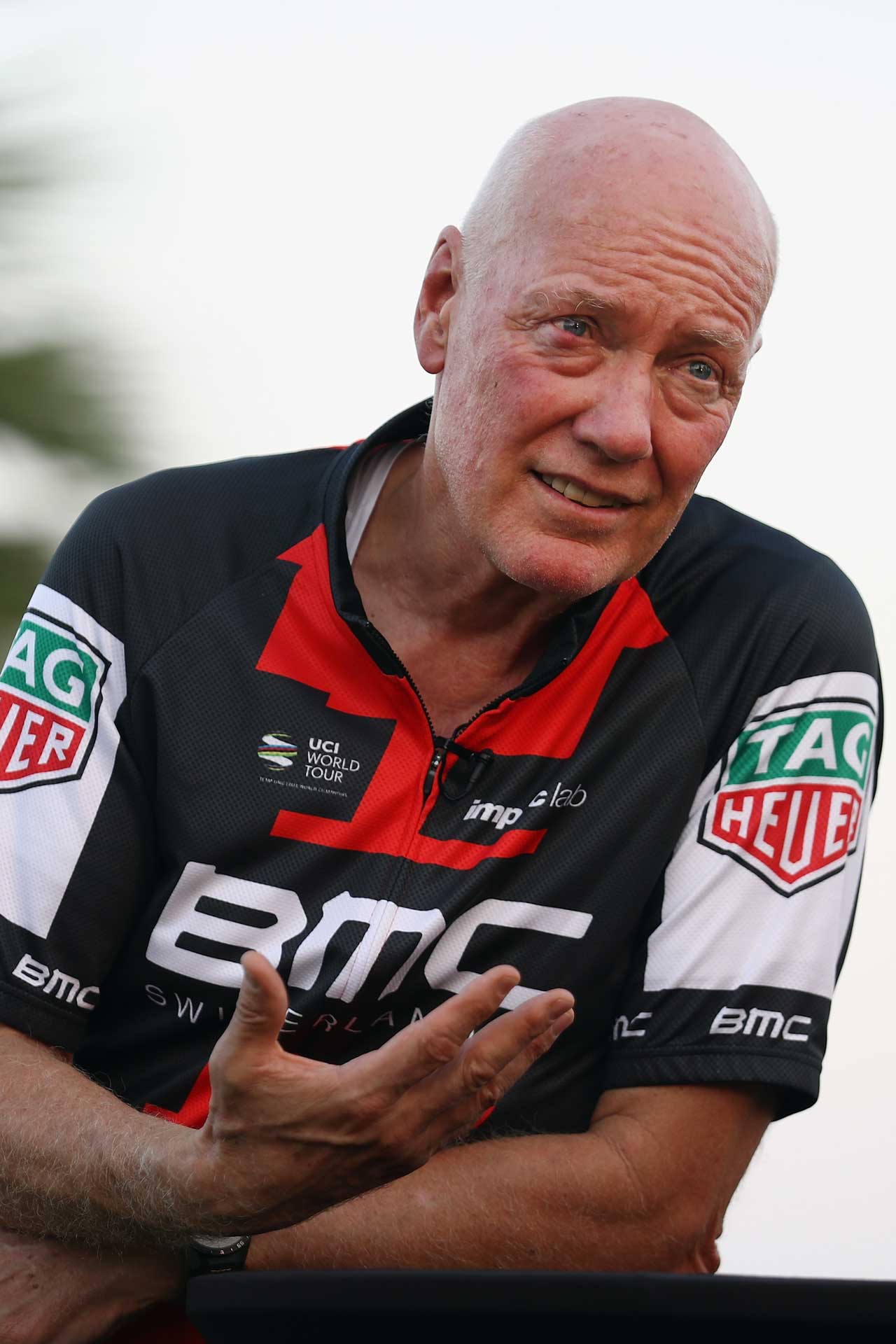
Jean-Claude Biver, former TAG Heuer CEO, at the UCI Road World Championships on October 8, 2016 in Doha, Qatar. (Photo by Bryn Lennon/Getty Images for Tag Heuer)
But he came on, and he told me he had heard good things about me. He knew my two-month probation period was coming to an end, and so he wanted to know if I would be willing to stay on. It had been an intense first two months. He knew this, so he told me to be calm and confident, that he trusted me, and that we would do great things together. This was a really important moment for me.
Before this, I had always pictured myself as, “Little Catherine, who came from shoes in Lille,” but I was then working for the world’s biggest luxury group and talking to this legend of the watch industry. I realized that if I wanted to work effectively and add some value, I had to stop thinking this way and start to feel a sense of belonging to TAG Heuer and believe that my voice could bring something.
Mr. Biver showed me the best leaders don’t intimidate, they inspire. I told myself, “OK, now you have to grow and take your place, because if you don’t, you are not helping anyone — not yourself and not your bosses either.”
How did you start with Bvlgari?
I have had the chance to work with amazing people like Stéphane Bianchi, Frédéric Arnault and, of course, Antoine Pin. I was in TAG Heuer for a total of seven and a half years. I was not only handling heritage, but also communicating about our restoration workshop — we were one of the first brands to really offer restoration — and also with the retail department to educate our people and our clients. Organically, I was moving more into communications and less in heritage.
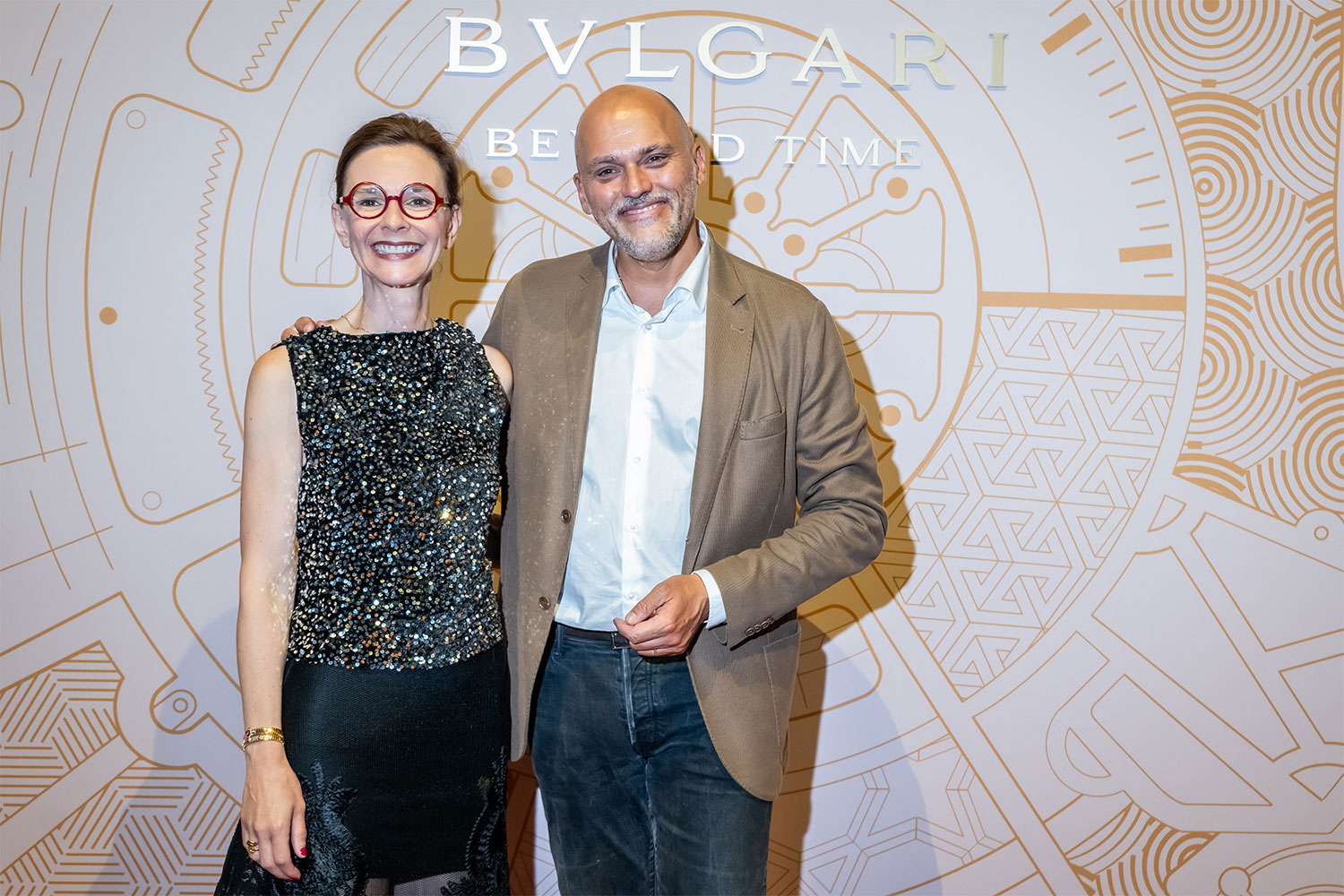
Eberlé-Devaux with Antoine Pin (right), former Managing Director of Bvlgari Watches, now the CEO of TAG Heuer
Then, Bvlgari appointed Antoine Pin as Managing Director of its watch division. He immediately knew that he wanted a strong and dynamic communications team to help him grow the awareness of the watches.
Already, there was the Head of PR, Pascal Brandt, but he wanted someone to oversee digital and also to push press and celebrities to come to the manufacture, which was still a best-kept secret in our industry. I was a plug-and-play solution for him, and I was very happy to join Bvlgari.
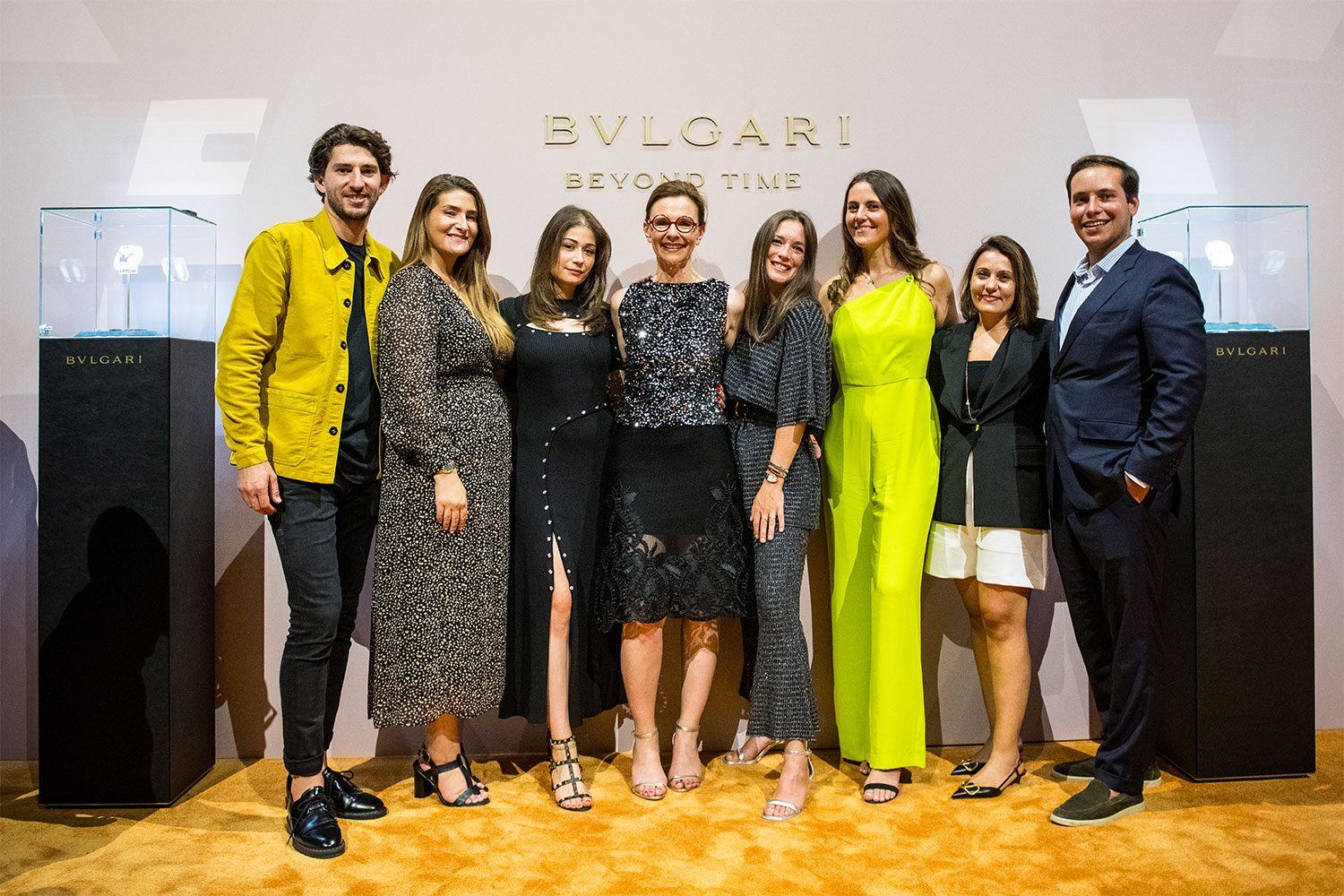
Eberlé-Devaux (middle) with her team at Bvlgari, where she oversees watch communications
We are extremely transversal as a brand, from jewelry to watches to fragrances to the best hotels in the world, and also transversal within the watch category, from accessibly priced watches all the way to timepieces for the ultra wealthy. The question was how to create the correct communication for each launch and understand how they each contribute to the Bvlgari ecosystem.
What does friendship mean to you?
Human relationships mean everything to me. The real friends that we have in the industry are the most important dimension of my job.
How did Geneva Watch Days get started?
I was not there for the first edition in 2020, but I looked at it with a lot of curiosity and admiration when I was still at TAG Heuer. At the time, I did not realize how, in some ways, I would come to consider this fair to be personally important to me as well. In 2020, we had the last fair before Covid hit the whole planet. That was LVMH Watch Week in Dubai. Then SIHH [Watches and Wonders] didn’t happen, Baselworld didn’t happen and, all of a sudden, the world stopped. But in summer, the sanitary measures slightly opened up. Jean-Christophe Babin saw this and he called the Canton of Geneva and said we had to do something. He reached out to his friends Patrick Pruniaux, Georges Kern, Max Büsser, Pierre Jacques and Felix Baumgartner, and said, let’s act together!
There were 15 companies, 19 brands and 200 people who were available to come. Of course, we had developed the digital tools to enable us to connect through Zoom or [Microsoft] Teams or whatever. But I think we all longed for and missed that vital human contact.
What is unique about our industry is that you need to try watches on. You need to touch them. You need to feel them on the wrist. You need to dive into the details. And we love to be together. We are the most community-based industry in luxury. And so, in the middle of this planetary nightmare, we were able to create a love moment.
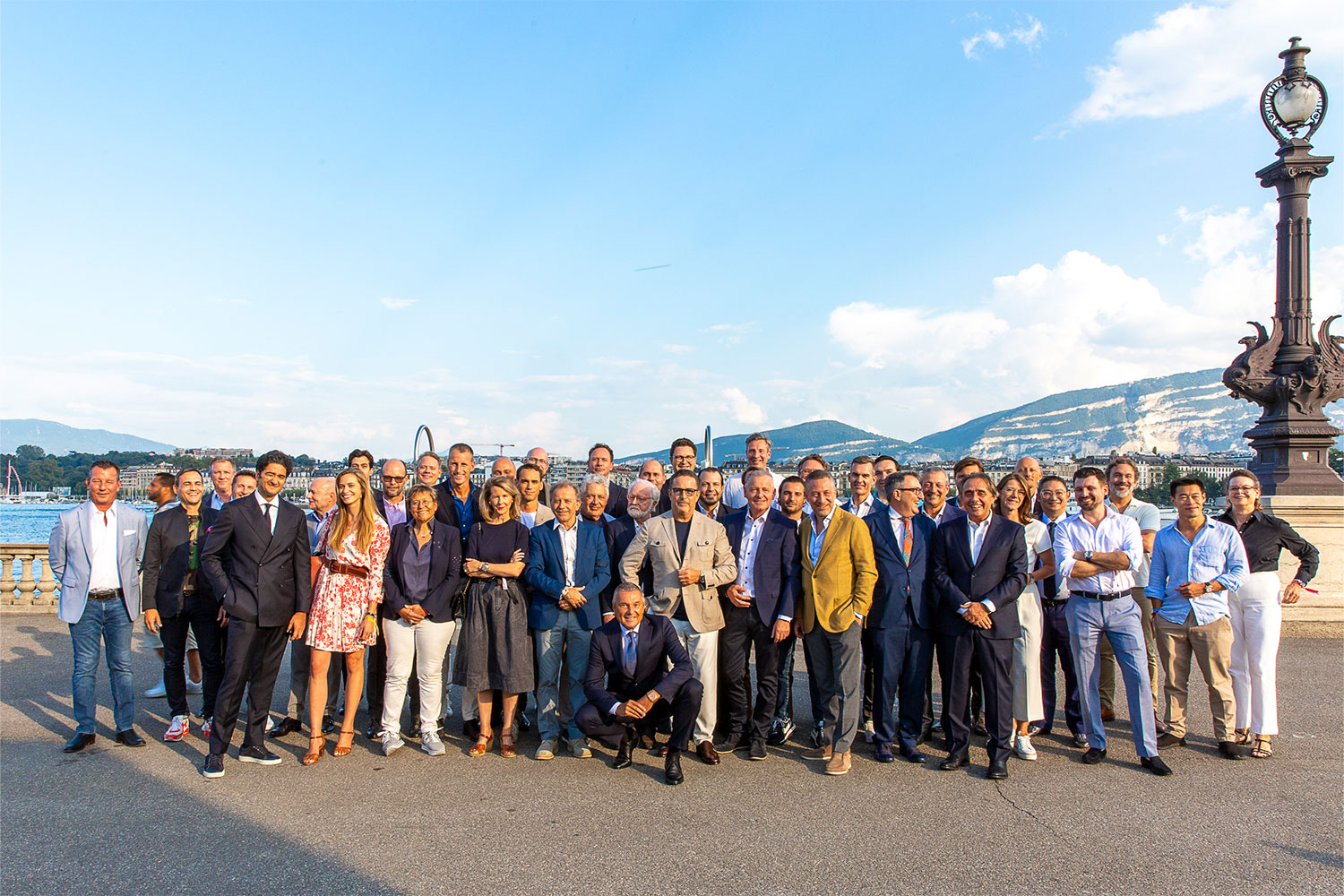
In 2024, Geneva Watch Days drew to a close with record results: 52 brands took part and nearly 1,500 watchmaking professionals, including 650 media representatives and 250 retailers, were in attendance
When I joined Bvlgari in 2021, one of the first things I asked the watch community was, “Should we do it again?” Everyone replied, “This was too cool! We have to do it!” From there, I involved myself in the organization and strategic thinking. Since then, it has become something I love to do and that I am most proud of.
You have to organize at least two major events each year. Do you ever get overwhelmed?
It’s a lot, sure. But it is joy. It is pleasure. I think that we always have this desire to achieve new things, to go further than before. But all human beings have a little voice that tells them, “No, no, you cannot, you have too much on your plate, you are getting old, slow down.”
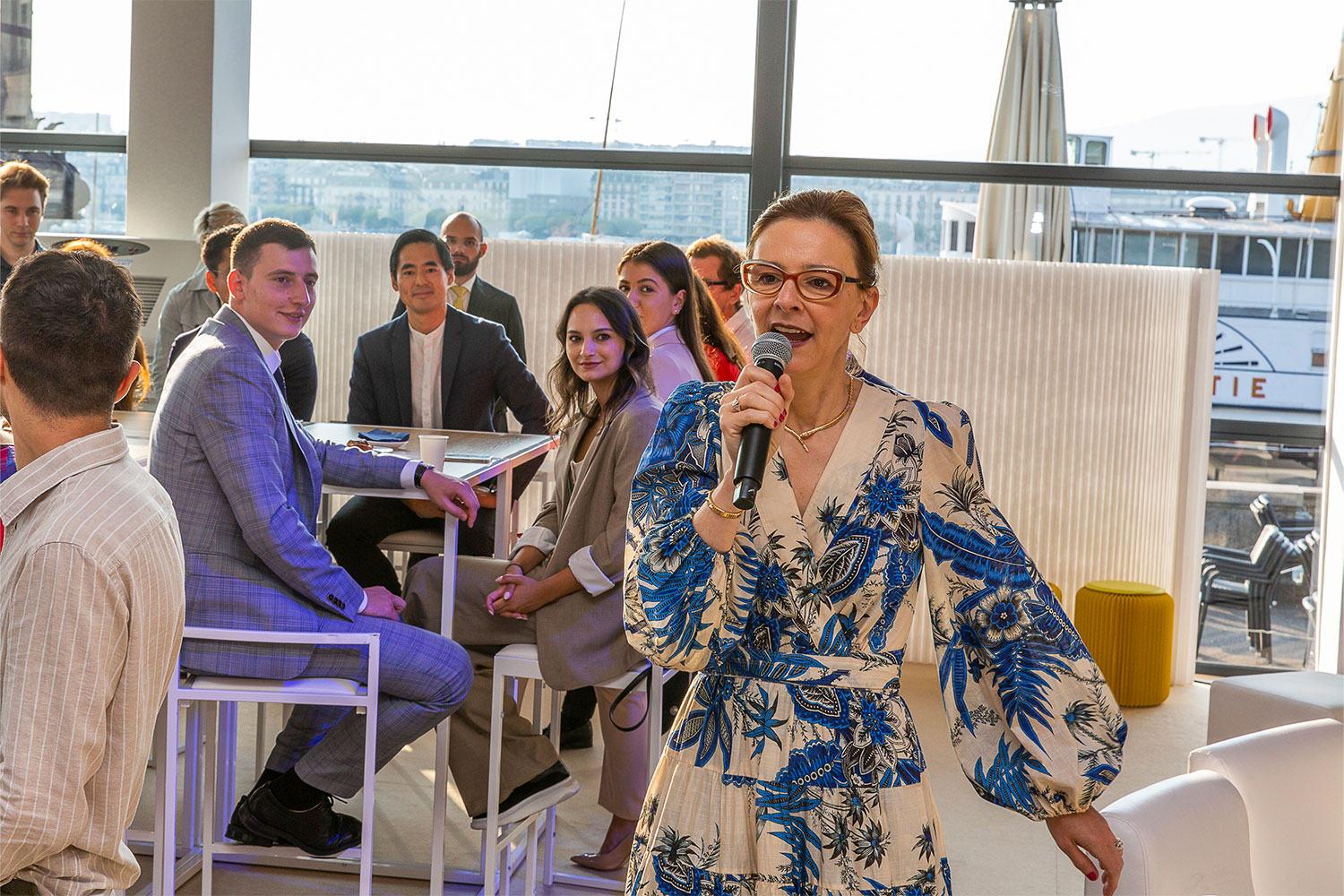
Eberlé-Devaux at the CEO Breakfast in Geneva Watch Days 2024
Every time I hear this voice, I always say, “OK, thank you for pointing this out, and now we are going to go for it anyway.” We are going to organize the next one and the next one because it is important and has value and brings us together as a community. Geneva Watch Days is not a tent anymore; it’s a pavilion with one of the most important exhibitions in our sector.
It is very rare to see 120 timepieces together under one roof with this quality of creation. So yes, it is of value. We raise money for the Geneva Watchmaking School.
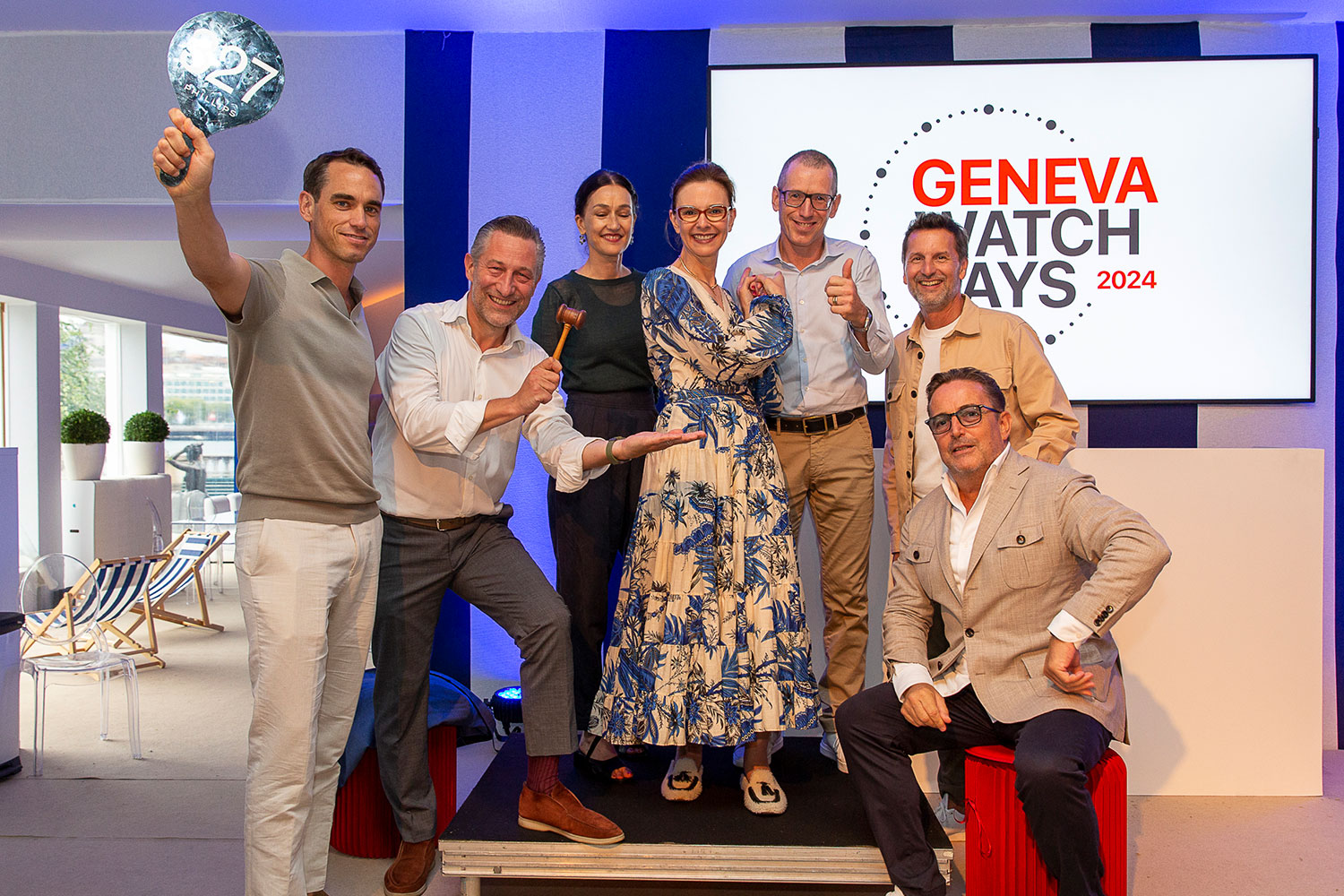
Last year, Phillips raised CHF 108,000 at the Geneva Watch Days Auction, with all proceeds benefiting l’École d’Horlogerie de Genève, Switzerland’s oldest watchmaking school
Last year, on the final day, I was crossing the bridge and looking at our Glass Box [content creation studio] and I thought, “Wow, this is real!” We don’t have the auto show anymore so Geneva Watch Days is the second most important fair each year. We welcomed over 13,000 visitors last year. It’s a strong and important platform for communication.
Jean-Christophe Babin has created something beautiful. It is our pleasure to honor his vision.
Bvlgari

You may also like

Editorial
Viva Bvlgari
Oct 28, 2025
Editorial
Viva Bvlgari
Oct 28, 2025

limited
Bvlgari × Revolution Octo Finissimo XX Anniversario
Oct 7, 2025
limited
Bvlgari × Revolution Octo Finissimo XX Anniversario
Oct 7, 2025

Editorial
Ultra Rosso – Bvlgari × Revolution Octo Finissimo XX Anniversario
Oct 7, 2025
Editorial
Ultra Rosso – Bvlgari × Revolution Octo Finissimo XX Anniversario
Oct 7, 2025