

A Closer Look: Petermann Bédat Reference 1825
Reviews
A Closer Look: Petermann Bédat Reference 1825

Founded in 2017 by Florian Bédat and Gaël Petermann, a duo who first met in watchmaking school and later worked together at A. Lange & Söhne, the namesake independent brand Petermann Bédat has just returned with its third watch in eight years.
The brand first gained attention with its debut piece featuring a deadbeat seconds complication, followed by a split-second chronograph that quickly raised their profile. But for their third watch, they’ve gone in the opposite direction. Dubbed Reference 1825, this latest model is their most pared-back yet. It’s a simple time-only watch, free of complications and without the openworked dial that defined their earlier pieces.
What makes this a major launch, though, is symbolic. The 1825 houses the brand’s first fully in-house movement. Their earlier calibers were developed with the help of Dominique Renaud, co-founder of Renaud & Papi and one of the industry’s best-known technical minds. This time, Petermann Bédat — now a workshop of eight watchmakers and two movement finishers — has gone entirely on its own.
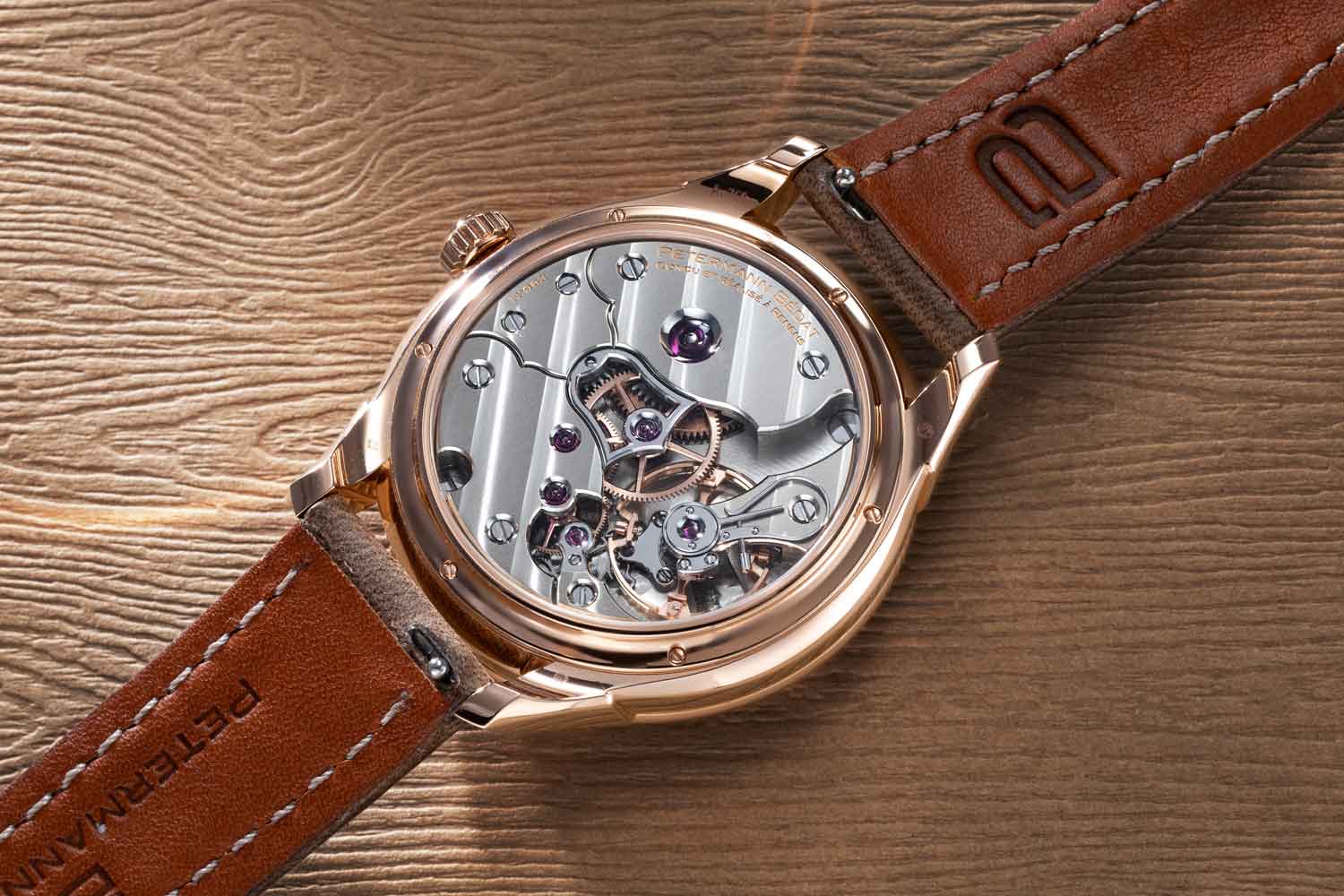
The all-new cal. 233 inside the Reference 1825 (Image: © Revolution)
If you were worried that going at it by themselves might compromise construction or finishing, worry not. Quite the opposite, in fact. The new movement looks even better, with a clever, symmetrical design. That’s a sign of maturity and growth.
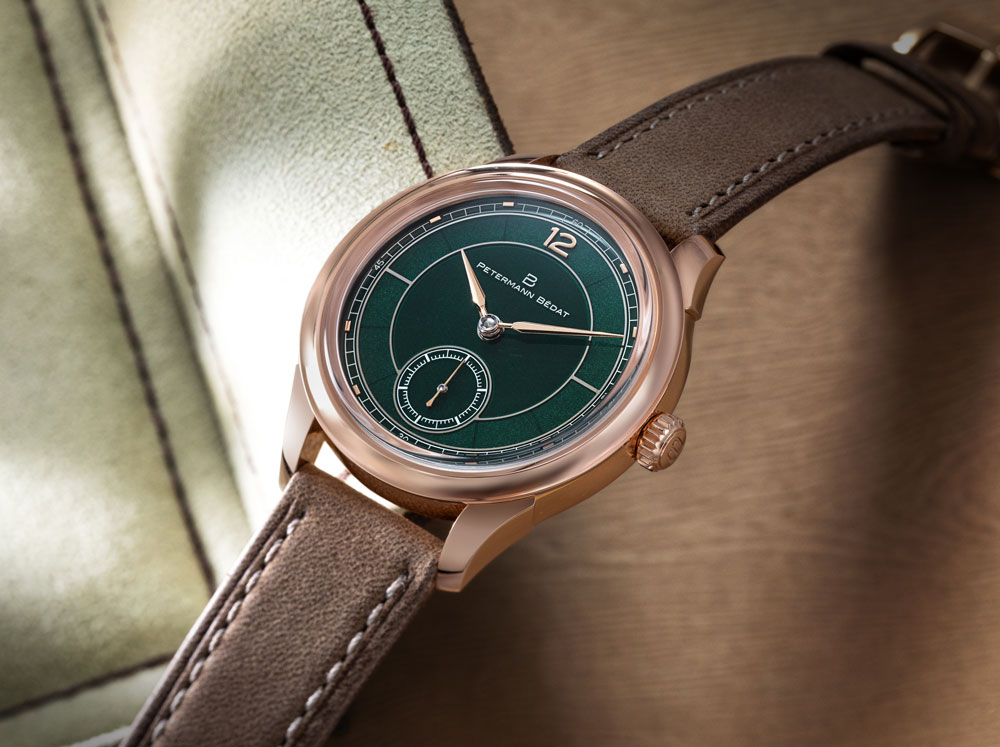
Other than the new movement, the 1825 gets a complete makeover. Gone is the brand’s usual all-silver, classical look. Instead, it arrives in bold green enamel and rose gold, a striking pairing that makes an immediate impression.
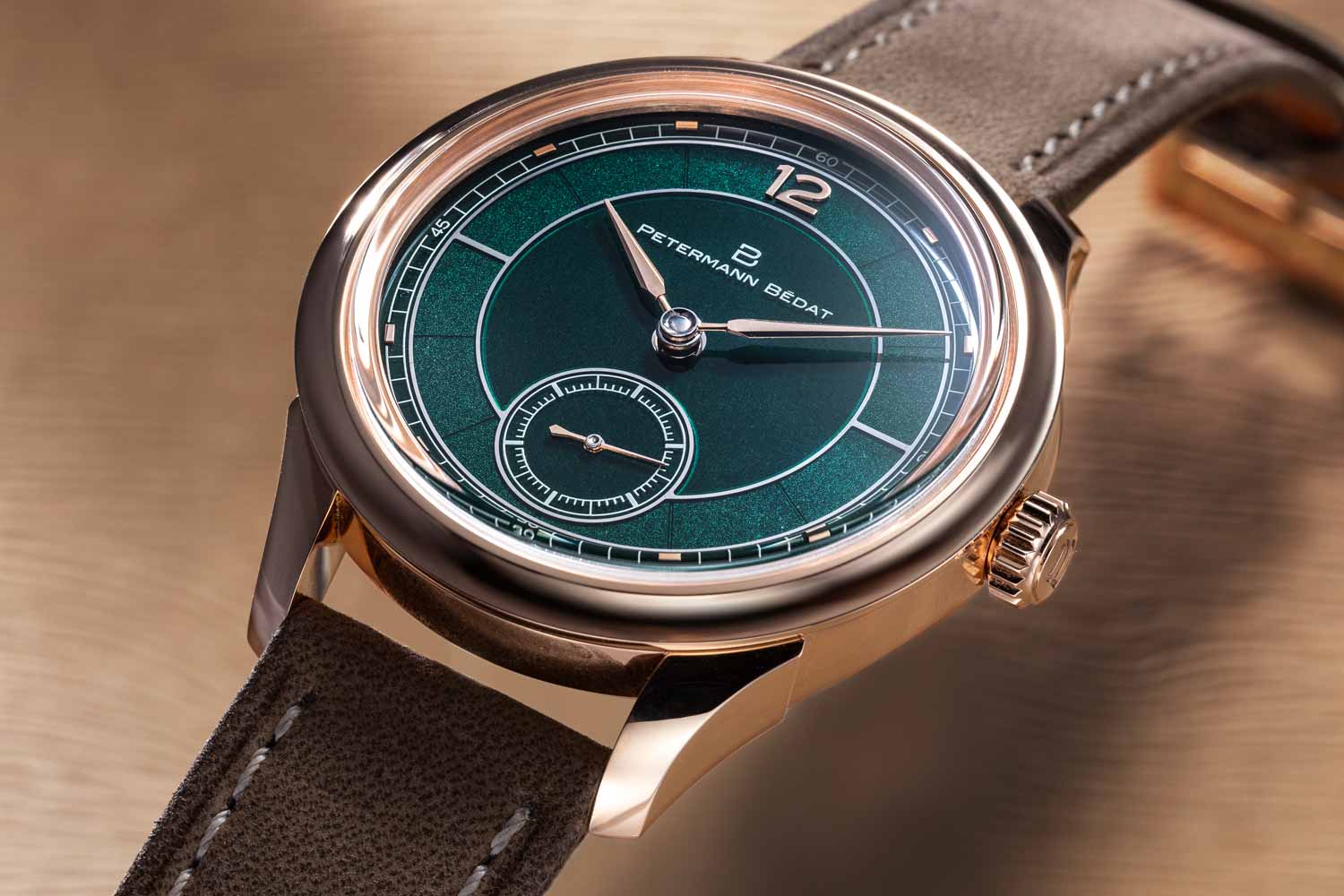
Gorgeous two-tone enamelling (Image: © Revolution)
A striking palette in a simple shell
The new 1825 sports an unusual color scheme. Green dials have become more common in recent years. But in the high-end independent world, especially among dress watches, green is still largely absent. Here, it is paired with a pink gold case, creating a striking palette that stands apart from the many classic dress watches that usually feature silver or black dials.
That said, this approach reflects the brand’s spirit of blending tradition with modernity, something evident in past models. For example, the second series of the 1967 Deadbeat Seconds featured a titanium case with a vibrant baby blue dial, while limited editions for the Arabic market came with a rich burgundy dial.
While the color is bold, the overall case design and dial layout remain straightforward and effective. They are not particularly unique, admittedly, even though the construction follows traditional methods such as separate lugs soldered to the case and a carefully fired enamel dial. This restrained design approach works in the watch’s favor, as it keeps attention on what truly matters: the exceptional movement inside.
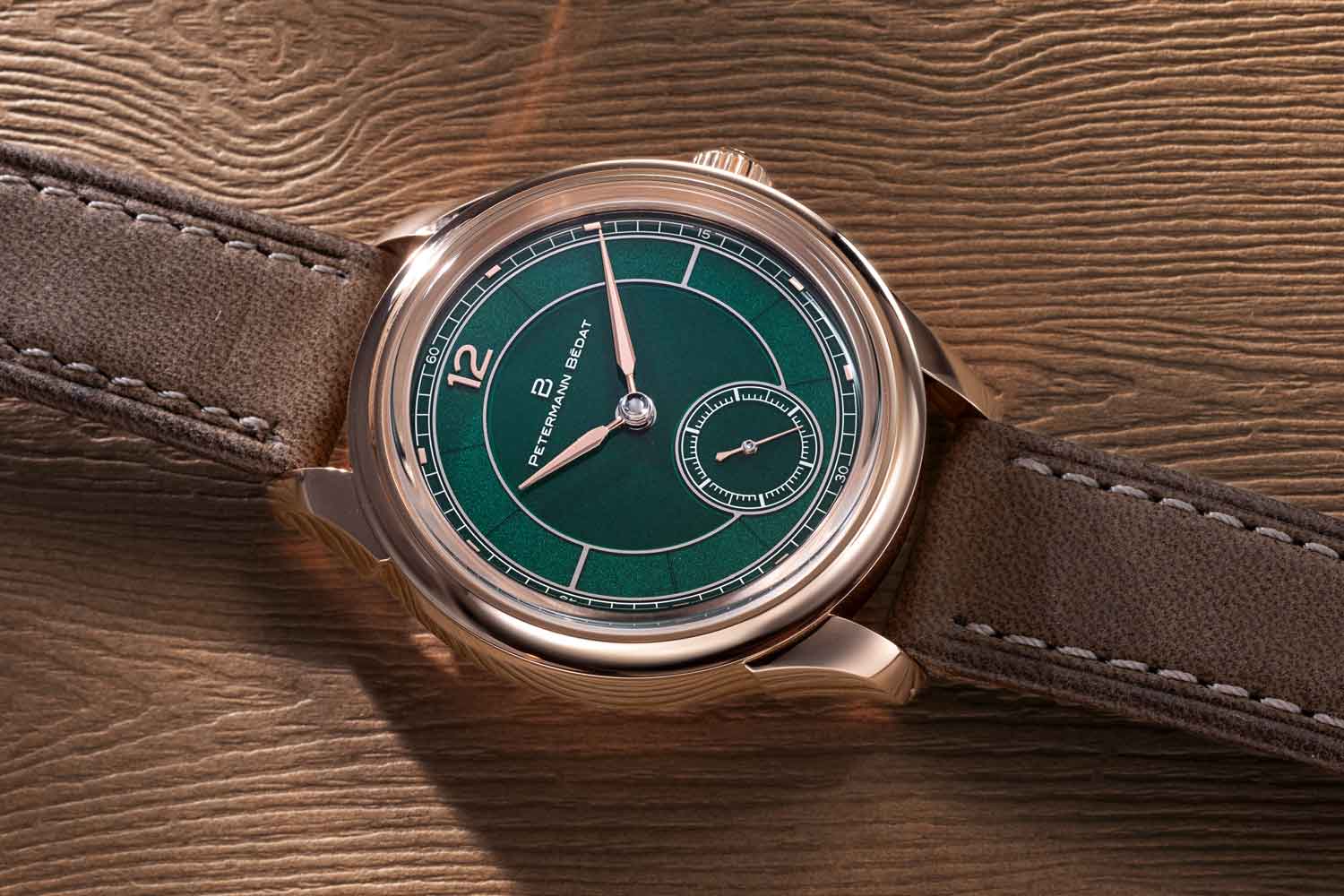
A simple and effective design (Image: © Revolution)
The dial adopts a sector-style layout, as seen in previous models, but with a simpler and more contemporary design. The sector effect comes from the clever use of two shades of green, translucent grand feu enamel, each with a subtle texture that adds depth. Tiny horizontal applied markers around the edge highlight the dial without overpowering the enamel. The centerpiece is the Arabic numeral at 12 o’clock alongside the brand’s logo, both rendered in modern typography that gives the dial a contemporary feel.
If there is one quibble, it is the small seconds sub-dial, which feels a bit undersized compared to previous Petermann Bédat watches. For example, the 2941 Split-Seconds Chronograph’s seconds counter takes up about half the diameter of the dial. A slightly larger sub-dial here might have given the 1825 a stronger traditional presence. That said, the smaller size suits the watch’s modern vibe, which may be exactly what the watchmakers intended.
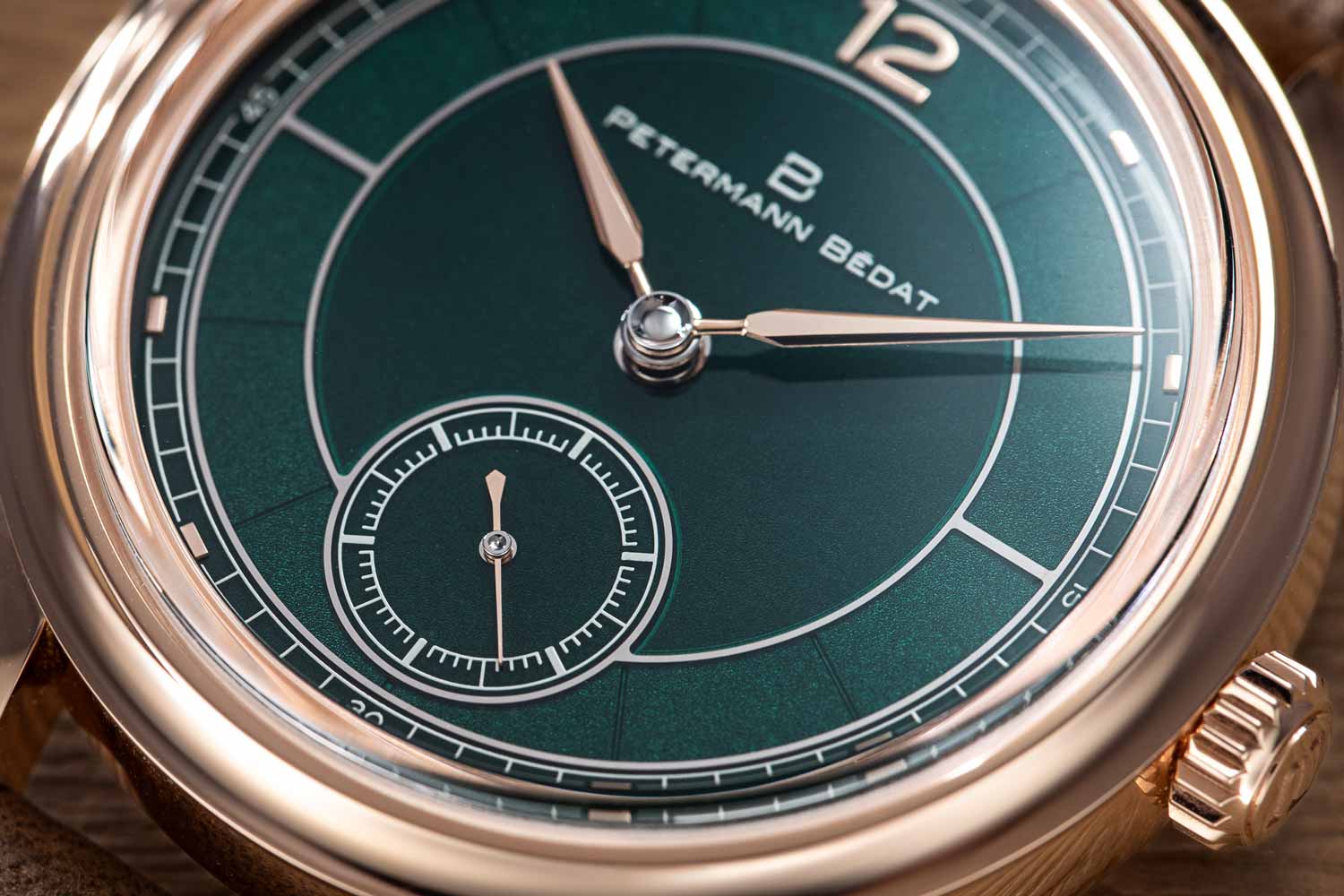
Image: Revolution ©
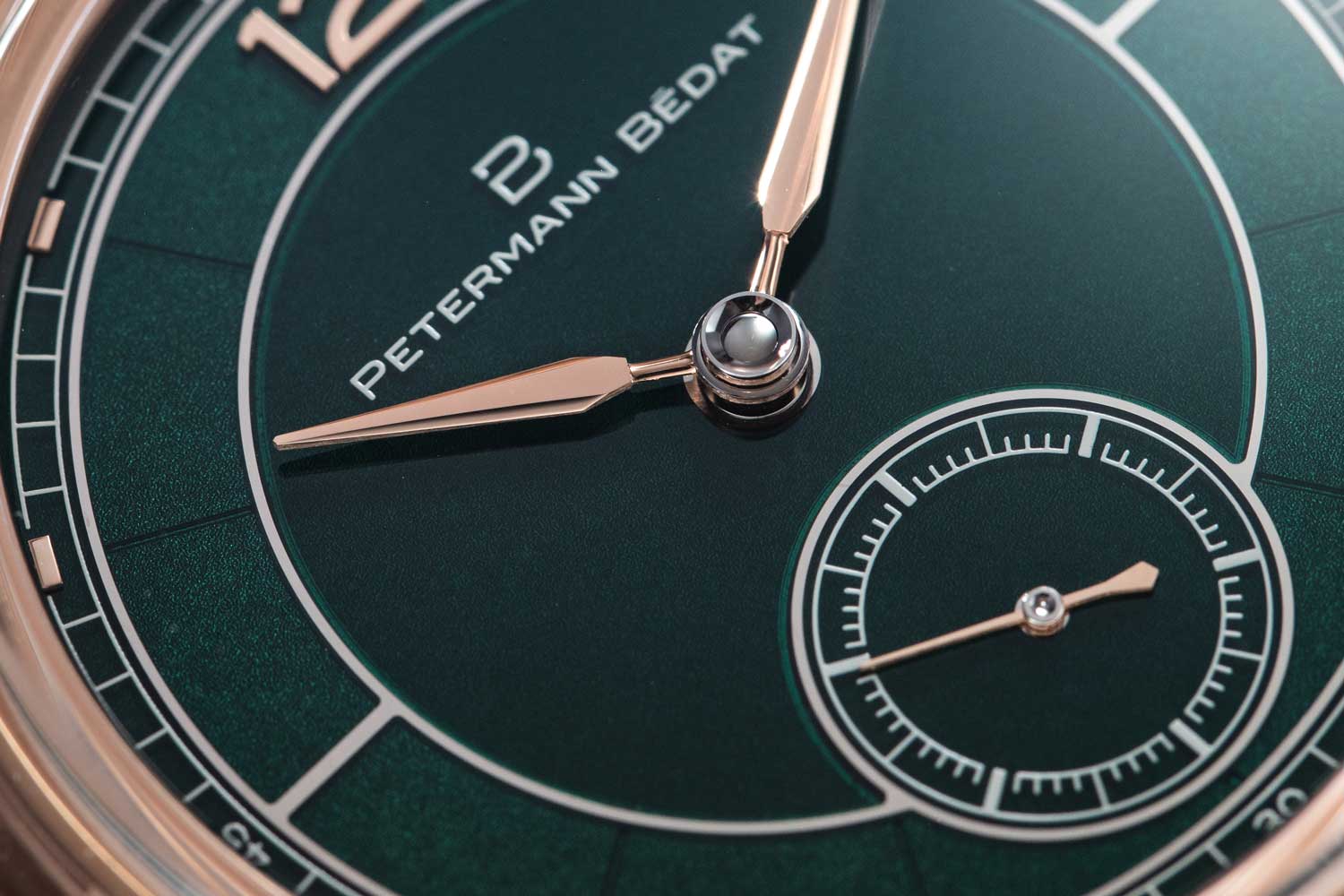
Exquisitely finished hands elevate the overall dial design (Image: © Revolution)
Despite the modern dial, the case is classically sized at just 38 mm, feeling rather compact on the wrist. It measures 10.15 mm tall and doesn’t quite feel thin due to the thick case middle, a common trait across Petermann Bédat watches. The design has improved since their first model, with a bevel added to the lower case flank to reduce visual thickness. Still, shifting some height from the case middle to the back might have more impact.
Even so, the construction shows no compromise. The case features soldered lugs, for instance, a clear step up from the inaugural 1967 Deadbeat Seconds. It is a well-made and effective case that complements the watch without overshadowing the movement inside.
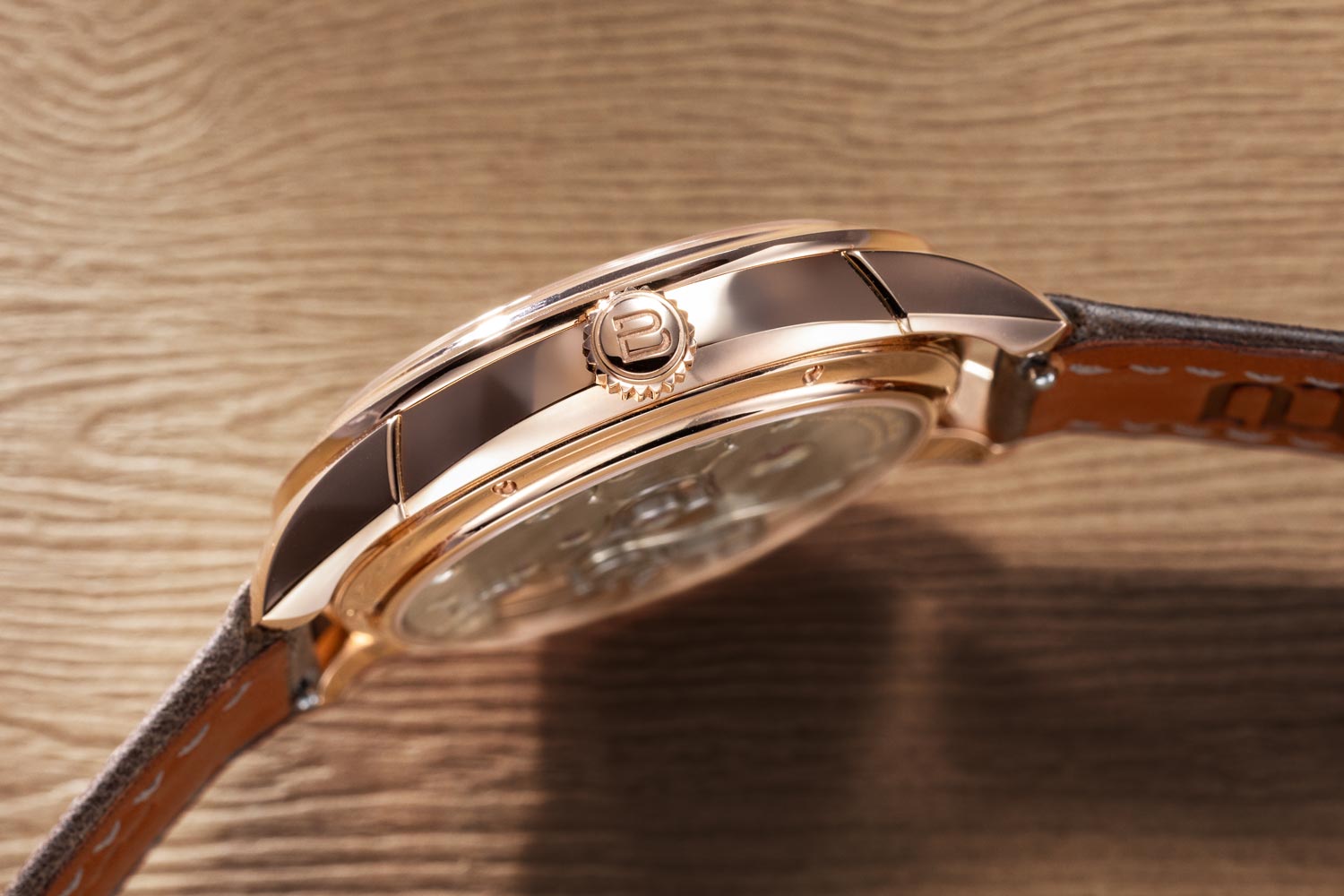
The wide bevel runs from lug to lug, cutting away the lower portion of the case (Image: Revolution ©)
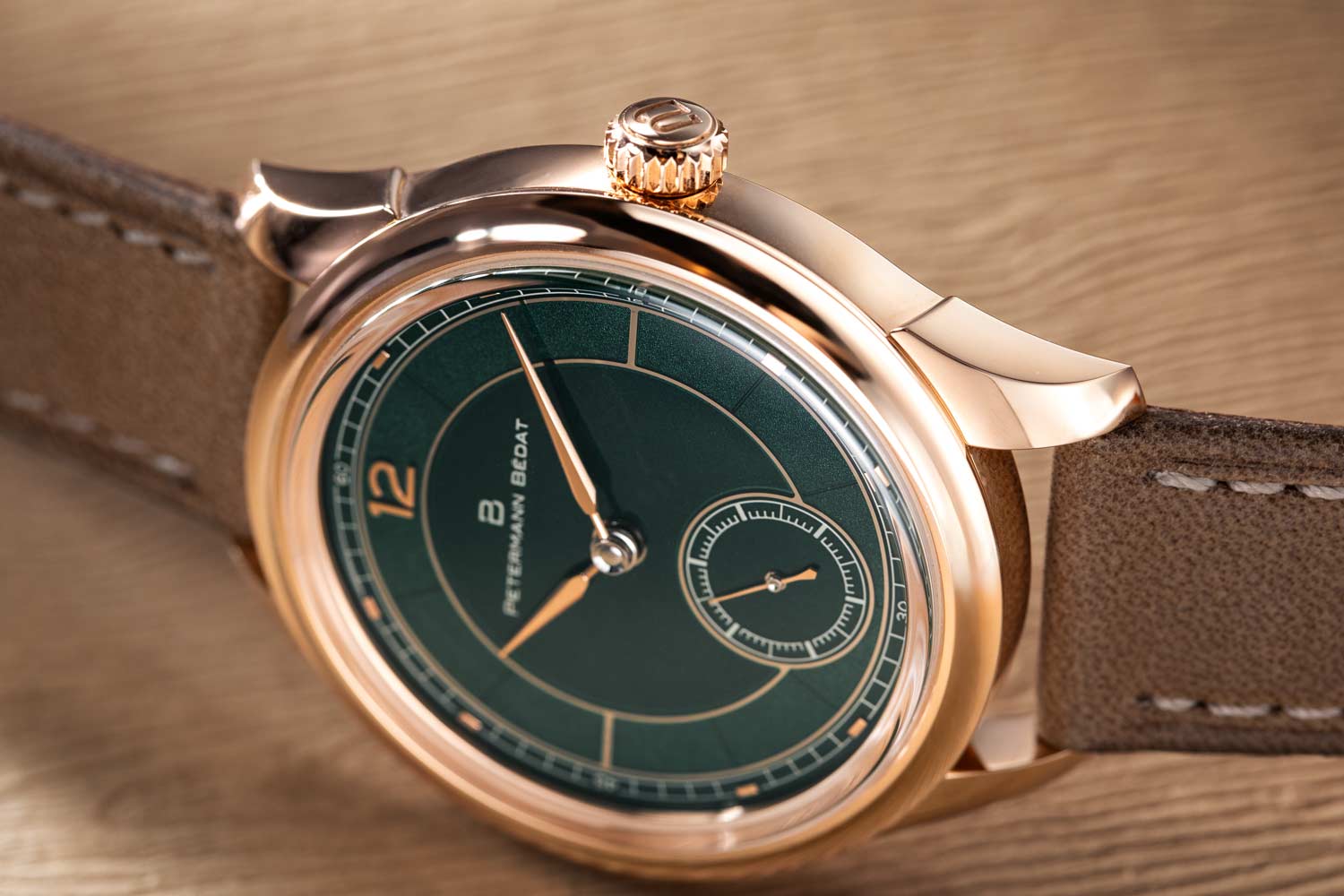
The soldered lugs give the case a bit more presence (Image: Revolution ©)
On the whole, the case and dial are straightforward, especially when viewed from above or at a distance. They take a quieter role next to the movement, which is typical among young independent brands where production of these components is often outsourced. It isn’t a drawback, but it does mean the overall look isn’t particularly memorable, something that could have lifted the watch from good to great.
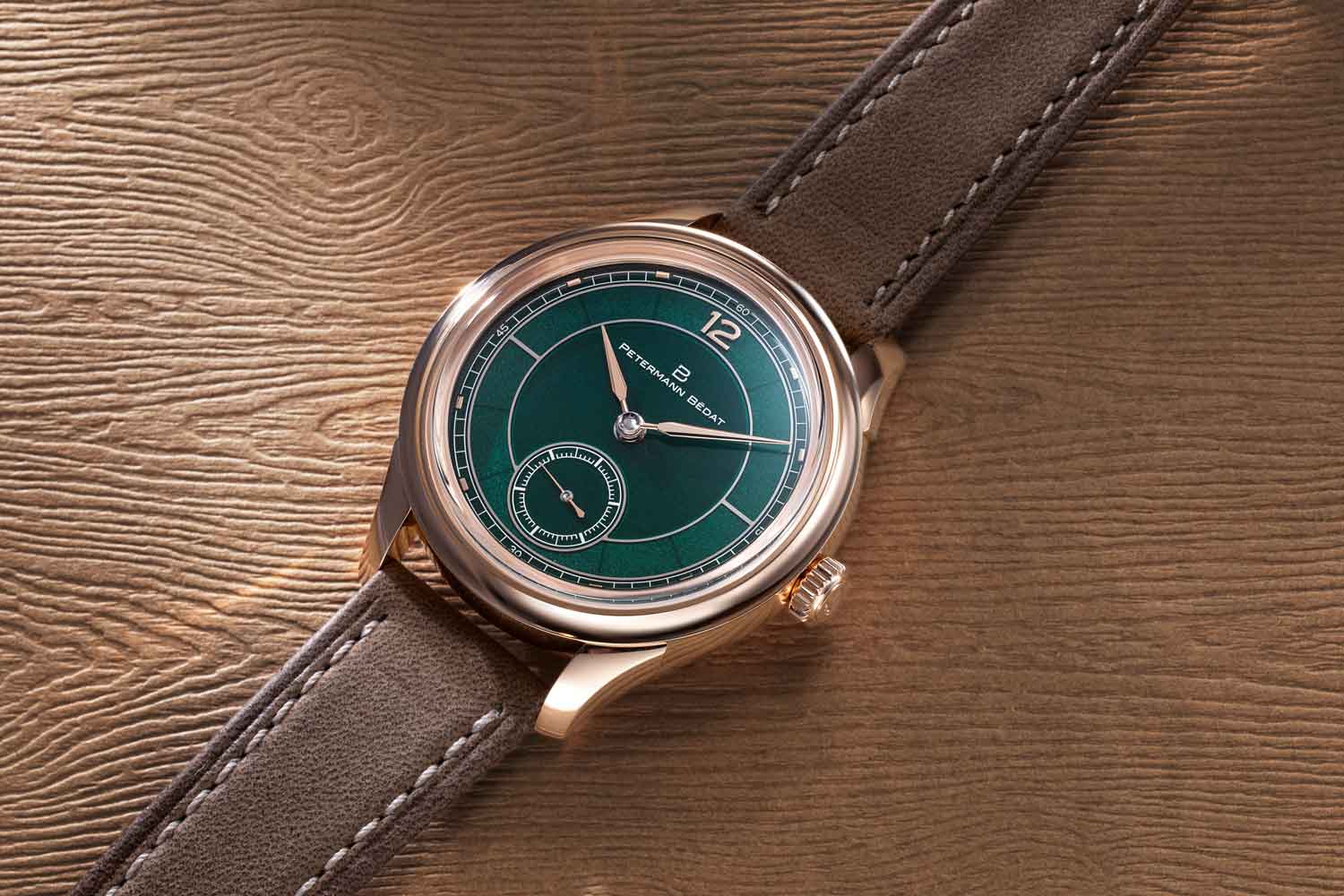
Understated from afar (Image: Revolution ©)
Top-tier finishing amid a crowded market
After admiring the striking palette on the front, the owner’s attention naturally turns to the view from the back. The cal. 233 is undoubtedly the highlight of the new 1825. It is exceptionally well executed and manages to stand out even in today’s crowded independent watchmaking scene, where high-quality finishing has become more common.
The first thing to notice is the distinctive design. This is the purest, simplest movement to date for the brand and their first fully in-house creation. It takes inspiration from a pocket watch the duo once restored.
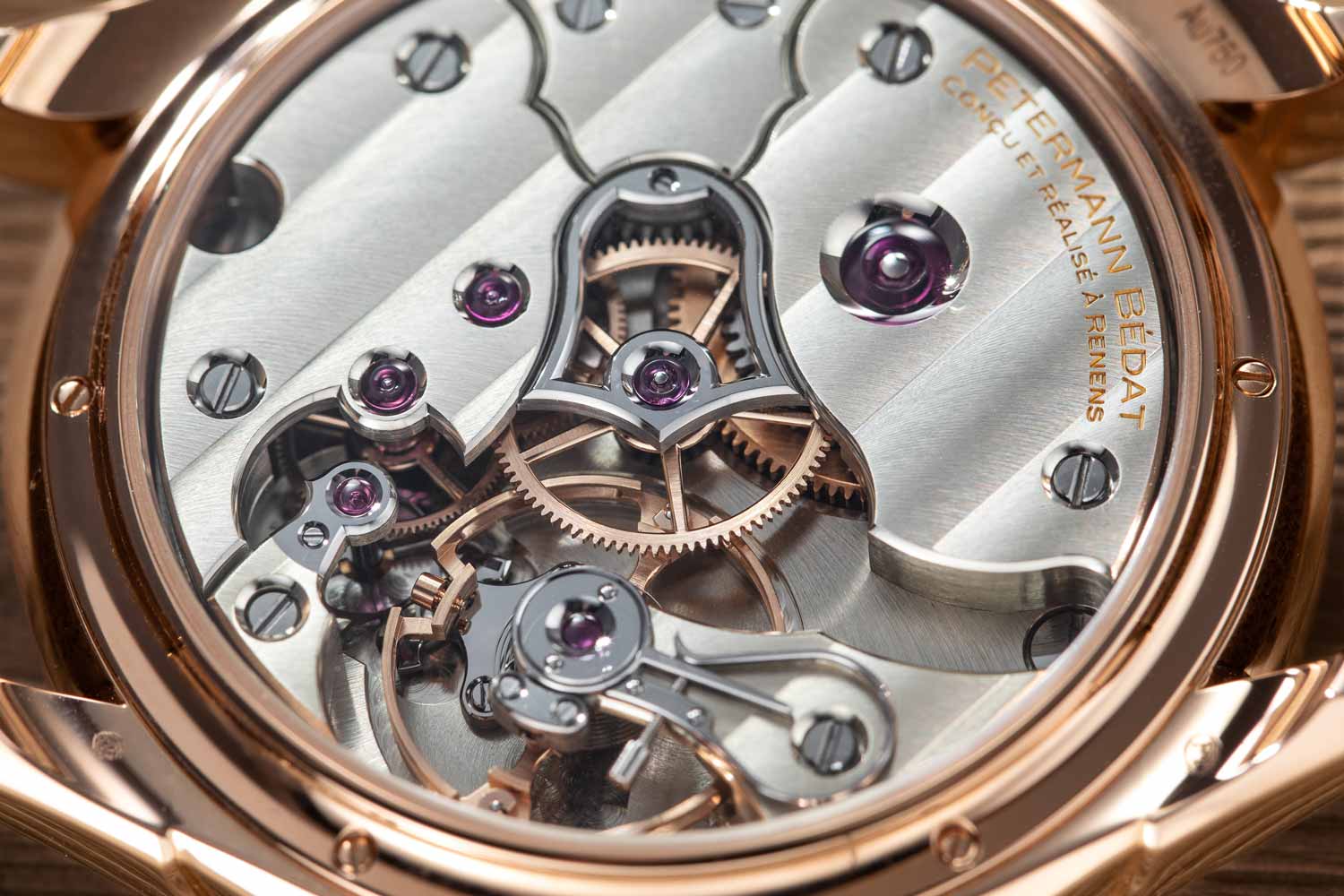
A satisfying mirrored layout (Image: Revolution ©)
The movement plates are divided into two symmetrical halves, separated by a central piece shaped like a bell. Echoing this, a steel bridge with an inverted bell shape stands out as the centerpiece of the movement. It features elegant lines and curves, is perfectly black polished on top, and displays wide anglage that leads to sharp, precise external and internal angles. Compact yet dense, the bridge speaks volumes about the brand’s finishing prowess.
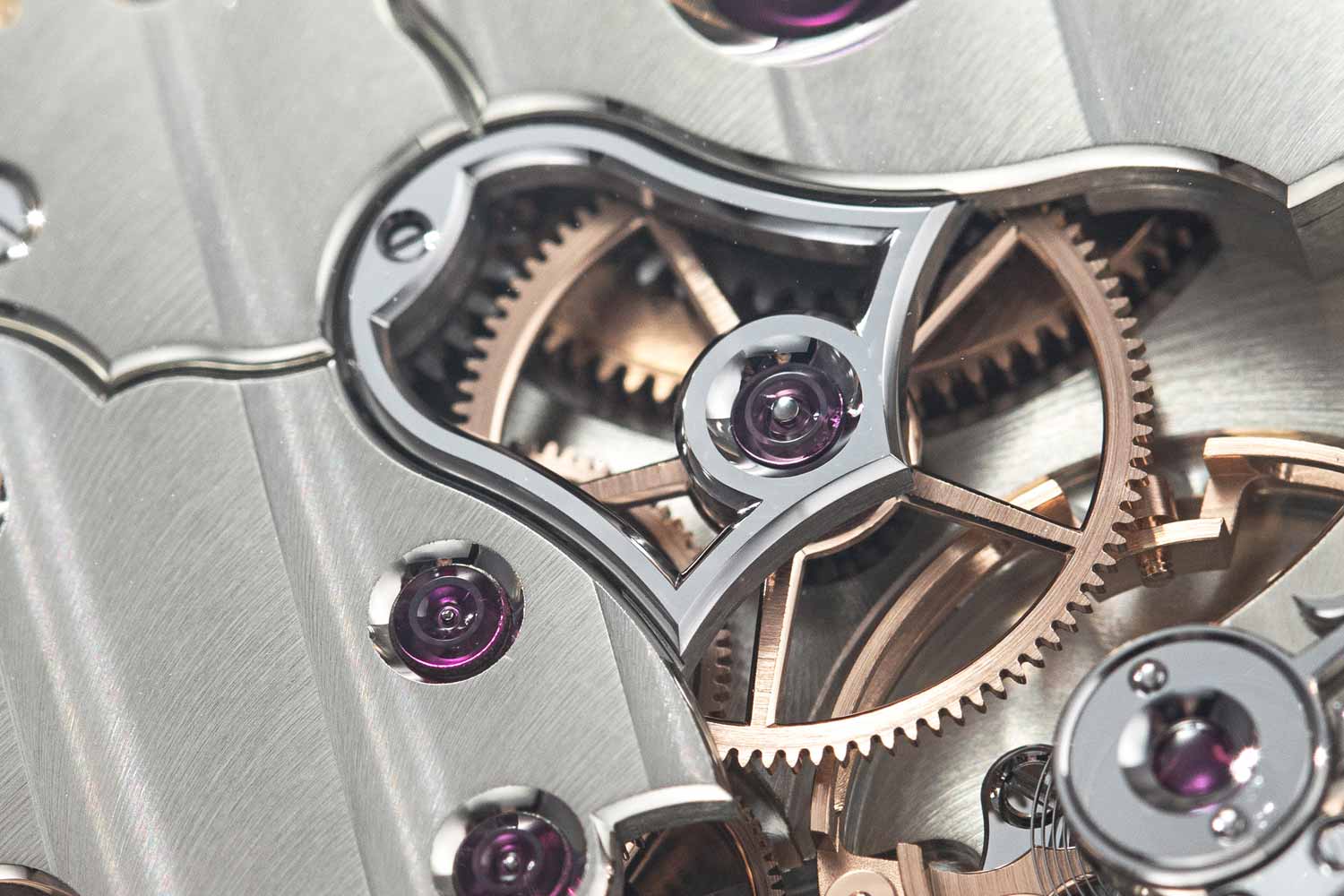
The clever design of the bell-shaped bridge calls for exquisite finishing (Image: Revolution ©)
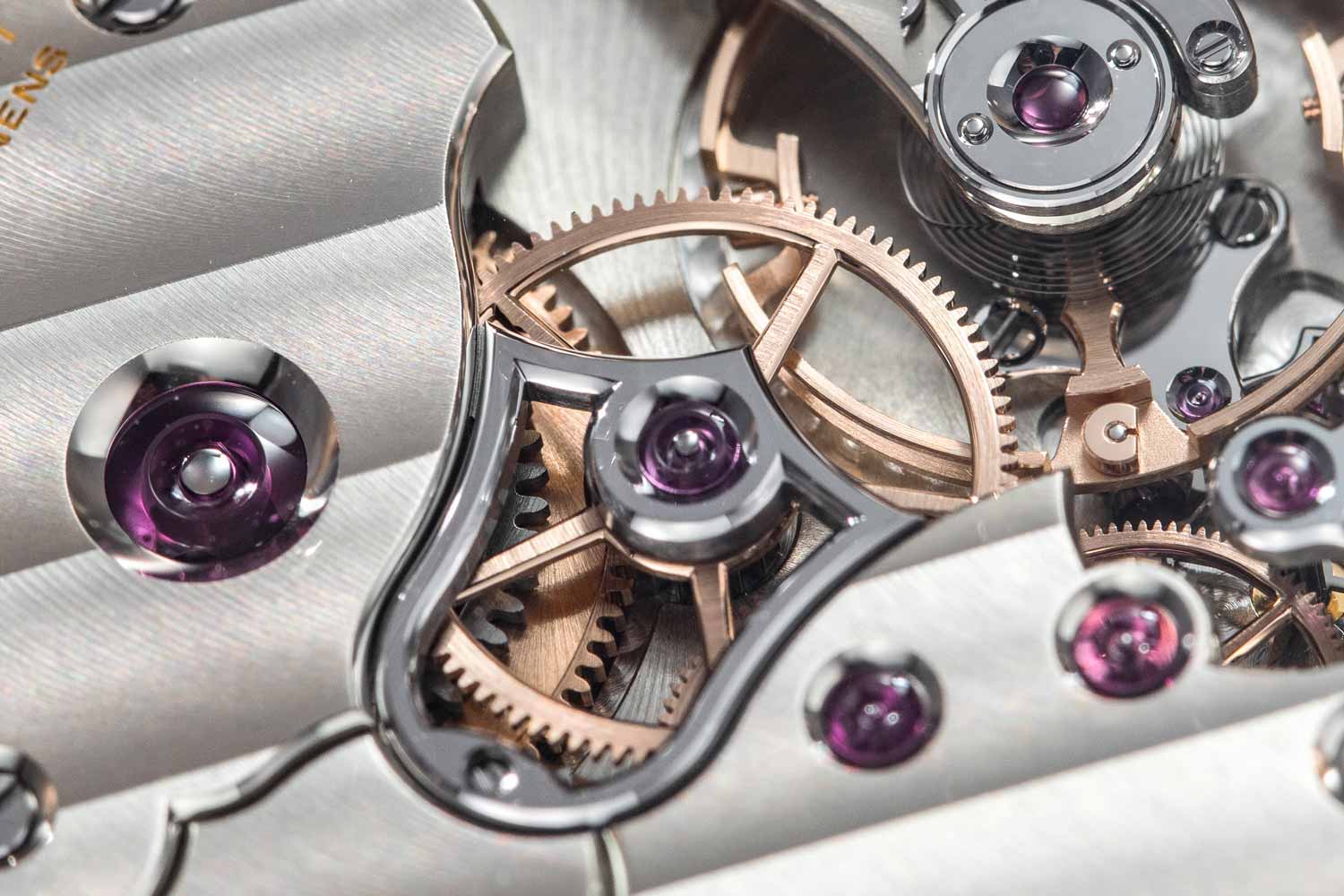
Image: Revolution ©
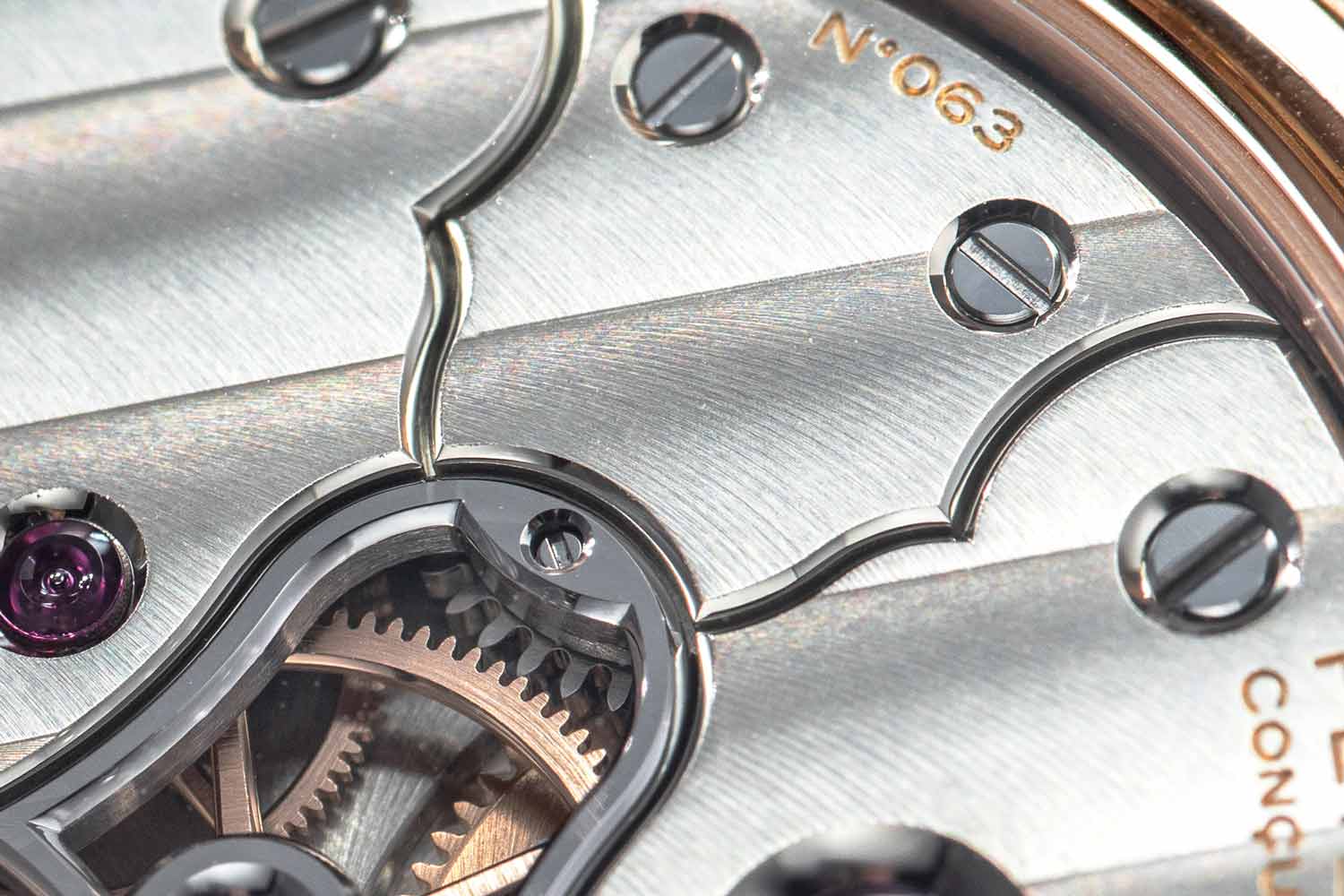
A plethora of interior and exterior angles, all nicely blended in and don’t jump out at you (Image: Revolution ©)
And on the topic of finishing, a few things explain why it looks as good as it does. The anglage, for one, is spot on. There’s a pleasing variety of curves and angles, all generously bevelled but never excessive. Where a sharp exterior or interior angle is needed, it’s there. Where it isn’t necessary, they’ve shown restraint. No corners cut like you might see from some big brands, and no unnecessary flourishes just to impress. It’s well considered and well executed. They’ve gone the extra mile without pushing too far. It’s the kind of finishing that will age well.
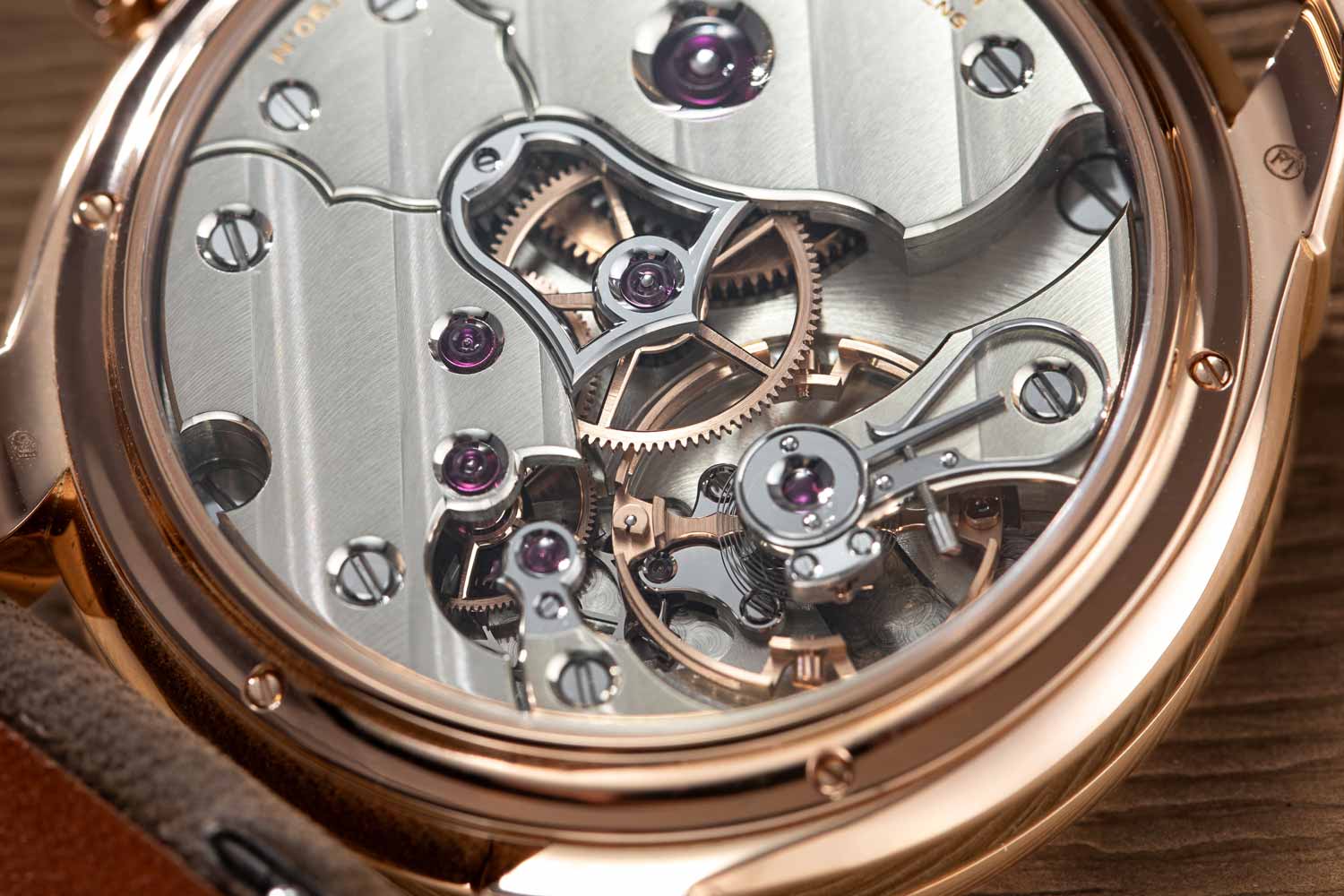
Image: Revolution ©
The attention to detail extends to the smallest components. The swan-neck regulator, the steel screw head for the regulator arm, and even the pallet fork bridge sitting a level below are all immaculately finished. The pallet fork bridge, in particular, features a black-polished top and generous bevels, treated almost like a centrepiece. It’s these subtle touches that reward careful inspection under a loupe.
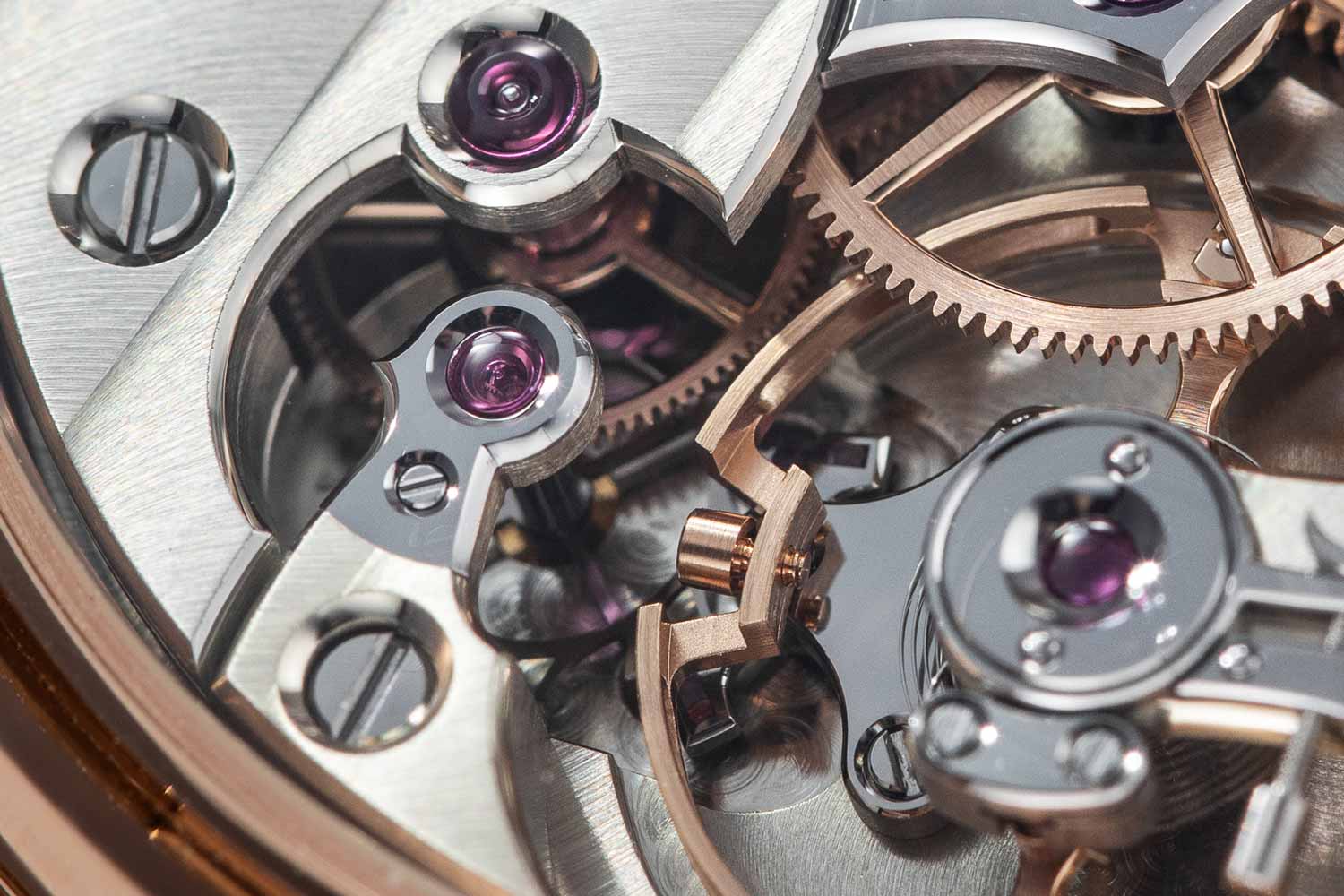
Elaborate on every level, literally (Image: Revolution ©)
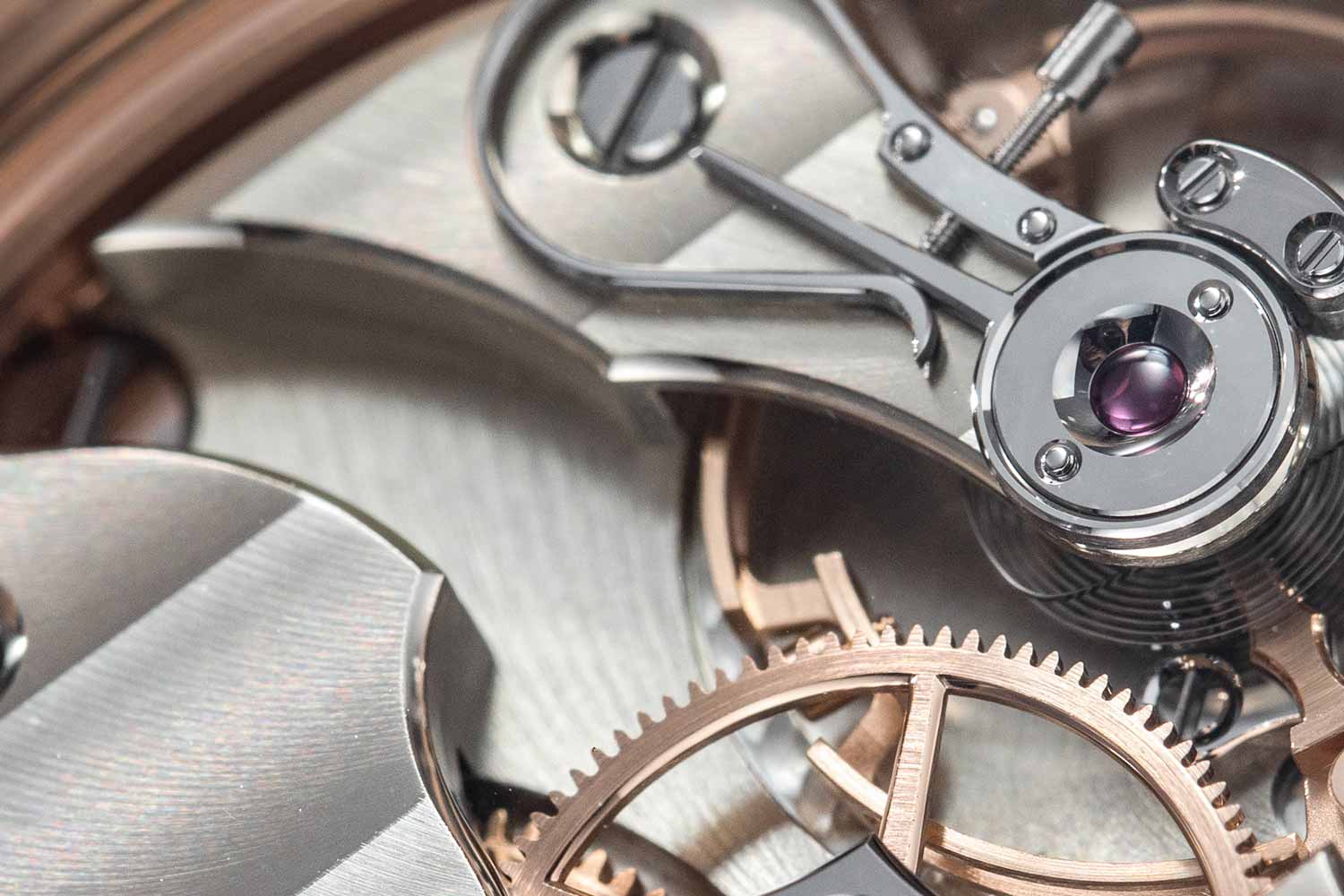
The elegant swan-neck regulator is accentuated by a polished top and gentle beveling (Image: Revolution ©)
The Geneva stripes deserve a mention too. They’re widely spaced, but each stripe is finely lined and impressively clean. This is easily among the better executions, even by the standards of high-end independents.
There are also the signature touches: oversized rubies that are now becoming a Petermann Bédat hallmark, and the all-gold wheel — not just gold-plated, but solid gold.
In terms of mechanical performance, it offers the longest power reserve to date at 56 hours, running at a low 18,000 vibrations per hour, a deliberately old-school rate. No extra complications here. Just a clean, traditional timekeeper with a free-sprung balance and a Breguet overcoil hairspring for improved stability and accuracy. What it arguably lacks, however, is a stop-seconds function for precise time setting.
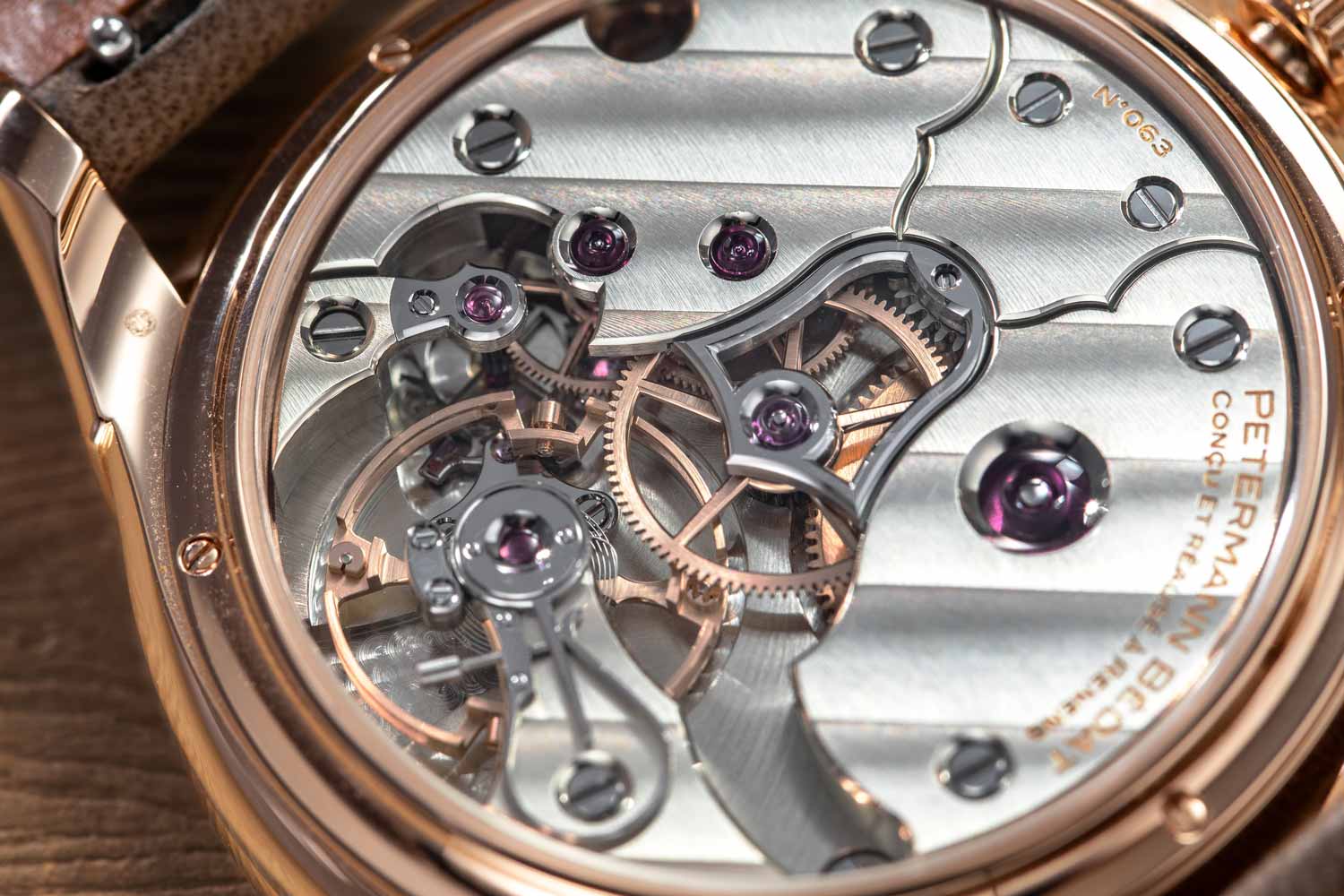
Image: Revolution ©
Concluding thoughts
The 1825 is an excellent time-only watch and a strong contender in a crowded field, thanks to a movement that stands out for its design and quality. For fans of the brand, this is especially significant — it is Petermann Bédat’s first fully in-house movement and marks an important milestone. This watch celebrates what the duo has achieved so far while making it clear there is more potential and promise ahead.
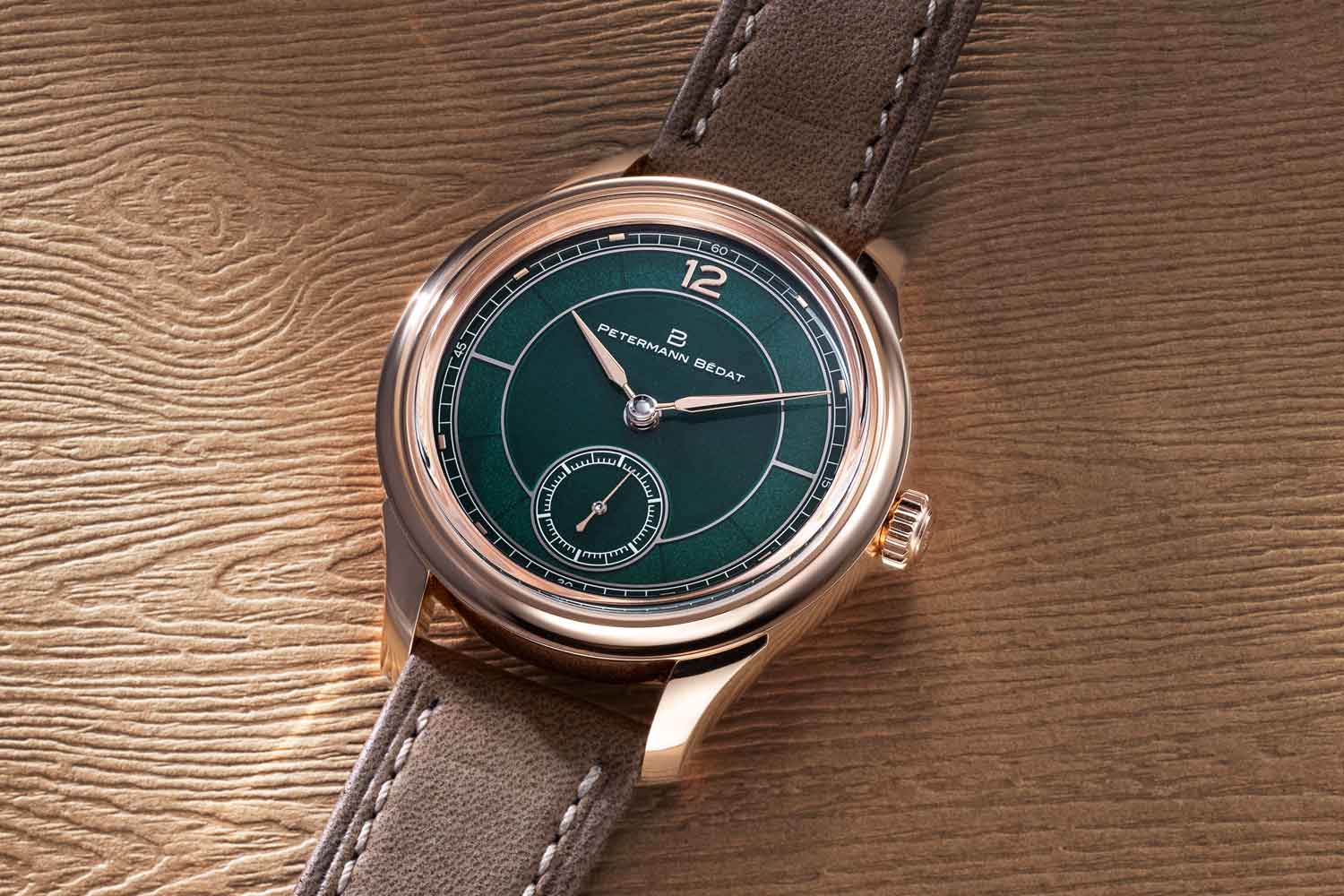
Image: Revolution ©
Tech Specs: Petermann Bédat Reference 1825
Movement: Cal. 233; manual winding; 56-hour power reserve; 2.5 Hz (18,000 vph)
Functions: Hours, minutes, and seconds
Case: 38 mm x 10.15 mm; 18k rose gold
Strap: Brown calfskin
Availability: Directly from Petermann Bédat
Limited edition: No, but production limited from 2026 to 2029
Price: CHF 75,000 (excluding taxes)
Petermann Bédat

You may also like
News
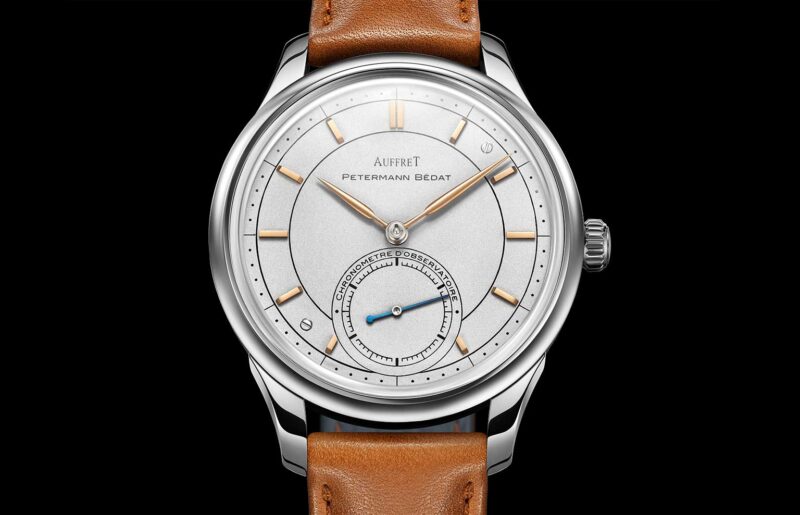
The Petermann Bédat X Auffret Paris Chronomètre d’Observatoire Ref: 1342 for Only Watch
Aug 10, 2023
News
The Petermann Bédat X Auffret Paris Chronomètre d’Observatoire Ref: 1342 for Only Watch
Aug 10, 2023
News
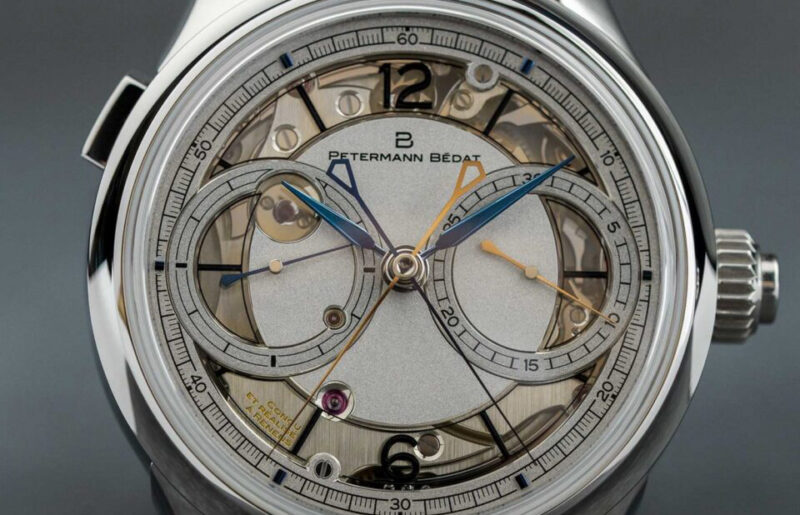
Petermann Bédat Introduces the Monopusher Split-Seconds Chronograph with Instantaneous Minutes Ref. 2941
Mar 23, 2023
News
Petermann Bédat Introduces the Monopusher Split-Seconds Chronograph with Instantaneous Minutes Ref. 2941
Mar 23, 2023