

How Will 31% US Tariffs Affect The Swiss Watch Industry?
Business
How Will 31% US Tariffs Affect The Swiss Watch Industry?

This time next month, all the latest watch drops you’ve been eyeing from Watches and Wonders 2025 will cost about a third more than its MSRP — if you’re based in the United States. From 9th April 12.01am, the US will levy an additional 31% in trade tariffs on all Swiss imports. This follows US President Donald Trump’s 2nd April announcement of “Liberation Day” tariffs which stand to affect more than 180 countries. US tariffs on the Swiss watch industry will undoubtedly pose additional challenges to an already challenging market situation.
Liberation Day Tariffs
Announced at a White House event just this week, President Trump’s “Liberation Day” Tariffs include a 10% universal tariff as well as reciprocal tariffs at varying rates. The 10% universal tariff applies to all countries, while reciprocal tariffs are levied against countries identified by the administration as having imposed unfair duties on US goods. These tariffs are additive. Switzerland is one of those countries, named for its stiff 61% tariff that the Administration claims is charged on American products.
[Update] The Swiss government denies trade surplus with the US due to unfair practices, adding 99% of US goods can be imported into Switzerland duty-free. No retaliation measures for now.
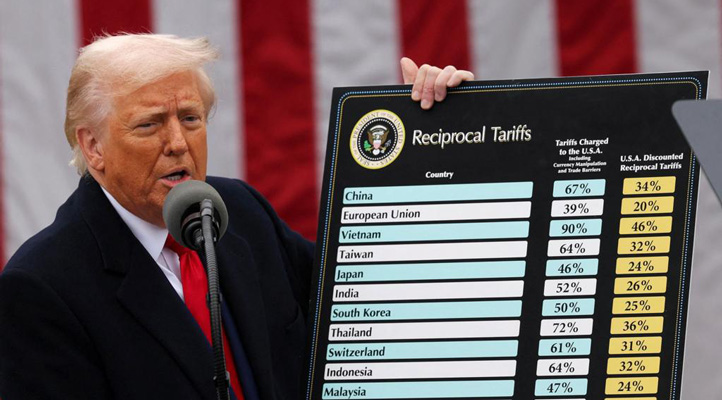
However, Switzerland had recently scrapped industrial tariffs. Since 2024, US exports like machinery, medical tech and software may enter duty free. Agricultural products on the other hand remain subject to higher taxation.
Additionally, reciprocal tariffs do not apply to a number of specific goods including copper, pharmaceuticals, semiconductors, lumber, gold, energy and “certain minerals that are not available in the United States.”
Switzerland’s key exports to the US include packaged medical products and watches. Since 2021, the US has been Switzerland’s biggest export market. Presently, the US has a goods trade deficit with Switzerland of USD 38.5 billion. This 31% reciprocal tariff on top of the 10% universal tariff was raised to offset the trade imbalance.
Significance of the US Watch Market
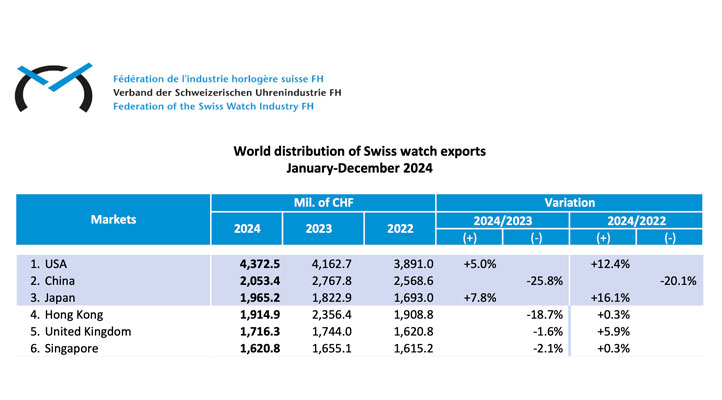
The US has since 2021 been Switzerland’s biggest export market. This is true also for the export of luxury Swiss watches. Based on industry statistics published by the Federation of the Swiss Watch Industry (FHS), the US has been the world’s number one consumer of Swiss watches since 2021. As of 2024, it spent over CHF 4.372 billion on Swiss luxury watches. Former world number one, China, now in position two, was nowhere close at CHF 2.053 billion.
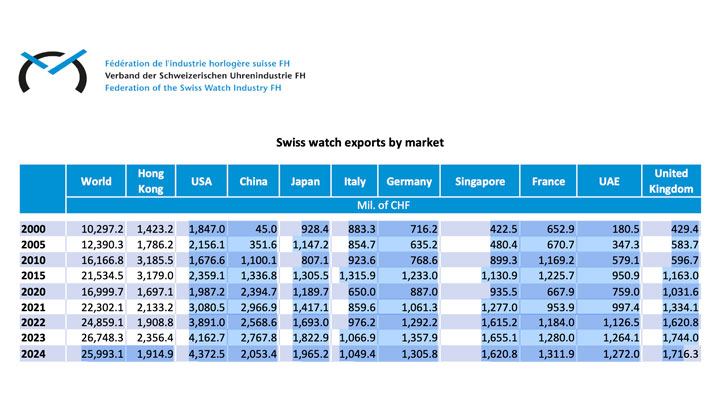
In addition, total revenue has also grown year-on-year. Just four years ago in 2020, the figure stood at CHF 1.987 billion — modest in comparison to the number today. Yet in 2021 it bounced back with a vengeance. Watch sales in the US climbed to never-before seen levels in any other market in the world. It became the first market globally to ever cross the CHF 3 billion dollar mark. And then two years later, it crossed CHF 4 billion. All this while, watch sales across all other markets remained stable with some minor ups and downs.
US Tariffs on the Swiss Watch Industry
Switzerland is one of the world’s worst-hit countries by Trump’s tariffs. Its 31% levy will exert pressure on manufactures, as well as American retailers and consumers. As it battles strong headwinds wrought by persistent economic challenges, overall the market shrank to CHF 25.993 billion in 2024 from CHF 26.748 billion in 2023. January 2025 started off well enough with an overall +4.1% growth in export value but February wasn’t so positive as numbers fell 8.2%, leading to an overall -2.4% year-to-date.
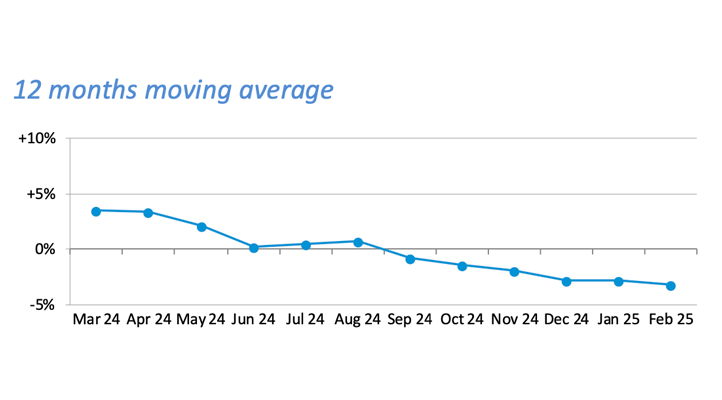
These numbers project a pessimistic view of the 2025 watch year. Watch companies and their American distributors and retail partners have until 9th April 12.01am to come up with any mitigating action as a response.
Says Founder of LuxeConsult Oliver R Muller, “These new import duties will be applied to import value and not to retail value. At the moment there already are duties in place but at varying tax rates depending on each type of component as detailed in the invoices. So on the whole, based on ex-works values the increase would be somewhere around 11 to 12% on retail price.”
This would bring the price of a watch such as the new Rolex Land-Dweller currently at USD 16,100 to about USD 17,900.
Vasu Kulkarni also known as NYC Watch Guy (@nycwatchguy) posted his views on Instagram. “Consumers are unlikely to pay 30% over prices that are already ridiculous post pandemic era prices increases. Either way, everyone loses.”
What Can Watch Companies Do?
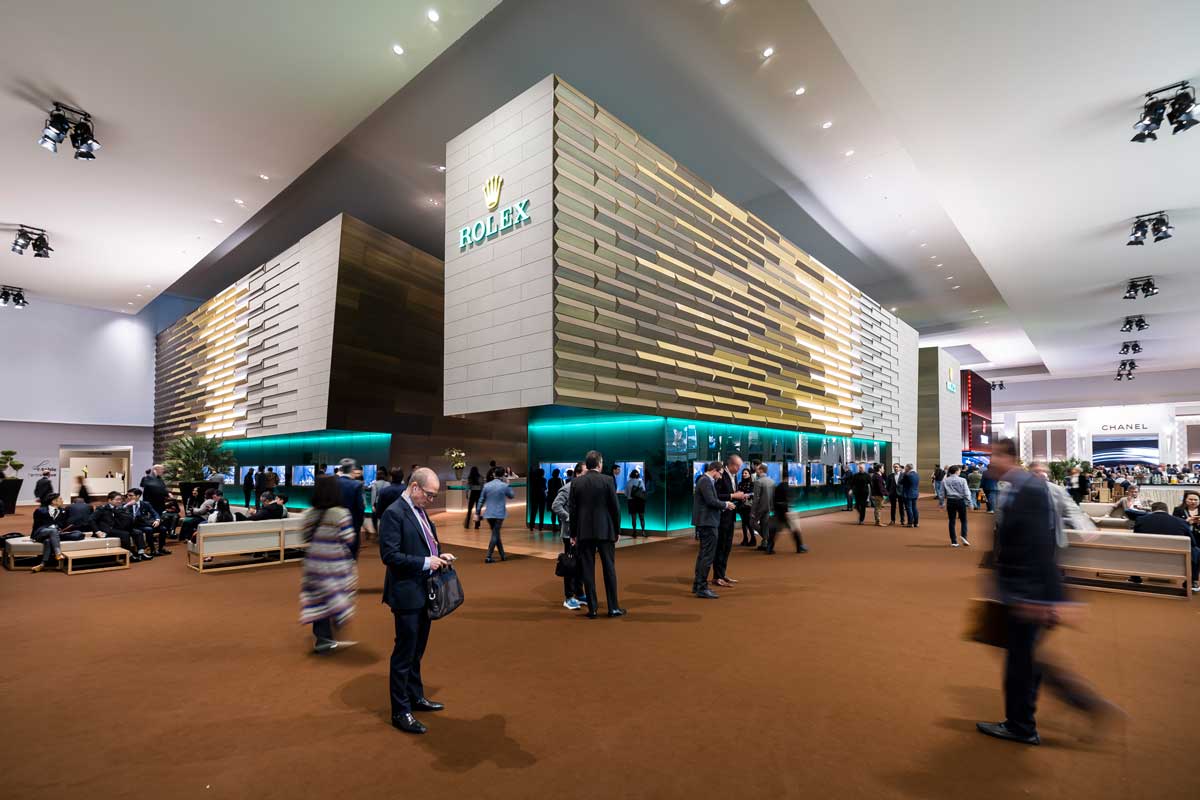
Trump’s tariffs leave the Swiss watch industry with only very little time to respond. Not to mention how it had come at a time when the entire industry was deep in the throes of Watches and Wonders 2025. Yet it was not altogether bad timing. With every watch CEO, every mover and shaker of the watch industry, every key retail and distribution partner gathered in Geneva right now, there is every opportunity here to unite and act in solidarity.

Realistically speaking, there could not be a one-size-fits-all solution for every brand in the industry. Says Müller, “It is a catastrophe for the Swiss watchmaking industry overall. The very high-end brands will be impacted less. But for most of the other brands, it is not good news.”
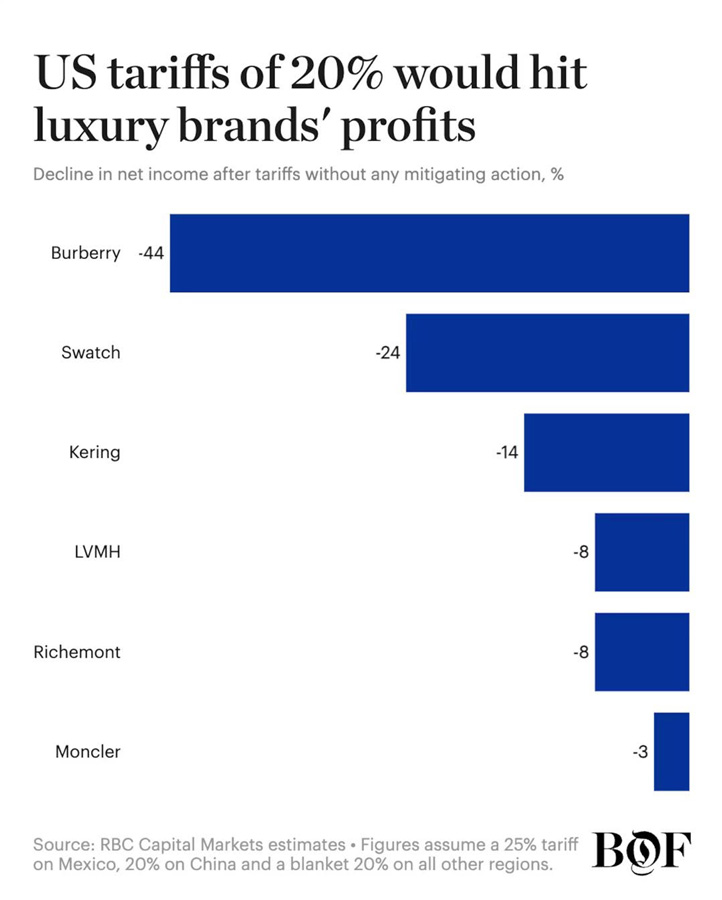
Indeed, big brands and conglomerates may be less susceptible to changing market forces but some are more vulnerable than others. Based on estimates done by RBC Capital Markets, additional US tariffs of 20% would negatively impact Swatch, LVMH and Richemont at varying degrees.

The chart below shared by BOF indicates a -24% decline in net income for the Swatch Group should there be no change in company strategy following the new tax levy. Meanwhile, LVMH Group and Richemont Group stand to lose just -8% in comparison. Of the three, Swatch Group revenue derives primarily from Swiss watch brands. Richemont, on the other hand, is essentially in the jewelry business. And LVMH competes mainly in fashion and spirits, with only a small portfolio on watches.
Impact On The Secondary Market
Trump’s 31% tariff applies to all imported Swiss products. Ostensibly this refers to watches trading on the primary market. As to how it affects the secondary market becomes a little more ambiguous.
Says Eric Ku, Founder of Loupe This, an LA-based online auction house, “Manufactures have a variety of tools at their disposal to blunt the effects of tariffs. From diverting product from USA to other regions, absorbing some of the tariff internally, to cutting dealer margins. Secondary dealers on the other hand conduct business with much thinner margins and will have to pass the cost on to consumers. I see a scenario where the prices of second-hand or grey market watches goes up much more than the prices of primary market watches.”
Founder of Miami-based watch dealer Menta Watches, Adam Golden, expresses a bleak outlook. “This change has the potential to severely impact the ability to import and export watches globally. And potentially hinder the international trade of watches.”
He continues, “As most watches traded are of Swiss origin, new or secondhand, the tariff will make the costs of purchase and import of these watches prohibitive for most consumers. As a result, American dealers may be forced to trade with those watches that are already located in the United States, making the sourcing of inventory overseas extremely difficult and costly.”
Pricing Adjustments
So the general consensus is that prices will be driven upwards. But by how much? That remains uncertain. For instance, not all watches offered by secondary market dealers are sourced from Switzerland. Watches imported from the UK face a 10% levy; watches imported from the EU face a 20% levy. And watches coming from Japan, 24%.
Kulkarni adds, “Secondary market dealers who have their inventory in the US are the winners right now. Platforms like @getbezel where all inventory is from the US are in a great position for the near term. Question is how quickly will that inventory dry up as people quickly try to load up on the limited domestic inventory.” He also foresees layoffs in the industry should the primary market be forced to re-price absorbing the tariffs.

In short, watch buyers should expect a minimum of 10% and a maximum of 31% increase on secondary market prices once the tariffs kick in. To recap, it is a 10% baseline tariff on all imports to US from 5th April. This will be followed by reciprocal tariffs in all affected countries on 9th April 12.01am.
“I think it is too soon to say what pricing adjustments we will see as a result of the tariffs,” says Golden. “After all, Trump is notorious for announcing these trade tariffs, only to withdraw his threats and ‘renegotiate’ a trade deal at the 11th hour.”
Per the official memo from the White House, these tariffs will remain in effect until such a time as President Trump determines that the threat posed by the trade deficit and underlying nonreciprocal treatment is satisfied, resolved, or mitigated.
More updates to follow on RevolutionWatch.com
You may also like
Business
Why Richemont’s Watchmakers Are Gearing Up For A Brighter 2026
Aug 18, 2025
Business
Why Richemont’s Watchmakers Are Gearing Up For A Brighter 2026
Aug 18, 2025

Business
Richemont Q1 FY2026: Richemont Posts €5.4B in Q1 Sales
Jul 22, 2025
Business
Richemont Q1 FY2026: Richemont Posts €5.4B in Q1 Sales
Jul 22, 2025

Business
New Ownership For Corum Watches, Company Back To Swiss Hands
Apr 30, 2025
Business
New Ownership For Corum Watches, Company Back To Swiss Hands
Apr 30, 2025