


Jérôme Lambert’s Return to Jaeger-LeCoultre
Opinion
Jérôme Lambert’s Return to Jaeger-LeCoultre

The announced move of Jérôme Lambert from the position of COO of Richemont to CEO of Jaeger-LeCoultre one of the eight brands making up the specialty watchmaker division of the group, was a decision that not many had seen coming. It’s not that the brand doesn’t deserve a senior manager as CEO equipped with a roadmap allowing it to regain the rank it would deserve, but sending someone from the board of directors of the group back to the frontline is not exactly the most predictable move.
With Nicolas Bos as the new CEO of the Richemont group it was clear that many leading positions within the group would be changed, especially regarding who should be helming the brands. Taking into account the brief interlude between the announcement of Mr. Bos’ advancement and the move of Louis Ferla from Vacheron Constantin to Cartier, followed by the confirmation of the names of their replacements was quite an indication that not everything had been thought through or agreed on with the chairman of the board.

Finally sending back Mr. Lambert to Jaeger-LeCoultre might be the best decision to stop an iconic brand from becoming irrelevant. Lambert is no stranger to Jaeger-LeCoultre having been its CEO for 11 years until 2013 — and having worked at the brand for 17 years — which makes him probably first choice for this mission. Now, as Lambert returns to take the reins officially, he faces a unique challenge: revitalizing a venerable yet somewhat stagnant brand and reaffirming its position as one of the cornerstones of the Richemont Group.
Let’s consider the trajectory of the brand in recent years. The following chart illustrates the decline of the brand going from 10th rank in 2018 with estimated sales of CHF 647m to 14th in 2021 with CHF 588. In comparison Breitling went from CHF 390m and 16th position of the Morgan Stanley annual report to 10th with CHF 680m. And Breitling is certainly a direct competitor for Jaeger-LeCoultre and showing that a brand can reignite the flame of success if it does its homework.
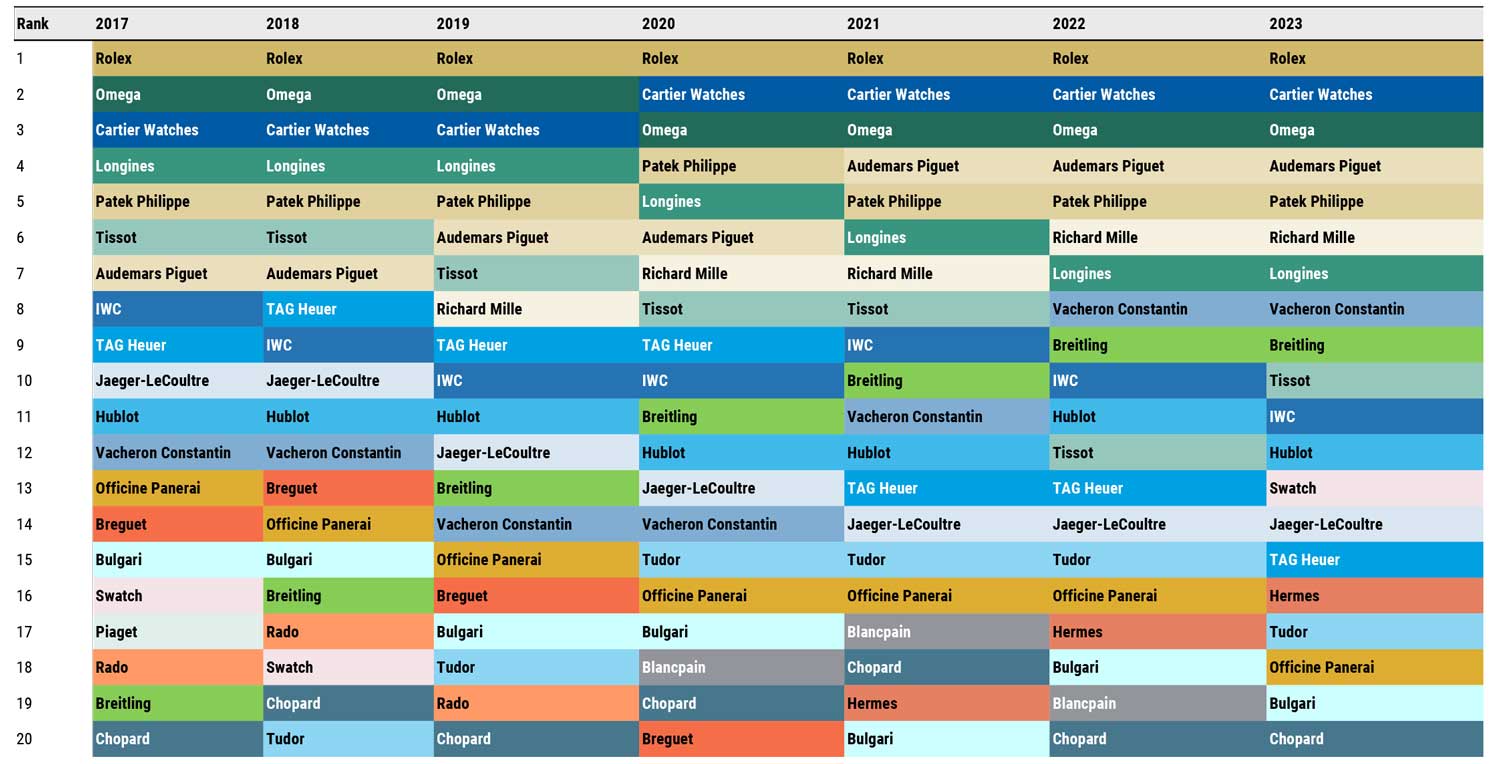
Source : LuxeConsult, Morgan Stanley Research estimates. Note: this chart cannot be reproduced without Morgan Stanley’s express authorization
A Storied Legacy in Need of Fresh Perspective
Jaeger-LeCoultre, affectionately known as the “Grande Maison” of the Vallée de Joux, is celebrated for its technical ingenuity and timeless design. From the iconic Reverso to groundbreaking innovations like the Gyrotourbillon, the brand has long epitomized the art of fine watchmaking. Yet, in recent years, it has struggled to maintain its relevance amid a highly competitive luxury market. While rivals such as Breitling, Omega, sister brand Cartier have surged ahead, Jaeger-LeCoultre’s identity has appeared somewhat diffused, with collections that occasionally fail to capture the imagination of collectors and enthusiasts. Or products that are highly attractive for a seasoned and passionate watch collector, but not highly beneficial for the commercial success of the brand.
The Master Control Chronograph Calendar is probably one of the best examples of those not so relevant recent product launches. Featuring a manufactured automatic movement with a triple calendar it’s a very attractive timepiece, but the perceived value compared with its actual retail price is not very favorable. Not because the watch is not worth its price, but the targeted client will either buy a simpler chronograph. Many chronographs are priced for much less or clients would go for another complication with a perceived higher statutory value such as a perpetual calendar.
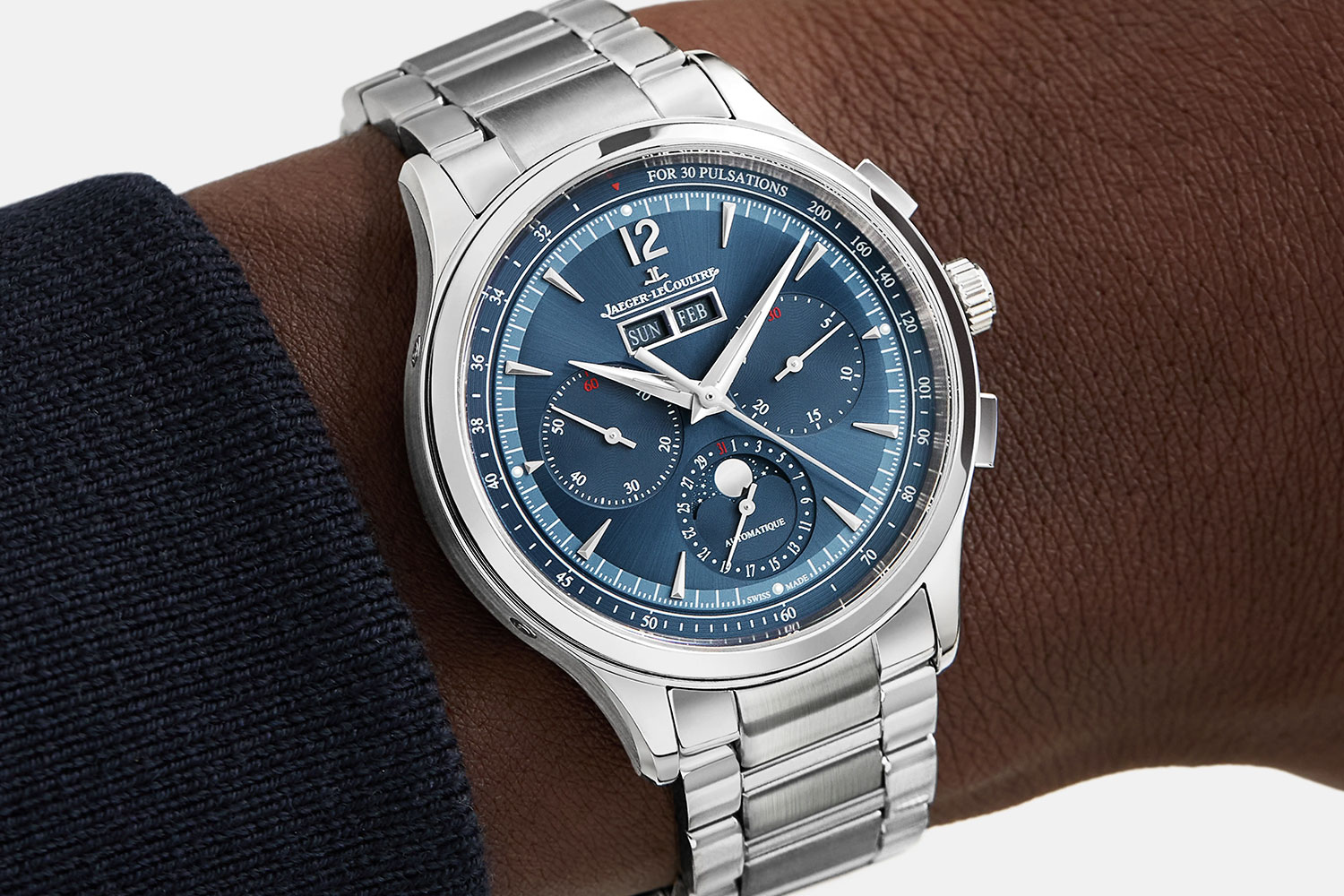
Jaeger-LeCoultre Master Control Chronograph Calendar ref. Q4138180 (CHF 17,600 in stainless steel)
Lambert’s challenge is to breathe new life into this storied maison without compromising its heritage. The goal? To shed the “dust” that has accumulated over the years and craft a narrative that resonates with contemporary audiences while celebrating the brand’s unparalleled watchmaking legacy.
Strategic Priorities for Renewal
1. Reasserting Iconic Collections
The Reverso remains Jaeger-LeCoultre’s flagship model, but it needs reinvigoration. While limited editions and artistic collaborations have kept the collection relevant, a more cohesive strategy to modernize the Reverso without alienating purists could reignite interest. Additionally, the Polaris collection — aimed at a younger, sportier demographic — requires further refinement to establish itself as a true competitor in the luxury sports watch segment.
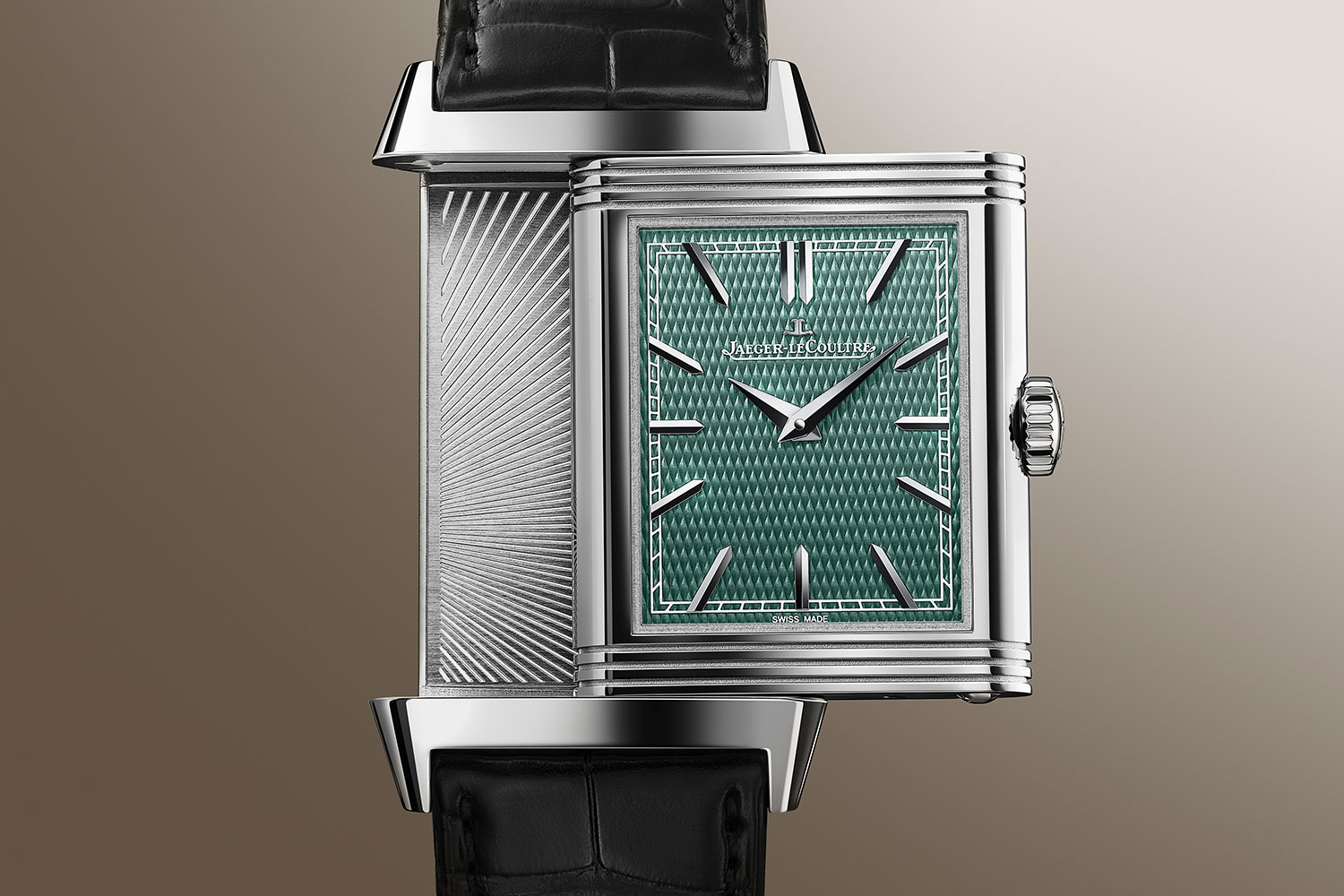
Reverso Tribute Enamel Hokusai 'Amida Falls'
The other challenge that the Reverso feminine product line is facing which at the same makes it so valuable, is the comparison with sister brand Cartier. The price increases at JLC were quite substantial in recent years and you can no longer find a Reverso below CHF 6,450 which is a very nice, though quartz driven, small side watch. Whereas at sister brand you get another iconic watch, the Tank Américaine at almost half the price, CHF 3,300. As a sweetener on top of everything, the magic red box of Cartier on top of a very attractive price might be the most powerful differentiator.
2. Elevating Brand Visibility with a younger audience
Jaeger-LeCoultre is probably one of the most active brands in developing immersive experiences with ateliers to discover its DNA or a specific craftsmanship. The question is not if the brand should do more, but rather questioning if it does the right thing for the targeted younger demographics. The olfactory masterclass is an interesting initiative to reposition the brand on a product territory which you wouldn’t think of spontaneously. But does it convey the right message for an audience in search of experiences by creating a parallel for the two worlds sharing two key values: creativity and scientific precision.
3. Aligning today with yesterday
Jaeger-LeCoultre has always been known for its mechanical mastery, but the younger clients do probably not know half of this very unique story. The maison boasts a record number of 430 patents and an impressive 1,400 unique calibers. The brand has created some of the most iconic complication, such as the Duomètre launched.
4. Streamlining the Collection
One of Jaeger-LeCoultre’s challenges has been a somewhat sprawling catalog. This is the challenge that any generalist brand faces by addressing various price and product segments. It is not different at Omega, but there the homework has been done and probably at JLC the incoming CEO will have the tough job of discontinuing many SKU’s.
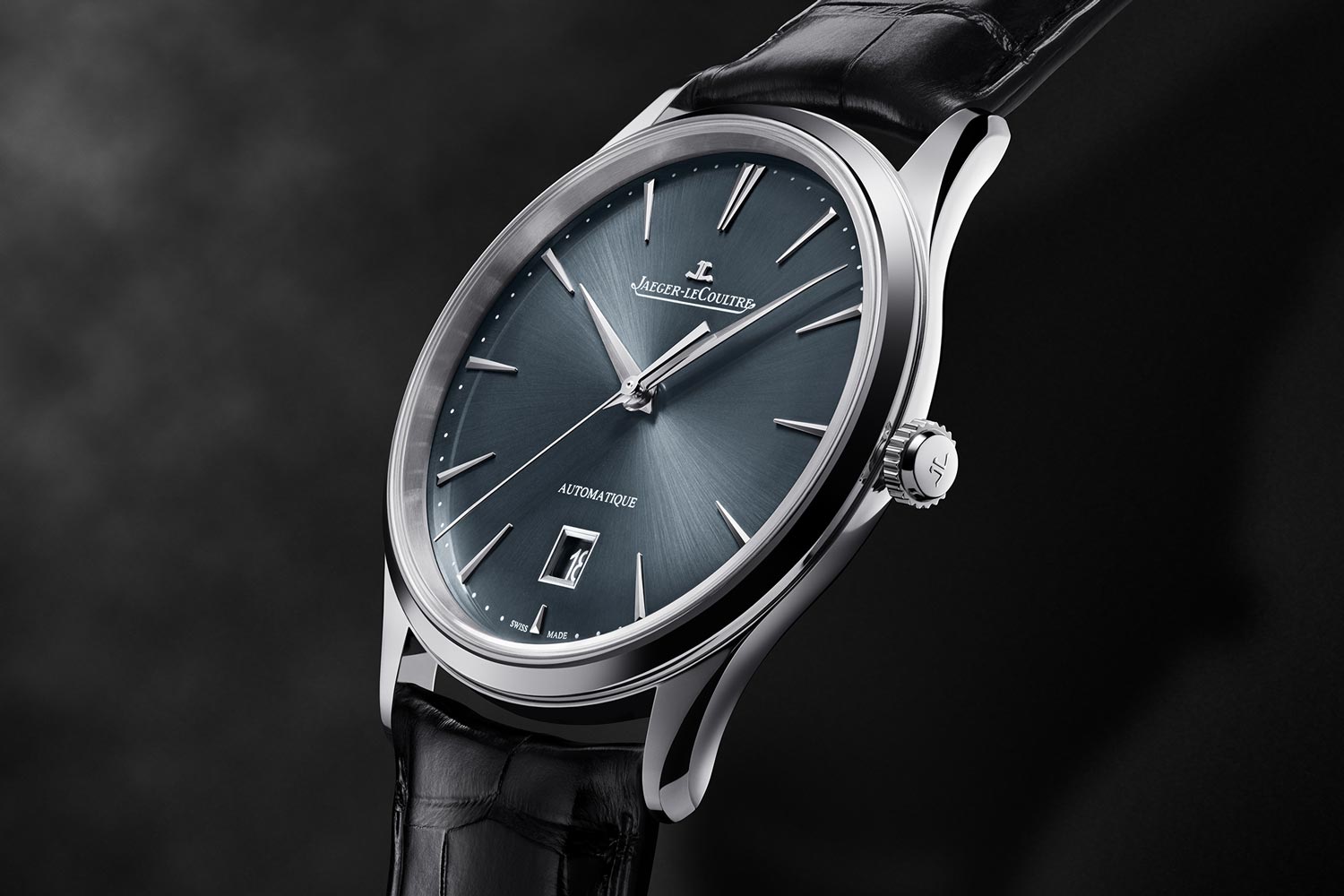
Jaeger-LeCoultre recently released an update to its Master Ultra Thin Date
Lambert may need to streamline the brand’s offerings, focusing on fewer, more impactful collections that highlight the maison’s strengths. This could also enhance the brand’s perceived exclusivity and coherence.
5. Reinforcing the brand’s desirability
Value retention is key for the brand’s perceived value and JLC has done so far, a very good job with its CPO vintage program named “Collectibles”. It conveys a very positive message that the brand is confident selling vintage which has gone through a thorough authentication and servicing procedure.
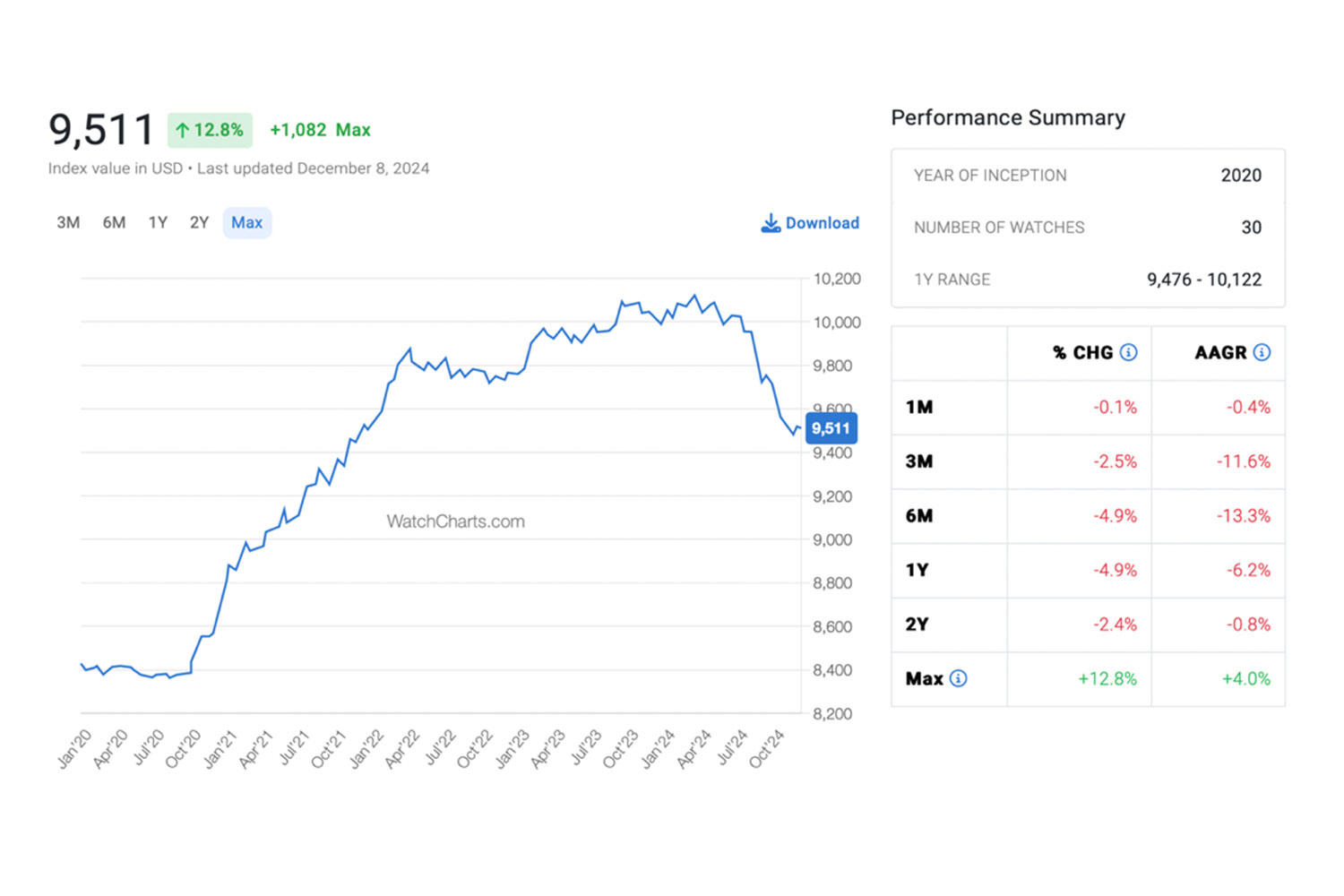
Copyright watchcharts.com
If we look at the overall performance of the brand on the secondary market it looks quite good over a 5-year timeframe. With an average annual growth rate of +4% JLC’s performance is quite good. If we zoom in on the last two years, then the indicator is slightly negative, but that is the overall image of the market and the brand has performed a lot better than others. It’s also due to the fact that JLC did not go through the roof when many brands did during the 2020-22 period.
6. Focussing on less but more intensively
At JLC you sometimes get the feeling that the passion for horological marvels pushes the product beyond the boundaries. This helps the brand to keep the image of the innovative manufacture, but the flipside is that sometimes you go for products which are hardly understandable or sought after by the “hard core” watch collectors. The Chronograph Duomètre – one of my all-time favorites at JLC and overall – is an extraordinary mechanical feast : two gear trains, two barrels each for the time indication and the other for the complications that the different versions are boasting. And finally, one escapement which allows the watch to regulate at a very high degree of precision.
It is an extraordinary product which sets the brand in the top league of high-end watchmaking, but one could question if it fits into the production collection. Beyond any doubt it fits the DNA, but it’s not because you did something yesterday, that you need to stick to that strategy forever. Hence high complications are good for the brand in terms of brand awareness and horological credibility, but the focus should be on the bread-and-butter business which today are sports chic watches at accessible prices for a younger clientele.
A Proven Track Record
Jérôme Lambert is no stranger to reviving brands. His tenure at Montblanc transformed the watch division into a thriving business, even though some people did not appreciate that any new Montblanc was looking like a low-cost model of sister brand Vacheron Constantin. But most importantly Lambert has been the artisan of the “new JLC” when he became CEO of the brand in 2002 and during his tenure many product and service initiatives were launched.
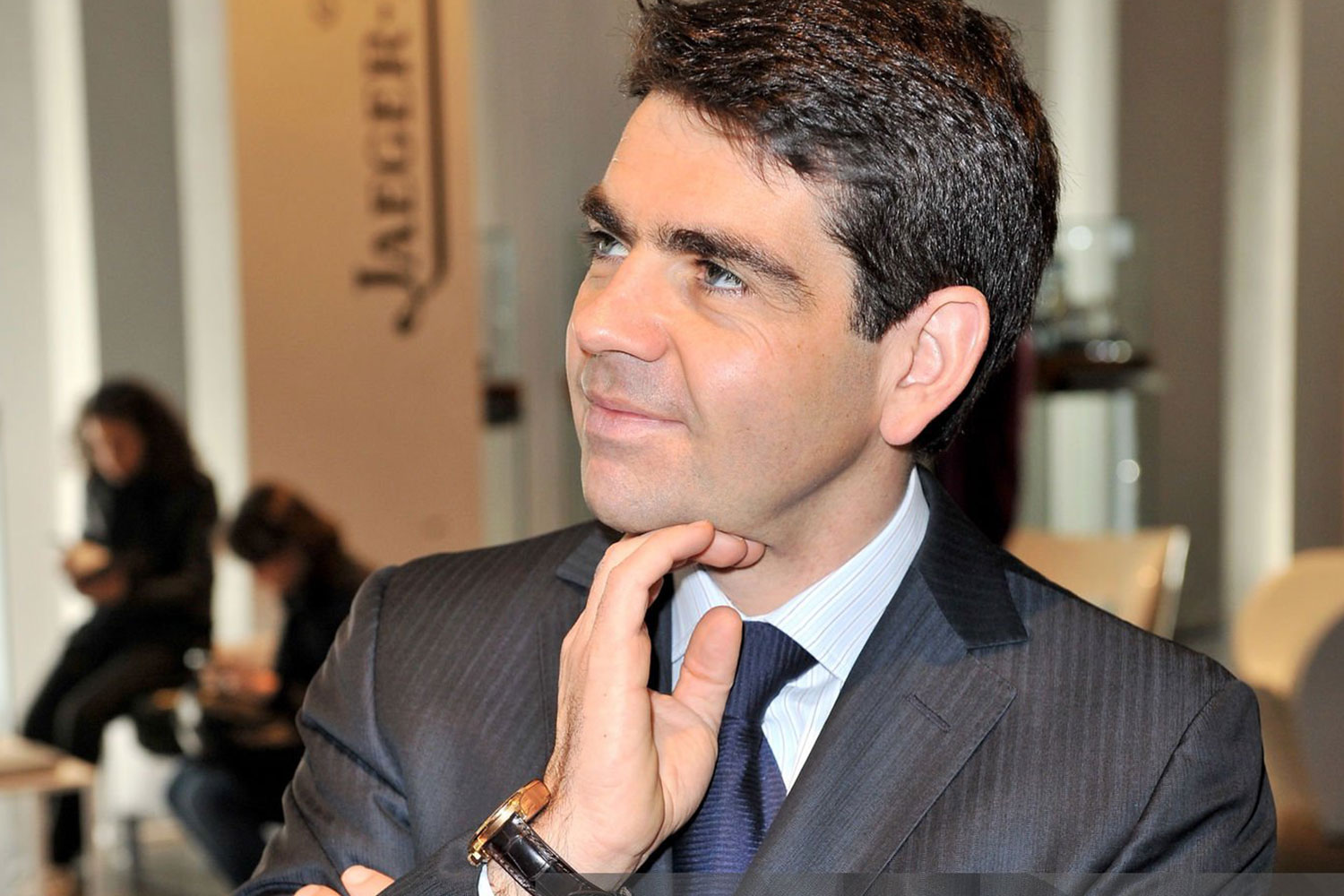
Jerome Lambert, Jaeger-LeCoultre CEO, attends Jaeger-LeCoultre new Atmos 566 press preview on April 14, 2010 in Milan, Italy. (Photo by Tullio M. Puglia/Getty Images)
But even before Mr. Lambert’s tenure, there had been a very stringent quality control certification launched in 1992 concomitant with the launch of the new product line “Master Control”. And the new CEO would be well inspired to put that unique certification on top of his priorities. His deep familiarity with Jaeger-LeCoultre—and the Richemont ecosystem—positions him uniquely to tackle the Maison’s challenges head-on.
Jérôme Lambert’s Defining Watches at Jaeger-LeCoultre
At the age of 32, Lambert took the helm of Jaeger-LeCoultre in 2002, overseeing a prolific era of innovation that spanned over a decade and concluded in 2013. During his tenure as CEO, the brand debuted a series of truly memorable and interesting timepieces.
While Lambert isn’t a watchmaker by trade (his background is in finance, starting in postal and telecommunications before joining Jaeger-LeCoultre’s finance team in 1996) the foundation for such impressive debuts relies on generous investments in research, development, and design, all of which require approval from a visionary leader.
As Lambert returns, it’s worth revisiting some of the standout creations from his earlier tenure to imagine what the future might hold for Jaeger-LeCoultre.
Gyrotourbillon
Two years after Lambert took on his new role, Jaeger-LeCoultre made waves with the Gyrotourbillon 1. This was in 2004, and at the time, a double-axis tourbillon — despite being invented by Anthony G. Randall in 1978 — was still a rare sight. In an era when tourbillons were far from commonplace, only the finest and most traditional watchmakers would attempt such a feat.
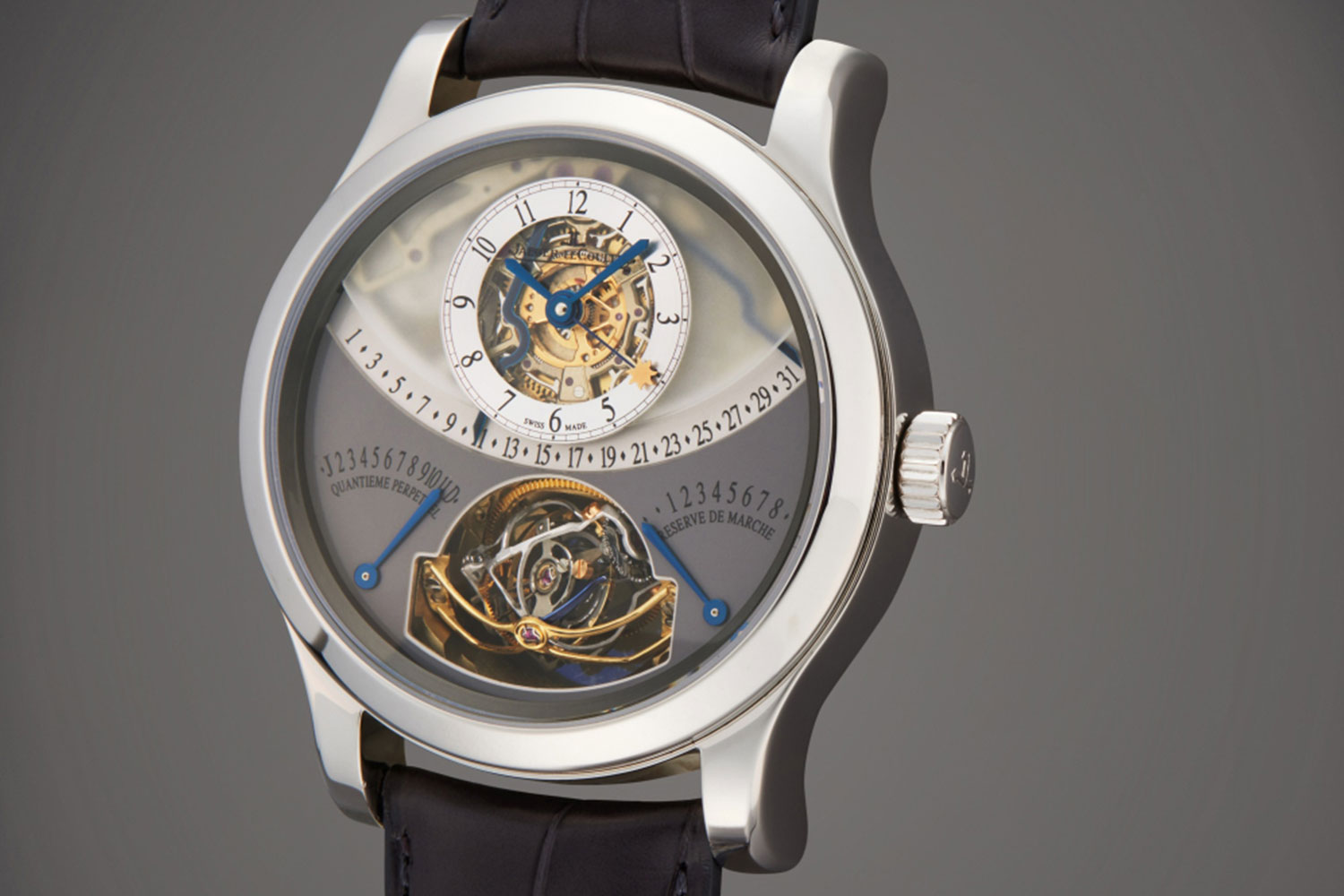
The Gyrotourbillon 1 was one of the first to enter the multi-axis tourbillon world, sparking competition among watchmakers to showcase their own take on this exotic complication. Its uniqueness was reflected in auction results from the early 2000s: despite its hefty retail price of nearly 400,000 Swiss francs, examples of the Gyrotourbillon often fetched auction prices that matched or even exceeded its retail value.
This was simply because a tourbillon in the form of a rotating orb — with the outer cage rotating once every minute and the inner cage rotating every 24 seconds — was undeniably cool. Not to mention, the watch also casually incorporated other complications, such as equation of time and a perpetual calendar with a retrograde display.
The Gyrotourbillon series would go on to become a defining feature of the brand, with ongoing improvements over the years. For instance, the Gyrotourbillon 2 introduced a spherical hairspring in place of the flat one and was incorporated into a Reverso.
AMVOX Collection
In the same year, Jaeger-LeCoultre rekindled its partnership with Aston Martin, dating back to the 1920s. While many collaborations between watchmakers and other brands are simply co-branding efforts, Jaeger-LeCoultre’s approach was far more ambitious.
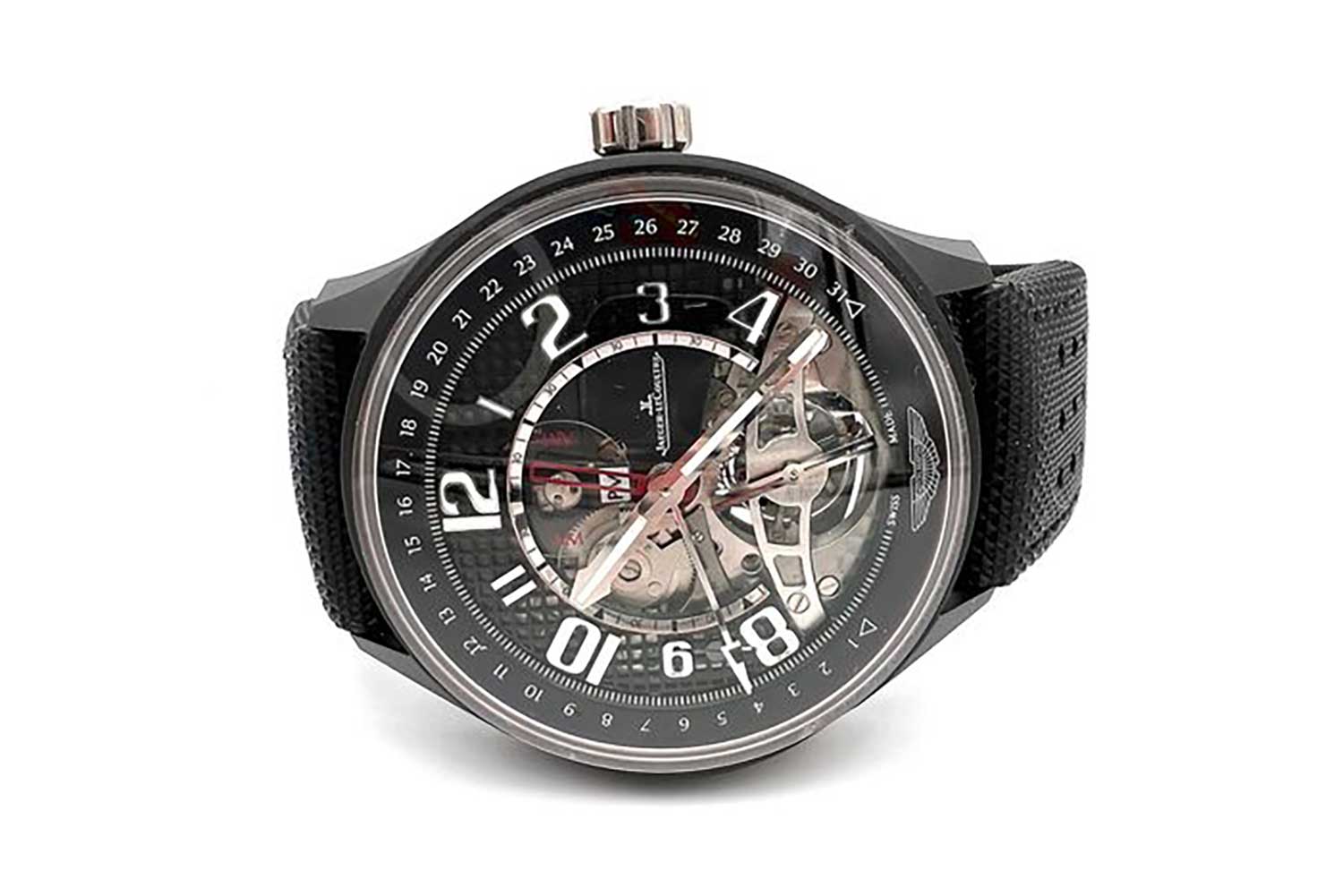
Jaeger-LeCoultre AMVOX 3 Tourbillon GMT for Aston Martin Ref. 193K76
Perhaps due to their shared pursuit of elegance and performance, Jaeger-LeCoultre launched an entirely new series for Aston Martin: the AMVOX. The name, combining Aston Martin and Memovox, reflects the series’ origins, with the first model being an alarm watch — a defining complication for the brand. That said, the dial stood out, striking a balance between modern and traditional elements, which still looks handsome after two decades.
The AMVOX series evolved from the AMVOX 1 to the AMVOX 7, with designs growing increasingly contemporary and incorporating complications like world time and tourbillons.
The standout remains the AMVOX 2 chronograph. At first glance, it seems like a typical chronograph, but it features just one crown with no pushers. To start and reset the chronograph, you press the sapphire crystal — 12 o’clock for start and stop, 6 o’clock for reset. It remains one of the most interesting watches made for a car — function and form perfectly configured for driving.
Master Compressor Extreme World Chronograph
In 2005, Jaeger-LeCoultre unveiled the Master Compressor Extreme World Chronograph, featuring the brand’s first in-house automatic chronograph movement.
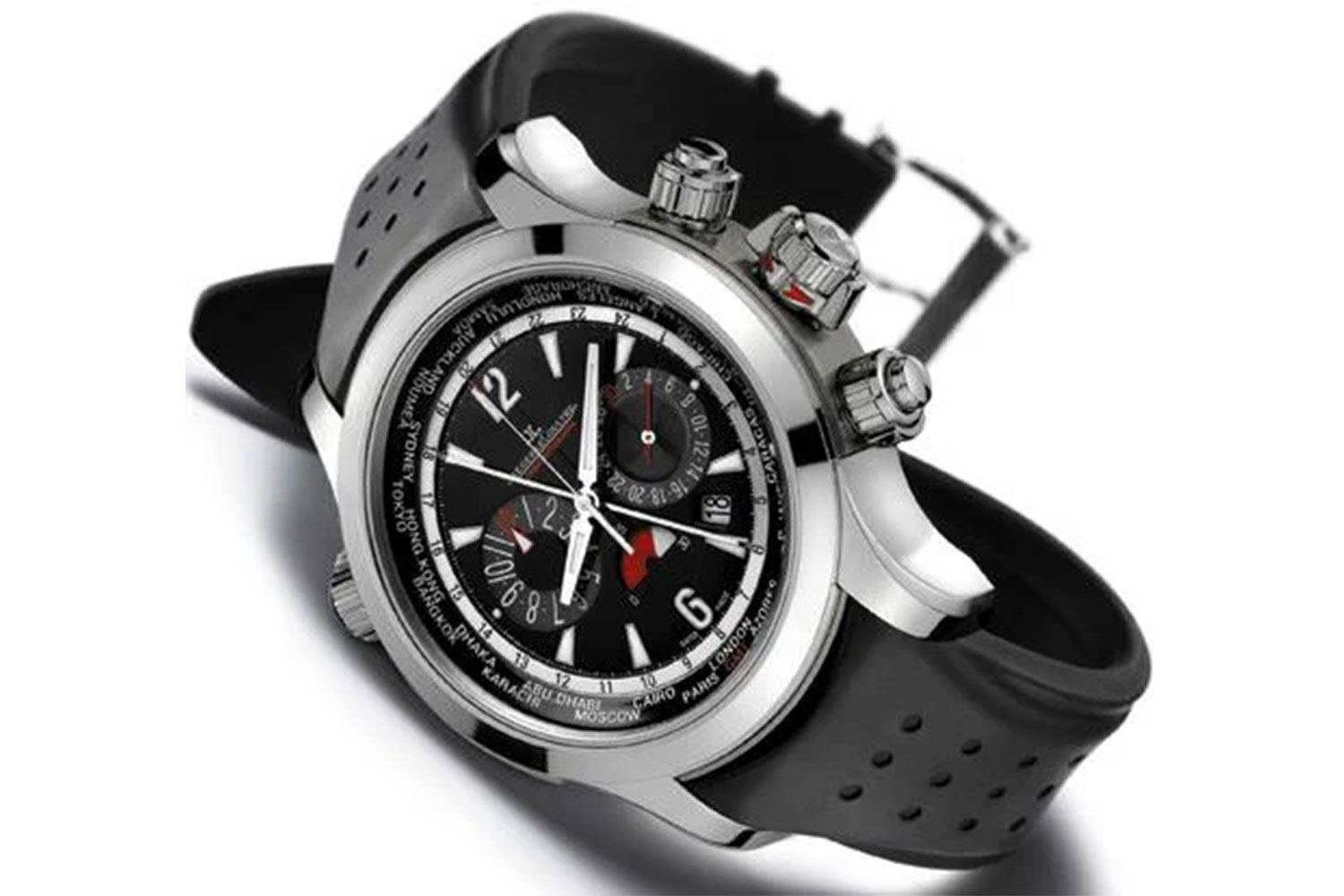
But the watch was more than just a new movement. It was a bold, oversized timepiece designed to compete with the likes of Audemars Piguet, Hublot, and Richard Mille, and it stood out effortlessly, for its large design was purposeful and natural.
The watch’s clever shock-absorbing system consists of two layers of cases — titanium on the inside, suspended by four springs and an air chamber, and steel or platinum on the outside. This allows movement when shock absorbers are engaged, making it one of the most shock-resistant watches of the 2000s.
The dial features rotating chronograph discs, a fan-shaped seconds indicator, and a world-time ring with a satisfying ratchet click. Given the complexity, the large size of the watch is essential. Its charm lies in being bold, complex, and innovative — any smaller or simpler would lose its appeal.
Master Minute Repeater
In 2005, the Master Minute Repeater made its debut as an innovative chiming watch. While its impressive 15-day power reserve is noteworthy, the true focus lies in the construction and presentation of its repeater mechanism.
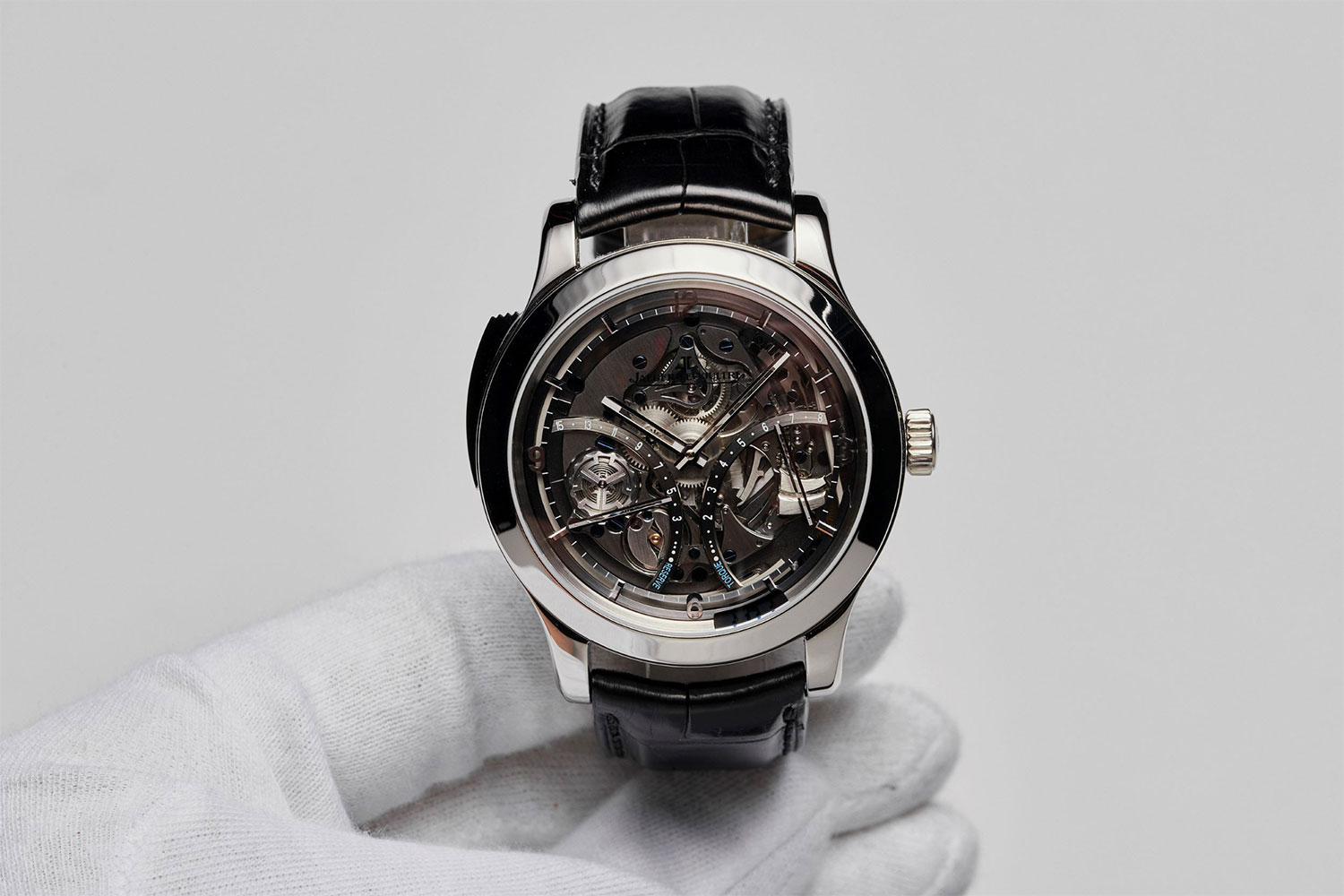
To achieve a chime that is both audible and melodious, the brand experimented extensively with materials and geometries for the hammers and gongs. Ultimately, they opted to solder a section of the gongs to the sapphire crystal on the front. This design allowed vibrations to transmit efficiently, producing a sound that was both louder and clearer — making it one of the loudest repeaters at the time.
Adding to its charm, the watch features a partially openworked dial. This isn’t a traditional skeleton design but a balanced blend of modern and classic aesthetics. Alongside the hour markers and minute track, the dial includes two retrograde indicators: one for the power reserve and another for torque. These indicators create fan-shaped openings that reveal key elements of the repeater mechanism, such as the gongs.
Master Tourbillon
While the Gyrotourbillon was Jaeger-LeCoultre’s bold flagship, the brand also introduced the Master Tourbillon — a steel watch with a single-axis tourbillon. In 2006, this was a big deal. Tourbillons were still rare, and the Master Tourbillon, with its steel case, made the complication feel accessible for the first time.
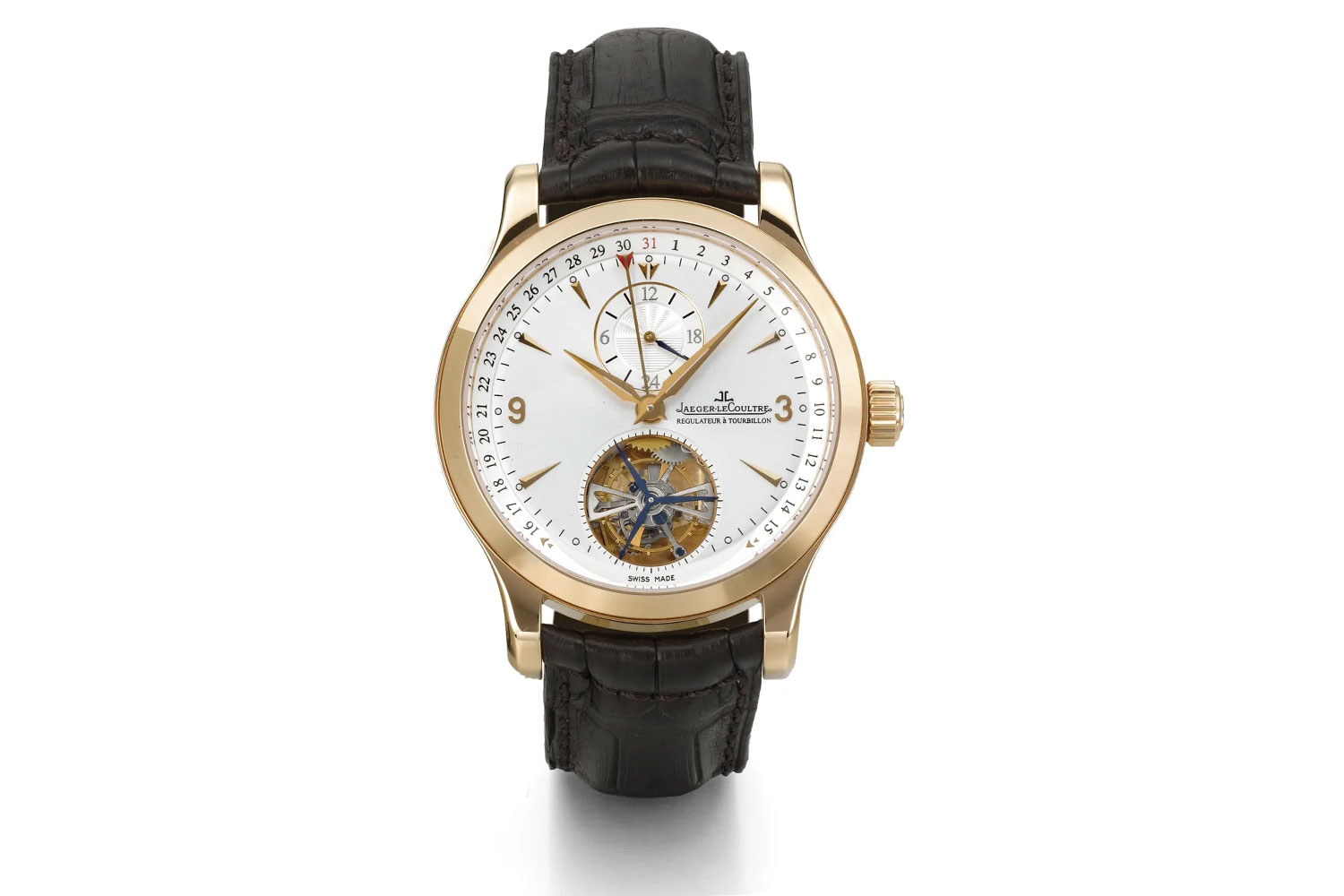
Showcases were held worldwide in partnership with retailers, drawing many collectors eager to see it up close. The feedback was overwhelmingly positive, with many praising its practical size and appealing price.
Yet the Master Tourbillon was far from simple. The dial featured thoughtful details that added to its charm. At 12 o’clock, the day-and-night indicator stood out with two distinct guilloché patterns marking the halves of the circle. The date display was equally clever, with a widened gap between the 15th and 16th — positioned at 5 and 7 o’clock — to prevent the date hand from overshadowing the tourbillon.
And by the way, the Master Tourbillon won the Chronométrie International timing competition in 2009, a contest that hadn’t been held since 1972. Over the course of 45 days, the Master Tourbillon averaged a 0.13-second gain per day (though the maximum gain per day was unknown), surpassing the Gyrotourbillon 2, which took second place.
Reverso Grande Complication à Triptyque
In the same year, Jaeger-LeCoultre unveiled its most complex swivelling watch ever, the Reverso Triptyque. Grand complications were a thing in the late 20th and early 21st centuries, a time when watchmakers competed to show their expertise and strengthen their reputations.
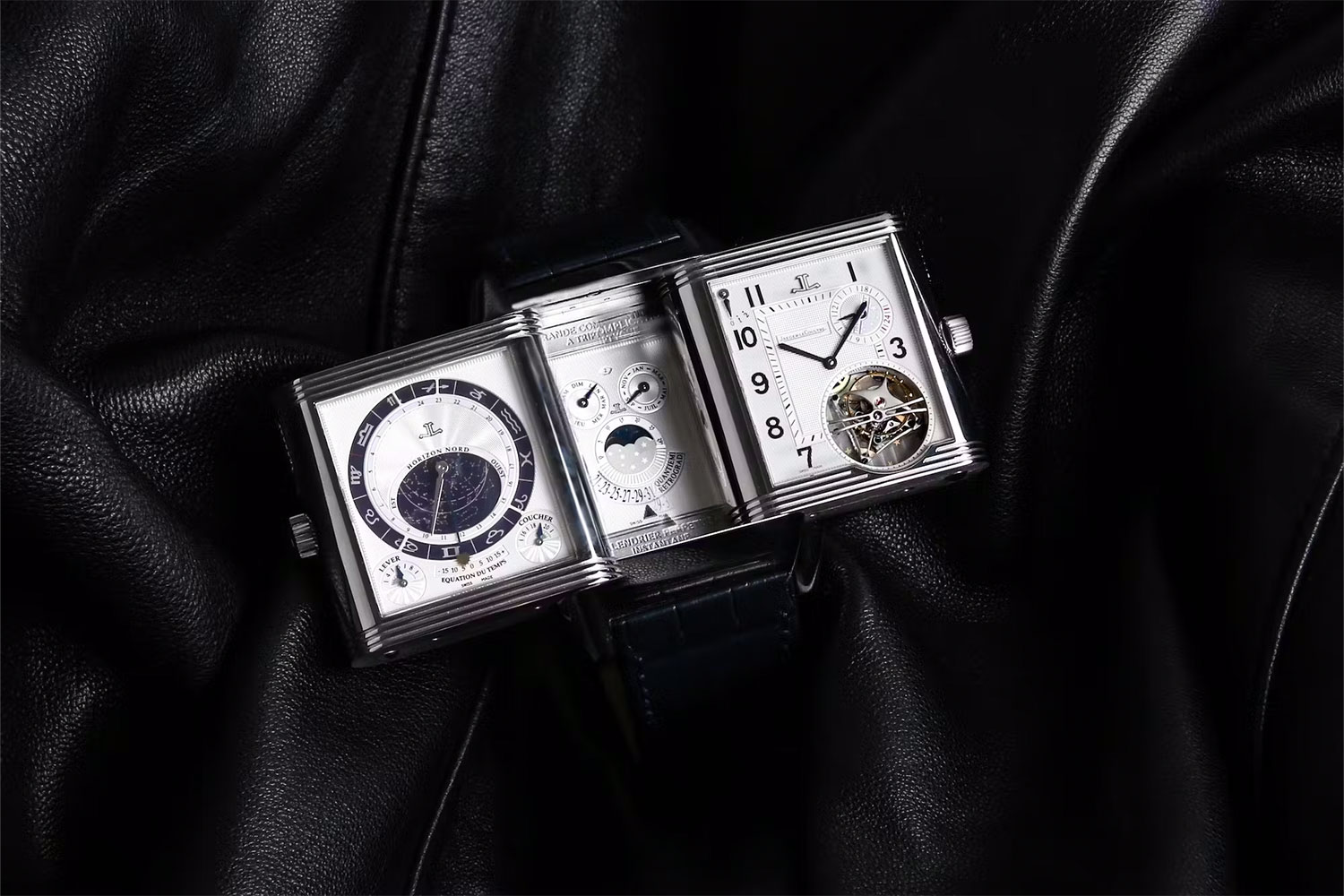
Image: The 1916 Company
For the 75th anniversary of the Reverso, Jaeger-LeCoultre presented the Triptyque, and it was a testament to its ability to fit grand complications into a rectangular watch. Beyond the usual perpetual calendar and tourbillon, it featured exotic celestial functions like a star chart, sidereal time, and the equation of time.
What set the Triptyque apart from other round grand complication watches was its three faces. There was the front and back, typical of the Reverso, but where was the third face? It turned out to be on the inner side of the caseback, which is separate from the swivelling case that contains the movement.
The third face displays the perpetual calendar, with all indicators jumping instantly when the time reaches 12 o’clock. This was achieved through a clever design — a pin connecting the movement to the caseback at 12 o’clock that transfers the motion.
There were more thoughtful innovations; nothing was a random mix of features. The power reserve indicator, for instance, jumped directly from “one” to “two” days when the mainspring was sufficiently wound, instead of moving gradually. The watch also introduced the Ellipse Isometer Escapement, featuring a spring detent that interacted with a pivot lever, acting as a bridge between the balance roller and escape wheel.
Extreme Lab
It was clear Jaeger-LeCoultre was onto something — bringing tourbillons into all sorts of watches — and in 2007, they turned their attention to sports models with the debut of the Extreme Lab.
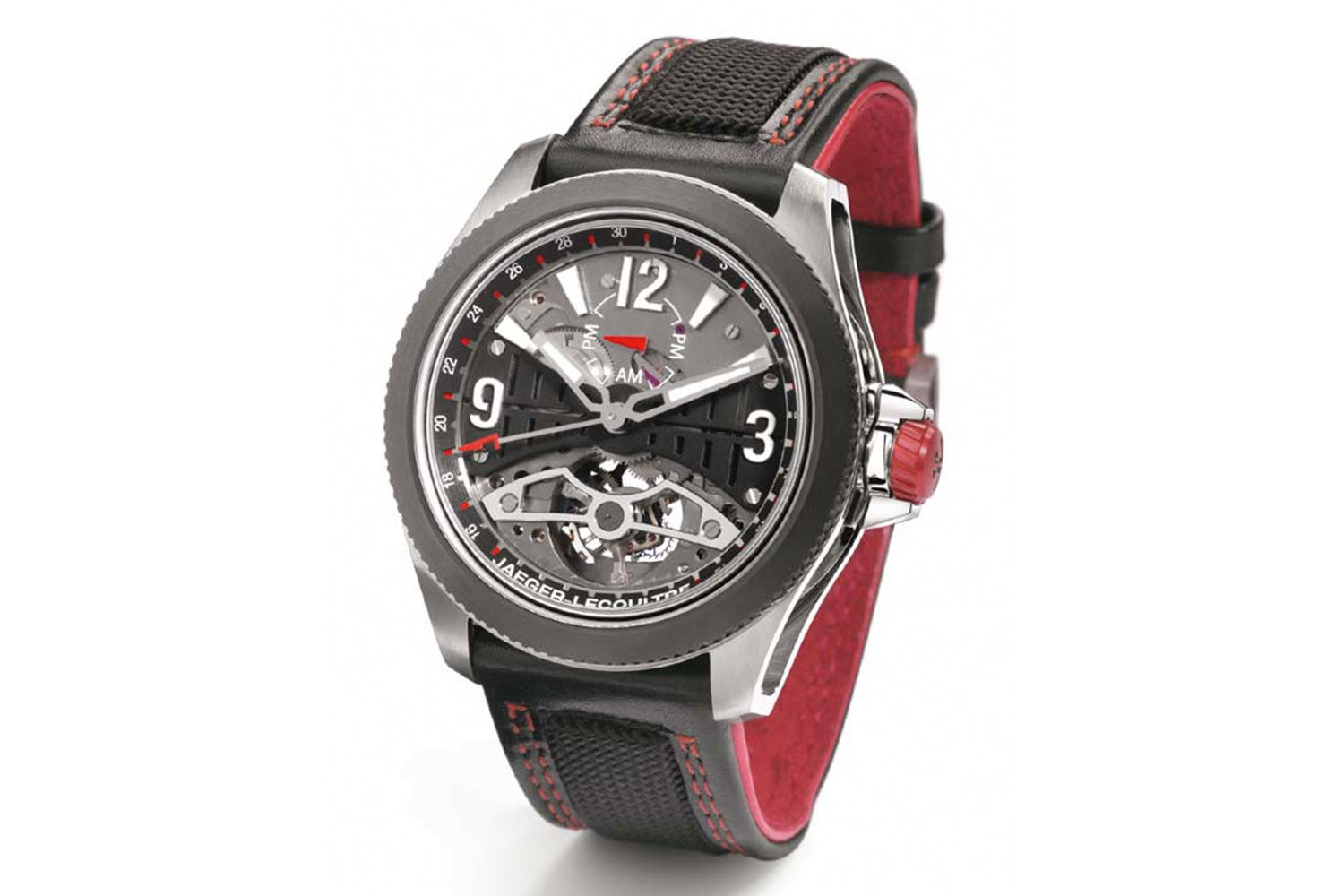
The Extreme Lab wasn’t just a tourbillon sports watch. It was so advanced that it hardly felt like something a traditional watchmaker like Jaeger-LeCoultre could produce. What set it apart was its cutting-edge construction, designed to operate without lubricants, enabling it to function in extreme temperatures ranging from -40°C to 70°C.
This was achieved through the use of innovative materials like Easium carbonitride, a highly durable substance that replaced traditional jewels and bearings. Wheel pivots and pinions were surface-treated to minimise friction, while components like the escapement wheel used silicon, pallet stones were made of synthetic black diamond, and ceramic ball bearings further ensured smooth operation.
Another standout feature was its unconventional balance wheel, which wasn’t a wheel at all but a two-sided anchor designed to reduce surface area and friction. To maximise density and inertia, Jaeger-LeCoultre turned to iridium-platinum for its construction.
Duometre
Two thousand and seven was a significant year for Jaeger-LeCoultre, as the brand unveiled the Duomètre, a collection that remains defining two decades later.
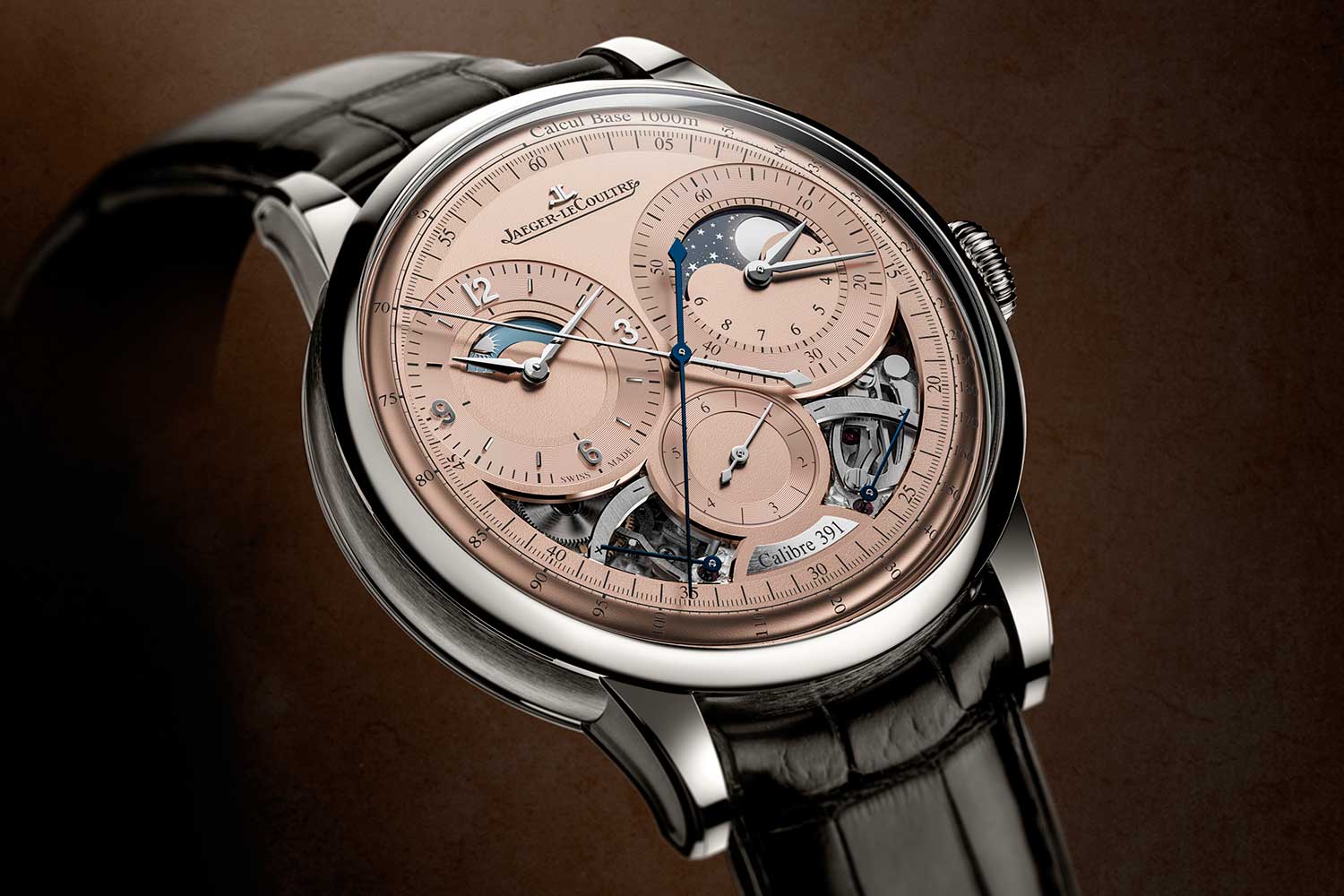
Jaeger-LeCoultre Duometrè Chronograph Moon
The first Duomètre model was a chronograph, and as its name suggests, the movement features two separate barrels and gear trains — one for timekeeping and the other for the chronograph. This design reduces drag on the timekeeping mechanism when the chronograph is activated, as there’s no energy transfer from the timekeeping train to power the chronograph. Both systems share the same 50-hour power reserve.
What’s particularly interesting is the “lightning second,” a very fast second hand on a sub-dial, marked in sixths of a second. The lightning second hand jumps every sixth of a second and completes a full revolution every second. The traditional chronograph seconds remain, mounted on the central axis for legibility. Interestingly, the timekeeping seconds hand is also centrally mounted but in a different colour for better visibility. It’s striking to see two central seconds hands running in parallel. And, of course, it’s a monopusher chronograph — the rectangular pusher at two o’clock controls the start, stop, and reset.
The dial is satisfyingly symmetrical and legible. The left subdial shows timekeeping hours and minutes, with the power reserve indicator at the lower left. On the right, a subdial displays chronograph hours and minutes, with a rotating disc showing the single-digit chrono minute. At the bottom right is the chronograph power reserve indicator. All hands are rhodium-plated, and all chronograph hands are blued steel for differentiation.
Hybris Mechanica Grande Sonnerie
Last but not least, in 2009, Jaeger-LeCoultre unveiled the Hybris Mechanica Grande Sonnerie, the most complicated wristwatch of its time, surpassing the Vacheron Constantin Tour de l’Île and Franck Muller Aeternitas.
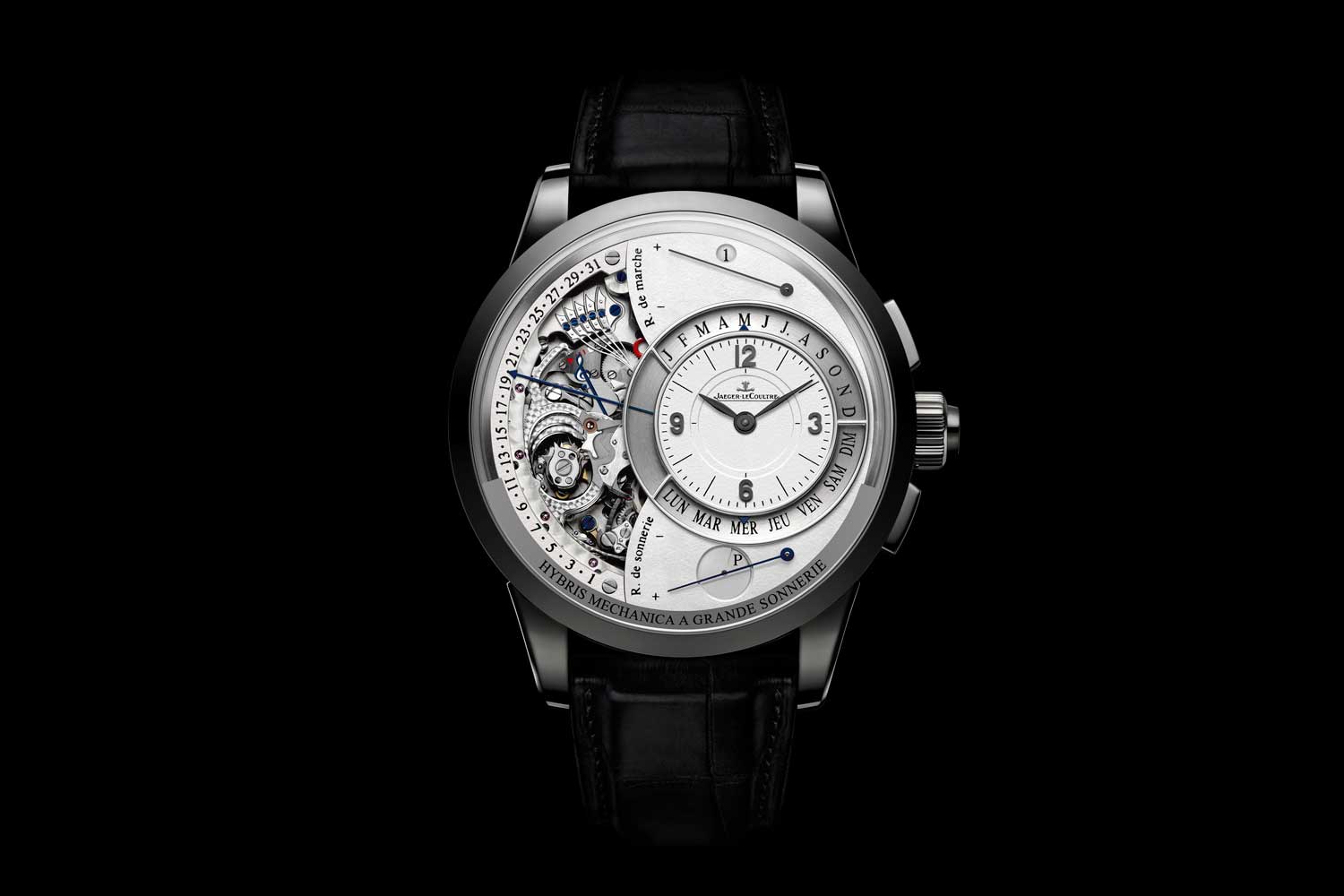
2010: The Jaeger-LeCoultre Hybris Mechanica à Grande Sonnerie features - the striking of the time just as the Tower of Big Ben in Great Britain dictates, every hour and quarter – fully automatic and miniaturized to the size of a wristwatch. Combined with this outstanding feature the watch also comprises a flying tourbillon and a perpetual calendar with retrograde hands; a jumping hour and minute mechanism rounds off the concerto of this elaborate masterpiece of 26-complications
Despite boasting 26 complications, the Hybris Mechanica’s highlights were undoubtedly two key aspects. The first is its design, which looks surprisingly simple at first glance. A quarter of the dial is open to show the striking mechanism, while the rest is arranged with symmetrical subdials that follow the style of earlier Duomètre and Master Minute Repeater models. Its clean and balanced look is unusual for a grand complication and is made possible by smart use of retrograde indicators, like those for the perpetual calendar’s day, date, and month, which save space.
The second standout feature is its striking mechanism, the result of years of research and development. The innovative Trebuchet hammers transfer 80% of the force from the spring to the gongs — significantly more than the 20-30% efficiency of traditional hammers — resulting in a louder and clearer chime. Additionally, the snails and cams were arranged in a vertical column rather than the typical horizontal layout, making them visible from the front. The watch also addressed a common issue with minute repeaters: the long lag between the hour and minute chimes when there is no quarter-hour chime.
The Road Ahead
As the watchmaking world waits to see what Lambert will bring to Jaeger-LeCoultre, one thing is clear: the stakes are high. The Grande Maison has the potential to reclaim its place at the pinnacle of haute horlogerie, but achieving this will require bold vision and meticulous execution. Lambert’s return heralds an exciting chapter for Jaeger-LeCoultre, one that could redefine the brand for decades to come.
The question is not whether Lambert can rise to the challenge — his track record strongly suggests he can — but how he will balance tradition and innovation to craft a Jaeger-LeCoultre that resonates with both the purist and the modern luxury consumer. For now, the world watches and waits.
Jaeger-LeCoultre
You may also like
News
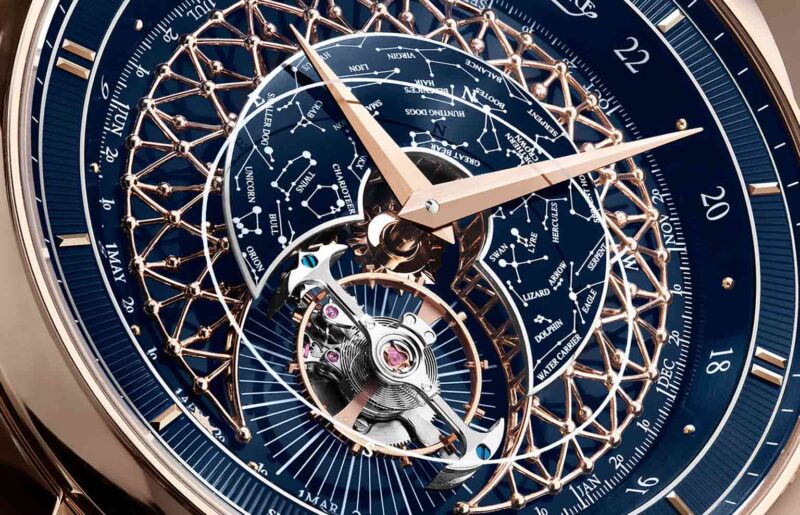
Introducing the Jaeger-LeCoultre Master Hybris Artistica Calibre 945
Oct 12, 2025
News
Introducing the Jaeger-LeCoultre Master Hybris Artistica Calibre 945
Oct 12, 2025
News
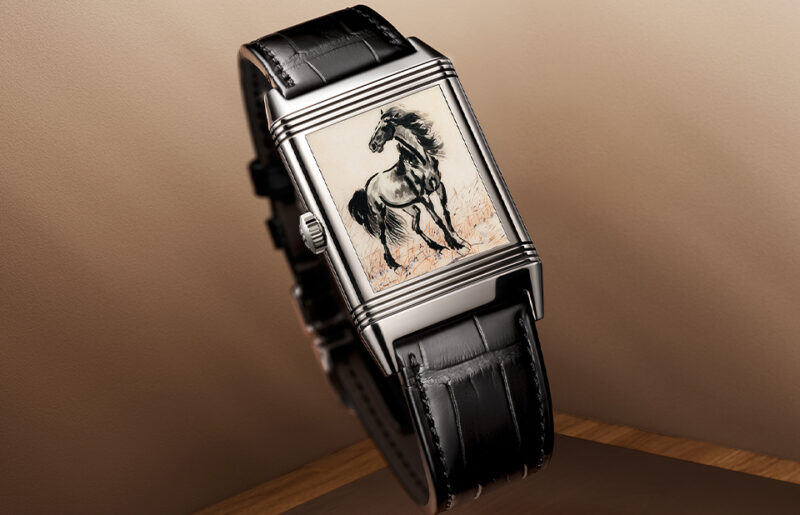
Jaeger-LeCoultre’s Reverso Tribute Enamel ‘Xu Beihong’
Sep 25, 2025
News
Jaeger-LeCoultre’s Reverso Tribute Enamel ‘Xu Beihong’
Sep 25, 2025
News
These Are The Most Iconic Singapore-Exclusive Timepieces Over The Years, And Then Some
Aug 8, 2025
News
These Are The Most Iconic Singapore-Exclusive Timepieces Over The Years, And Then Some
Aug 8, 2025