


Introducing the Jaeger-LeCoultre Master Hybris Artistica Calibre 945
News
Introducing the Jaeger-LeCoultre Master Hybris Artistica Calibre 945

With the explosion of interest in watches over the past decade, and with the internet making information more accessible than ever, it’s no longer surprising to any enthusiast just how advanced a timepiece can be, from perpetual calendars to tourbillons. It’s fair to say that high complications have now become common knowledge among the new generation of collectors.
So what kind of complication, or combination of complications, still remains unfamiliar to most? That would be the display of astronomical elements, explored by only a handful of brands and, even then, often in very limited numbers. Enter the Jaeger-LeCoultre Master Hybris Artistica Calibre 945, a five-piece limited edition that brings together a celestial display, tourbillon, minute repeater, enamel dial, and more.
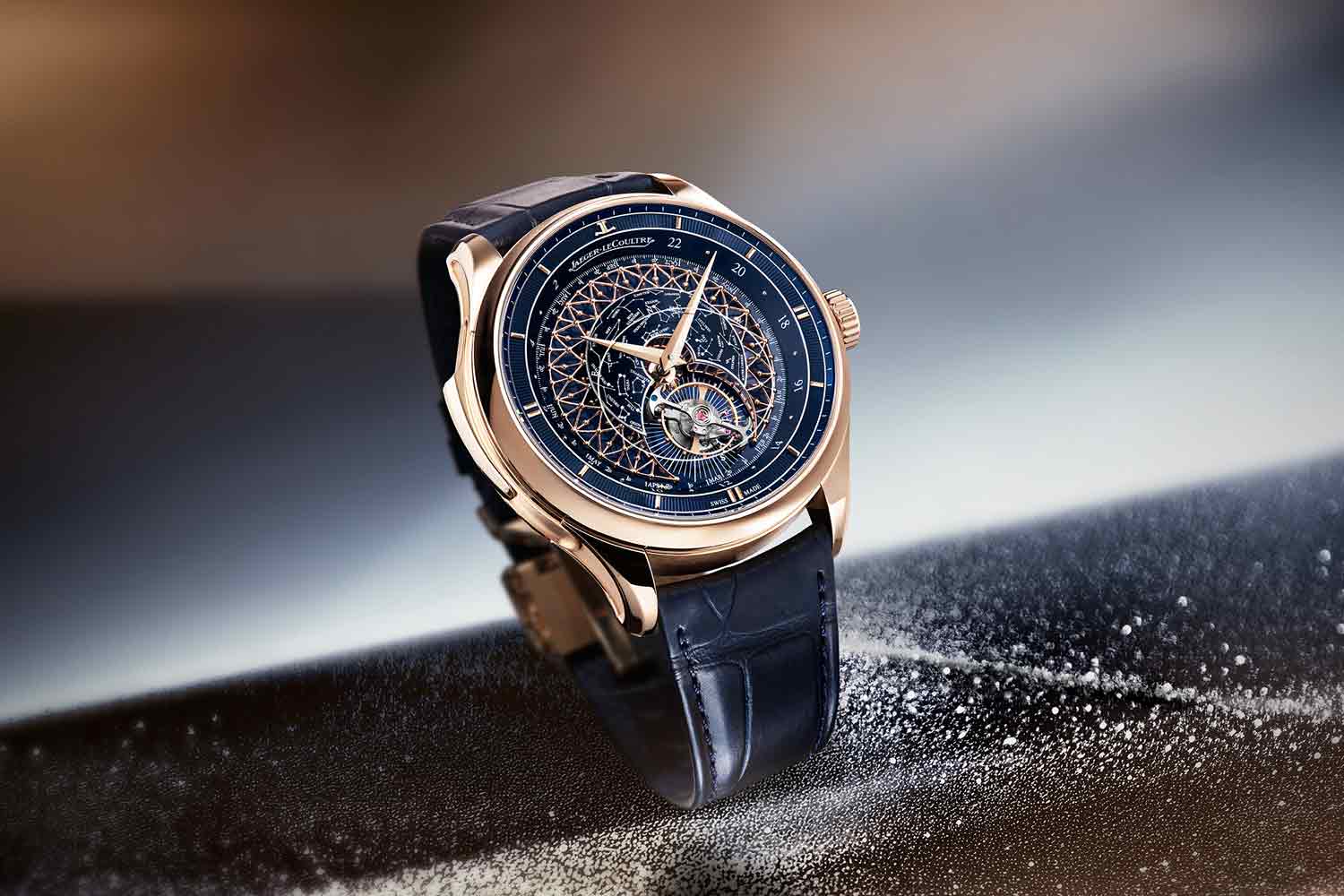
Jaeger-LeCoultre Master Hybris Artistica Calibre 945
Hybris Artistica’s astronomical complications
The Hybris Artistica is highly complicated, but in a meaningful and poetic way. It impresses not by excess, but by how harmoniously its many elements come together. The result is a watch that feels both technically astounding and emotionally moving, yet remains clean and composed. Let’s take a closer look at what it packs.
First things first, among the mix of complications found in the Hybris Artistica, it’s hard to believe, but the tourbillon is perhaps the most familiar of them all. Yet this is no ordinary tourbillon. It is a one-minute flying tourbillon that doubles as a seconds indicator, but what makes it special is its second axis of rotation. The entire cage orbits around the dial once every sidereal day, which is fascinating to watch, as most tourbillons rotate in place rather than travel across the whole dial.
This second axis also leads to another of the watch’s complications: sidereal time. A sidereal day differs from the 24-hour solar day we use in daily life. While a solar day is based on Earth’s rotation relative to the Sun, a sidereal day — lasting 23 hours, 56 minutes, and 4 seconds — is measured against the fixed stars. As such, sidereal time is used by astronomers to track and predict the movements of celestial bodies and to calculate their positions. Having a feature once meant for stargazers built into a wristwatch feels rather romantic.
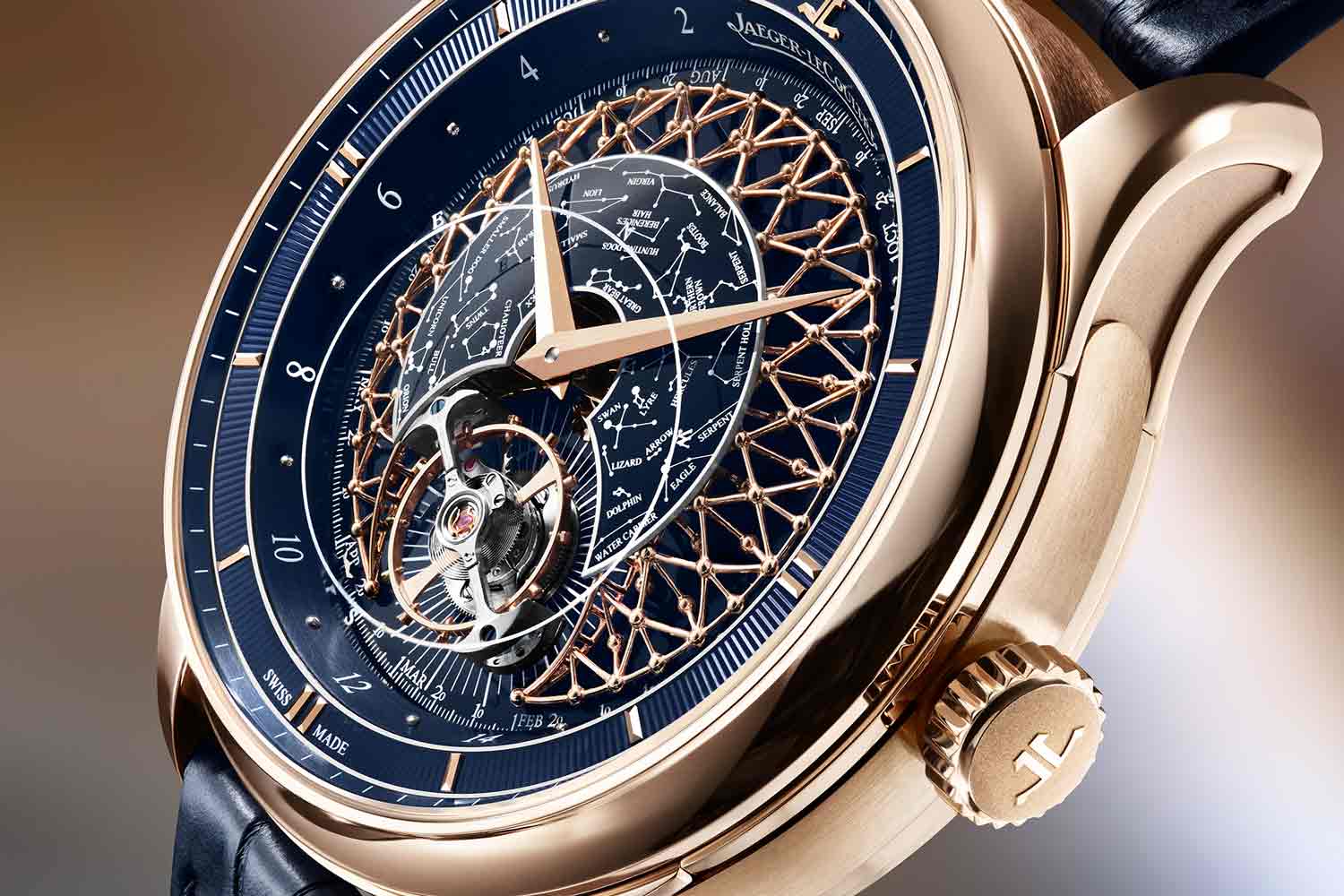
The enamelled sky chart, while slightly smaller than on previous iterations, leaves more room for the intricate golden-colored lattice structure
That brings us to the next complication, which takes up most of the dial: the sky chart. The chart moves in tandem with the tourbillon, revolving around the centre of the dial once every sidereal day. In doing so, it depicts the movement of the constellations across the heavens in real time. This particular chart is based on the view of the Northern Hemisphere sky as seen from Jaeger-LeCoultre’s workshop in the Vallée de Joux.
And if that isn’t impressive enough, the watchmaker has even included a chiming function — a minute repeater that lets you tell the time by sound alone, perfect for those who venture deep into the mountains for stargazing under a pitch-black sky.
Last but not least, there’s a subtle “easter egg” complication in the form of a 24-hour display. It’s indicated by a tiny pin set along the edge of the dial, which completes one full rotation every solar day, or 24 hours. It’s a discreet detail that blends beautifully into the composition, adding a quiet touch of surprise without disturbing the celestial scene.
Grand Feu enamel with an “Atomium” lattice
Given the sophistication of its complications, the decoration naturally has to be of the same level. Jaeger-LeCoultre clearly understands this, delivering exceptional attention to detail on the dial. The sky chart, for instance, is crafted in dark blue Grand Feu enamel, with the stars transferred onto its surface in white ink.
Surrounding it is a laced “Atomium” structure that echoes the connecting lines of constellations. It’s rendered in a gold colour rather than solid gold to keep it light, which is important since moving all these elements around the dial requires significant energy. Even the tourbillon, for example, is made of titanium to reduce weight. Beneath the golden lattice sits a dark blue lacquered base, adding depth to the dial’s three-layer construction.
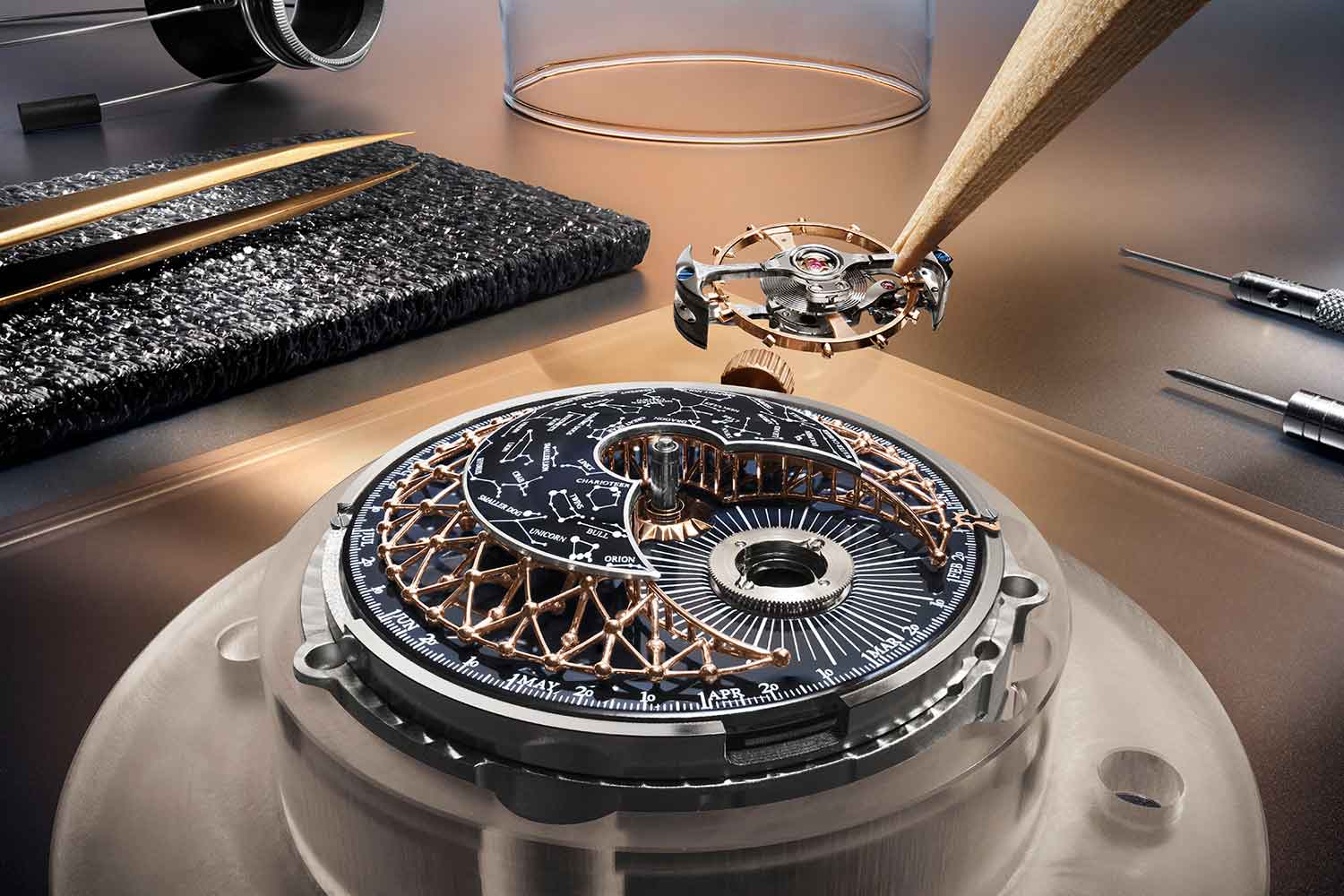
The triple-level dome-shaped dial is complemented by a filigreed “Atomium” structure
Inside the watch is the Calibre 945, which debuted 15 years ago in 2010. It is a hand-wound movement with a 40-hour power reserve. What’s particularly interesting about this movement is the view from the back, where the minute repeater mechanism is displayed in all its glory. It is a solid repeater packed with innovation, from the cathedral gongs fixed to the rear sapphire crystal for maximum resonance to the brand’s patented trébuchet hammers that enhance striking power and volume.
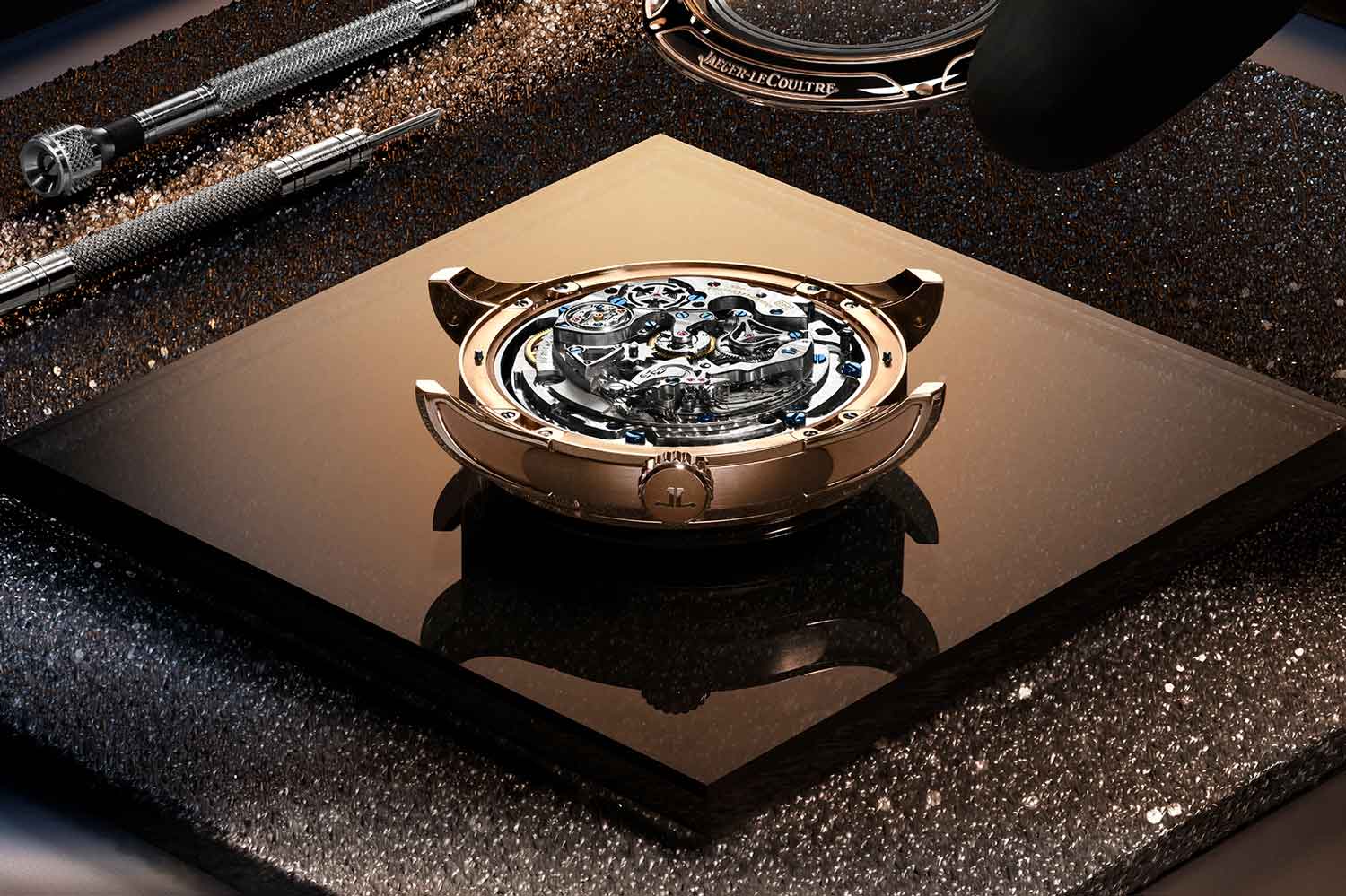
In the minute repeater mechanism of the Calibre 945, the cathedral crystal gongs are fixed on the rear sapphire crystal for maximum resonance
Tech Specs: Jaeger-LeCoultre Master Hybris Artistica Calibre 945
Movement: Manual-winding Calibre 945; 40-hour power reserve
Functions: Hours and minutes; star chart; sidereal time; tourbillon; minute repeater
Case: 45mm × 16.05mm; 18K pink gold; water-resistant to 50m
Dial: Dark blue Grand Feu enamel dial
Strap: Blue alligator leather strap with 18K pink gold folding clasp
Availability: Limited to 5 pieces
Jaeger-LeCoultre

You may also like

News
Jaeger-LeCoultre’s Reverso Tribute Enamel ‘Xu Beihong’
Sep 25, 2025
News
Jaeger-LeCoultre’s Reverso Tribute Enamel ‘Xu Beihong’
Sep 25, 2025

News
These Are The Most Iconic Singapore-Exclusive Timepieces Over The Years, And Then Some
Aug 8, 2025
News
These Are The Most Iconic Singapore-Exclusive Timepieces Over The Years, And Then Some
Aug 8, 2025

Events
Jaeger-LeCoultre Is Bringing Swiss Watchmaking Education To Singapore
Jul 8, 2025
Events
Jaeger-LeCoultre Is Bringing Swiss Watchmaking Education To Singapore
Jul 8, 2025